REVIEW · RIO DE JANEIRO
Rio de Janeiro: Bossa Nova Walking Tour with Guide
Book on GetYourGuide →Operated by Rio Bossa Experience · Bookable on GetYourGuide
Bossa Nova sounds better on Rio sidewalks. This 3-hour walking tour mixes live music with a guide who actually plays, so the story of Rio’s sound isn’t stuck in a lecture room. You’ll cover Ipanema and Copacabana and hear how the style grew, from early pioneers to the names that still define it.
What I love most is the combo of a tour guide who’s also a musician and the chance to pause at multiple real places—bars, beach views, and streets tied to the songs. You also get the practical bonus of a moving “map” for first-time Rio visitors who want context without planning a self-guided scavenger hunt.
One drawback to consider: the music is delivered in short bursts during the walk, not as one long sit-down concert. If you’re hoping for a full on-stage performance length, this tour may feel more like a highlight reel than a marathon concert.
In This Review
- Key highlights at a glance
- Bossa Nova on foot: why this 3-hour format works
- Start at Praça Nossa Senhora da Paz: the lesson before the music
- The Ipanema-and-Copacabana walking route, stop by stop
- 1) A quieter corner for the first photo and performance
- 2) Rua Nascimento Silva: street-level context
- 3) Another music-linked street corner
- 4) Cantagalo: a viewpoint pause
- 5) Praça General Osório: a classic Rio landmark stop
- 6) Av. Atlântica (3968): views plus time to absorb
- 7) Estátua de Dorival Caymmi: a songwriting connection point
- 8) Garota de Ipanema: the route’s famous cultural anchor
- 9) Arpoador: a short scenic finish-line feeling
- 10) Estátua de Tom Jobim: meet the myth at street level
- 11) Casa de Cultura Laura Alvim: a quick cultural stop
- 12) A local bar: the last live performance moment
- The guide’s role: history told with instruments in hand
- One thing to watch for
- Price and value: is $49 fair for what you get?
- Who should book this Bossa Nova walking tour
- A practical plan for your day before and after
- Should you book Rio Bossa Experience?
- FAQ
- How long is the Bossa Nova walking tour?
- Where does the tour meet?
- How many places will we see during the tour?
- Is there live music during the tour?
- What languages are available?
- What is included in the price?
- Is food or drinks included?
- What should I bring?
- Is this tour suitable for everyone?
Key highlights at a glance
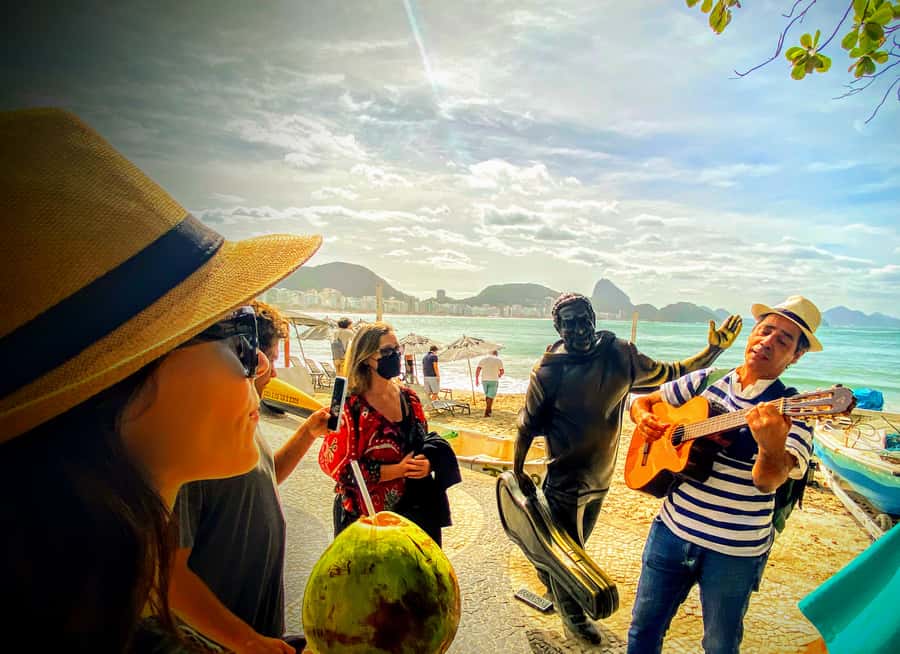
- Guided by Guilherme, who brings the music to life with guitar and other instruments along the way
- Live Bossa Nova performance during the walk, not just background playlists
- Ipanema-to-Copacabana circuit with scenic viewpoints and repeated photo stops
- Spotting the streets connected to Bossa Nova’s creators and performances, including the names you hear in the classics
- Multiple language options (Portuguese, Spanish, English) for a smoother experience
- Small groups or private options available, which can help you hear the live music more clearly
Bossa Nova on foot: why this 3-hour format works
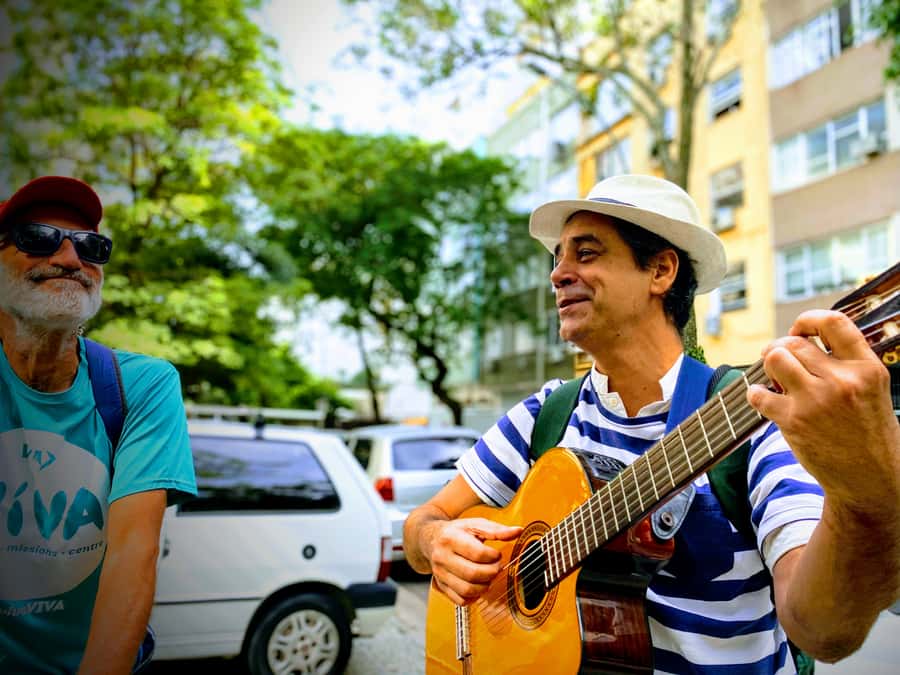
This tour is built for people who like their music with context. Instead of a museum-style lesson, you walk the neighborhoods and let the guide connect Bossa Nova to the streets, the hangouts, and the artists who shaped the sound.
You’re also getting a tight timeframe: about 3 hours, broken into short stops. That matters because Bossa Nova’s story isn’t one straight timeline—it’s a bunch of connected moments, people, and places, and the tour design lets you absorb it without feeling stuck.
You can also read our reviews of more walking tours in Rio De Janeiro



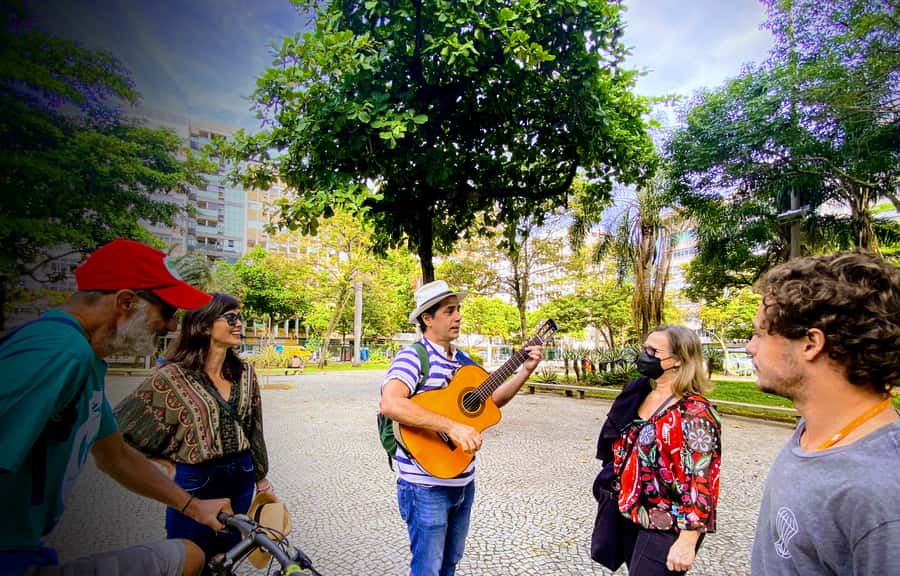
Start at Praça Nossa Senhora da Paz: the lesson before the music
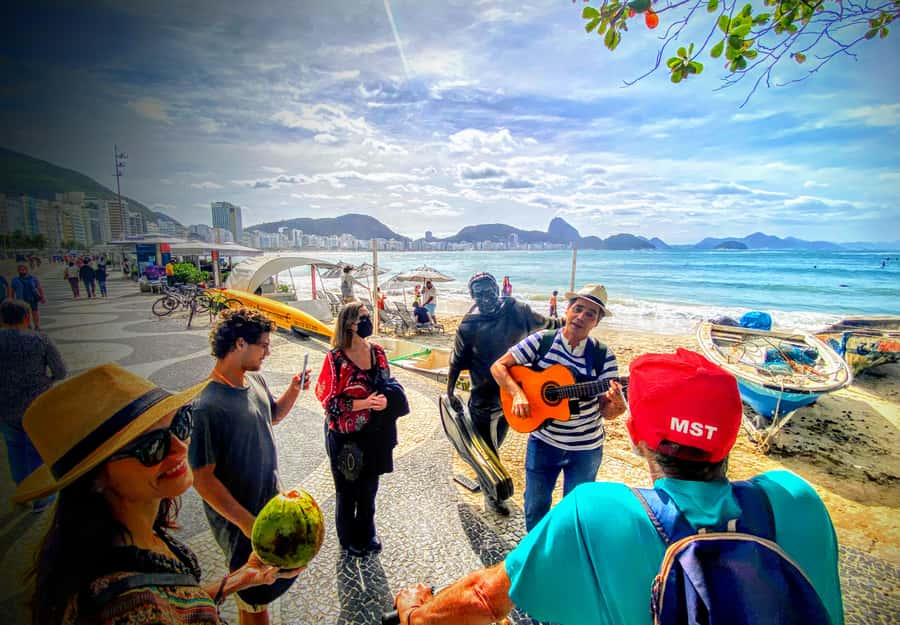
Your tour begins at Praça Nossa Senhora da Paz in Ipanema, near metro exit A. The night before (around 20:00), you should expect an email with the exact meeting location and directions for finding the guide in the square.
The first stop includes a 20-minute class, which is smart. You set your “listening framework” early—what Bossa Nova is, how it developed, and which key composers and performers shaped the sound. The tour specifically points to major figures like Tom Jobim, Vinícius de Moraes, and João Gilberto, so you’re not walking around wondering who’s who.
From there, you shift from learning mode to walking mode—short segments, photo moments, and quick musical stops. It’s a rhythm that keeps the tour moving, while still letting you catch the meaning behind what you’re seeing.
The Ipanema-and-Copacabana walking route, stop by stop
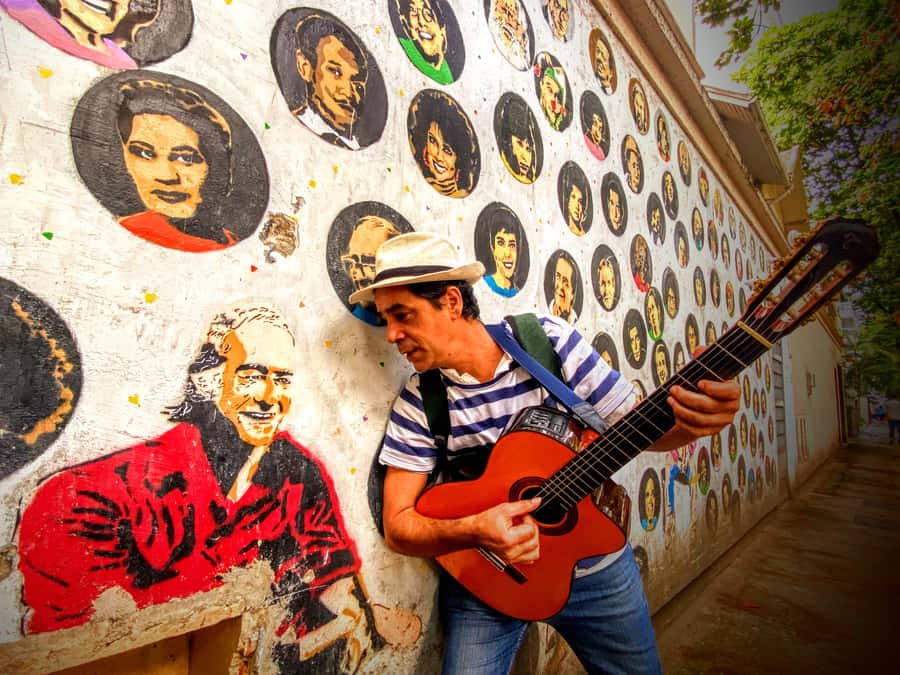
The route is designed around named photo stops and viewpoints across Ipanema and Copacabana, with breaks that pair walking with brief performances. The experience description also notes that you’ll pass by places where Bossa Nova was written, played, and composed, so the route isn’t random sightseeing—it’s a guided circuit meant to connect music to the city.
Here’s how the pacing typically feels across the day’s stops:
1) A quieter corner for the first photo and performance
After the opening square briefing, you head to a less obvious corner for a photo stop and a first musical segment (about 15 minutes). This early performance is more than entertainment—it cues your attention so the history sounds start to make sense as you keep walking.
2) Rua Nascimento Silva: street-level context
Next comes Rua Nascimento Silva (about 15 minutes). This is the kind of street stop where the guide can connect the neighborhood to the people and the style. Even if you’re not chasing exact addresses on your own, having someone explain what to notice changes the whole walk.
You can also read our reviews of more guided tours in Rio De Janeiro





3) Another music-linked street corner
You’ll also hit another short stop (about 15 minutes) that’s framed as a spot with Bossa Nova relevance. In practice, these middle stops are often where you get the “how it really worked” details—who played where, how the sound traveled, and why certain places became part of the story.
4) Cantagalo: a viewpoint pause
At Cantagalo (around 15 minutes), the tour shifts into a more scenic moment. Cantagalo is used as a photo-and-walk stop, so you get a break from the constant “explain-explain-explain” rhythm and can reset your eyes on the coast and streets.
5) Praça General Osório: a classic Rio landmark stop
Then you move to Praça General Osório (about 15 minutes). This pause is useful for two reasons. First, it gives your legs a breather. Second, it’s a place where the guide can tie the Bossa Nova era to the feel of old Rio—the 1950s and 1960s are specifically mentioned as the golden years, when the music was at its most glamorous.
6) Av. Atlântica (3968): views plus time to absorb
At Av. Atlântica, 3968 (around 20 minutes), the tour includes scenic viewing time. This longer stop helps because Bossa Nova isn’t only “about music”—it’s also about atmosphere. When you can see the coastline and the city’s rhythm, the guide’s talk about the era lands better.
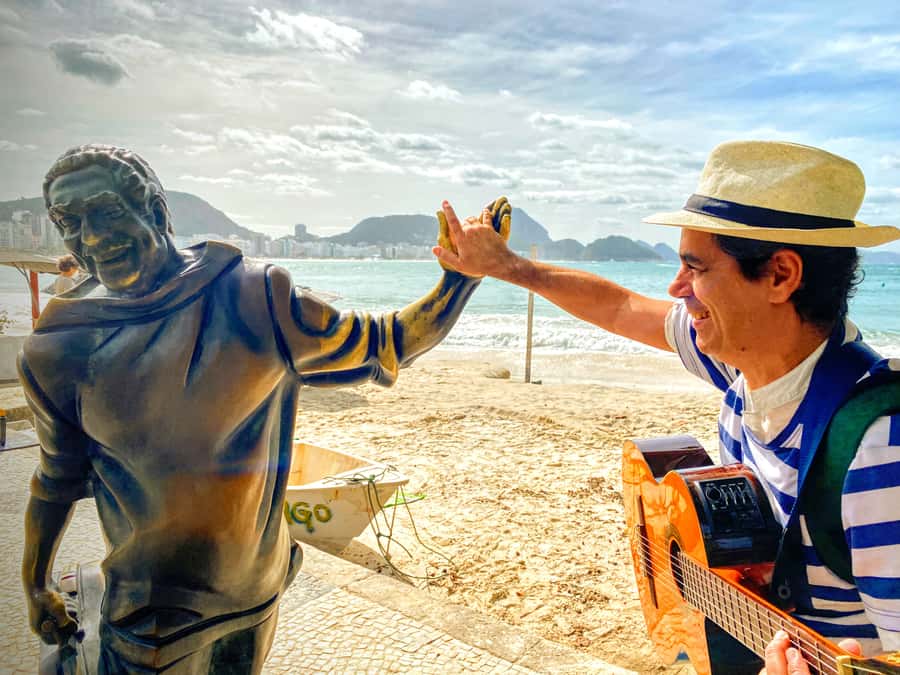
7) Estátua de Dorival Caymmi: a songwriting connection point
Next is Estátua de Dorival Caymmi (about 15 minutes). Even if you’re not deeply plugged into every composer name yet, stopping at the statue makes it easier to remember that Bossa Nova didn’t appear out of nowhere. It grew out of earlier Brazilian songwriting traditions and performers.
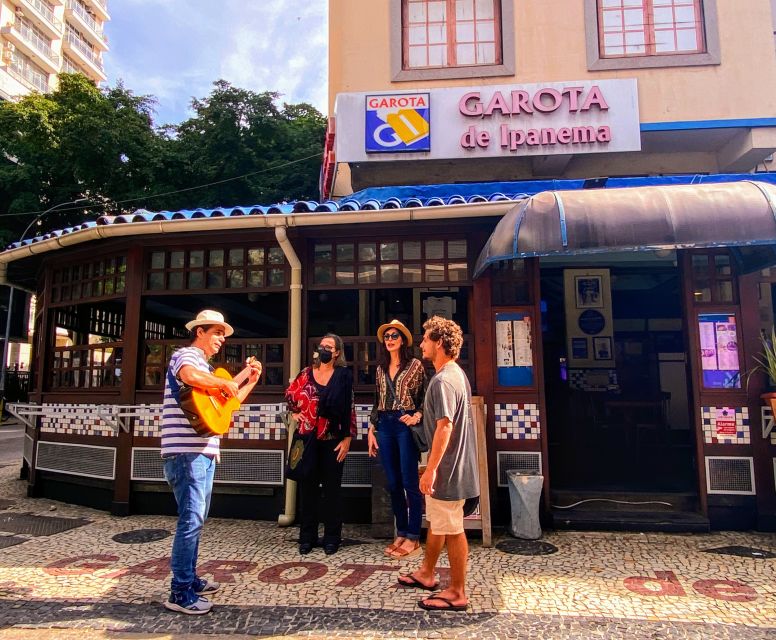
8) Garota de Ipanema: the route’s famous cultural anchor
You’ll stop at Garota de Ipanema (about 10 minutes). The tour experience explicitly calls out walking by streets connected to the Girl from Ipanema story, and this is one of the clearest anchors for that thread. If you only know one Bossa Nova song, this part helps you connect the title to the neighborhood.
9) Arpoador: a short scenic finish-line feeling
Then comes Arpoador (about 10 minutes). This is another photo stop with scenic views. It’s a good moment to look out, take a breath, and let what you just learned about the 50s–60s style settle in.
10) Estátua de Tom Jobim: meet the myth at street level
At Estátua de Tom Jobim (about 10 minutes), you get one more artist tie-in point. Again, even without extra backstory, the naming does the work: you can’t forget what the tour is trying to connect—Bossa Nova’s big names to Rio’s actual streets.
11) Casa de Cultura Laura Alvim: a quick cultural stop
You’ll also make a brief stop at Casa de Cultura Laura Alvim (about 5 minutes). It’s short, so treat it as a signpost rather than a museum visit. The value here is keeping your mental map of Bossa Nova tied to the city’s cultural spaces.
12) A local bar: the last live performance moment
Finally, you visit a local bar (about 15 minutes) with another live musical segment. This is the tour’s closing “music hit.” It also gives you a natural transition into the next part of your evening—since the tour ends at Restaurante e Bar Garota de Ipanema, right where you can keep the night going.
The guide’s role: history told with instruments in hand
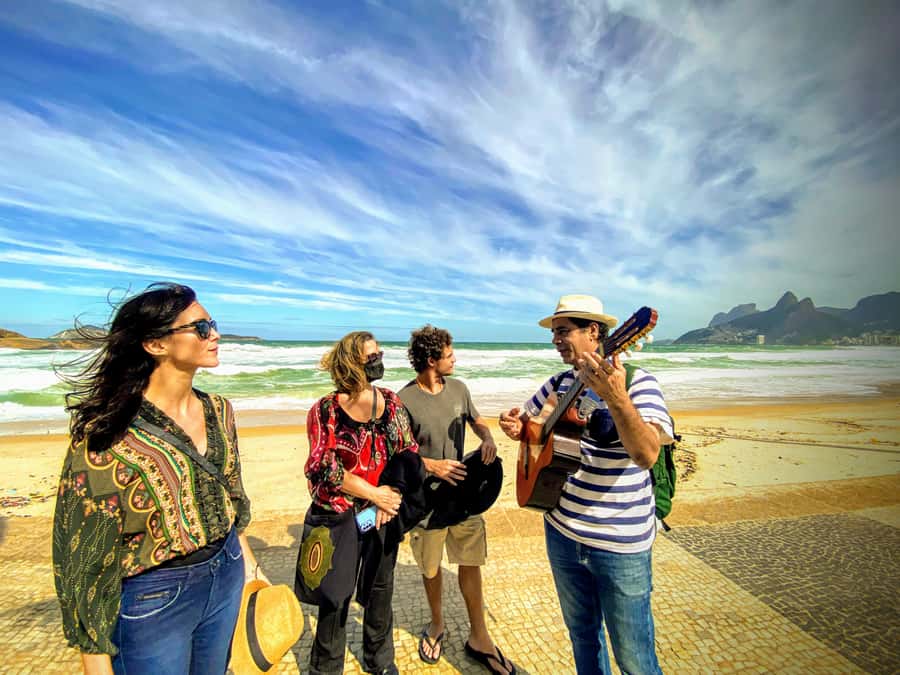
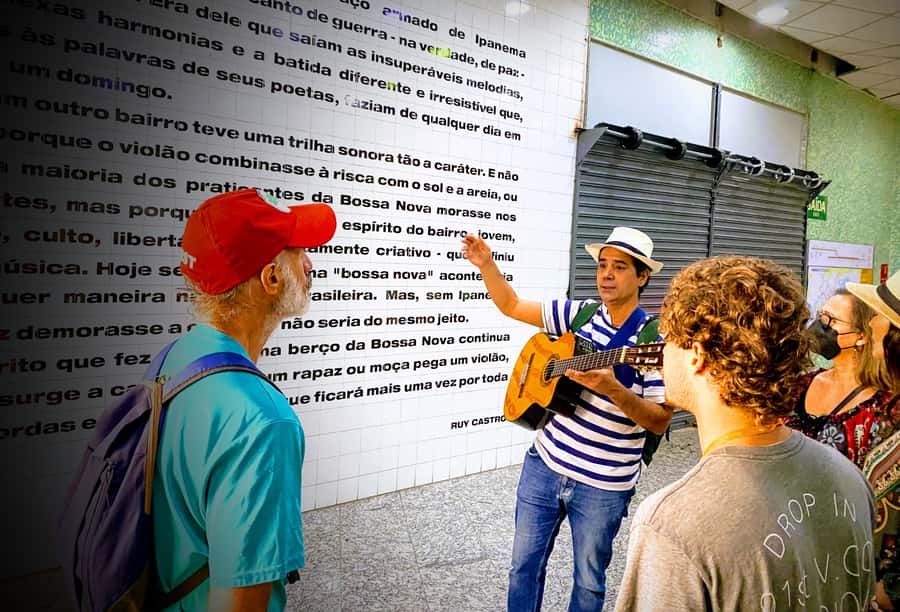
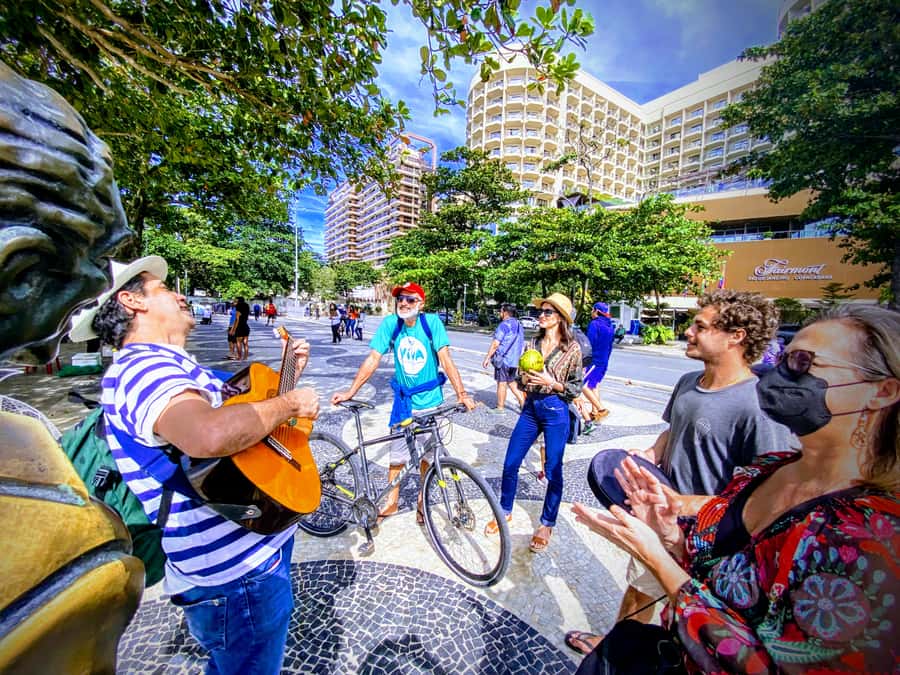
The heart of this tour is the guide-musician format. The experience description says the guide is an all-in-one professional—also a musician and singer—playing guitar and other instruments along the way, and presenting history and curiosities about Bossa Nova.
In the feedback, Guilherme stands out specifically for being both personable and full of knowledge. One review notes he did a great job explaining Bossa Nova history, and another credits Gui for being an amazing guide with a lot of depth. There’s also praise for how the guide and musician pairing helps you experience the story, not just hear it.
That connection is exactly why the walking format matters. When the guide can play while talking, you don’t have to picture the sound from memory—you can hear it right then, at the place being discussed.
One thing to watch for
There is one clear “want more” note: a review that liked the story and the fact that the musician played some songs, but wished there was more music. So if your top priority is volume—more songs, longer sets—consider that the tour spreads performances out to match the walking schedule.
Price and value: is $49 fair for what you get?
At $49 per person for about 3 hours, the value depends on what you’d otherwise spend. Here, your money is buying three things at once: a live guide, a walking route through major Ipanema/Copacabana sights, and live Bossa Nova performance during the tour.
If you’re the type who learns best when the guide can show and play, this price starts to make sense quickly. You’re not paying for a slideshow; you’re paying for storytelling paired with real sound in real places.
The walk also includes multiple artist reference points—statues of Dorival Caymmi and Tom Jobim, plus the Garota de Ipanema stop tied to the famous song. Those anchors are helpful for first-timers who want their Rio memories organized.
If you’re only interested in a few photos and don’t care about the music/history connection, then $49 might feel steep. But for music lovers, it’s hard to find better “all-in-one” time-to-value in the city.
Who should book this Bossa Nova walking tour
This is a great fit if you:
- Want a guided way to understand Bossa Nova’s origins and key players
- Like seeing the big names—Tom Jobim, Vinícius de Moraes, João Gilberto—tied to actual neighborhoods
- Prefer learning while walking rather than sitting through a standard talk
- Like getting live performances mixed into a sightseeing plan
It’s a tougher fit if you:
- Need a lot of live music time in one place (some performances are brief)
- Have mobility limitations, since it’s not suitable for wheelchair users or people with mobility impairments
- Are traveling with kids under 8, since it’s not designed for that age group
Also, wear and comfort matter. Bring comfortable shoes and comfortable clothes, because you’ll be walking as you hit the stops and viewpoints.
A practical plan for your day before and after
Because the tour ends at Restaurante e Bar Garota de Ipanema, it pairs well with an easy dinner nearby. Food and drinks are not included, so plan to treat the end as your handoff point for the rest of your evening.
For timing, you should plan to be present and ready at the square meeting point. You’ll get details the night before on exactly where to meet, so don’t show up ten minutes late and try to guess the guide’s face in a crowd.
Language-wise, it runs in Portuguese, Spanish, and English, which helps if your group isn’t all one language. In a small group, that flexibility usually makes everyone feel included.
Should you book Rio Bossa Experience?
Book this tour if you want a first-rate, Rio-specific way to experience Bossa Nova—walking + live music + the names and stories behind the sound. The strongest reason to choose it is the guide format: Guilherme and others bring the history with the guitar, so the style becomes easier to understand.
Skip it if your goal is a long, full concert with lots of songs. This is a guided circuit with musical moments, not a single long show. Also, if you have mobility constraints or you’re traveling with children under 8, you’ll want another plan.
If your idea of a great afternoon in Rio is moving through Ipanema and Copacabana with the story of the 50s–60s era in your ears, this is a very workable way to do it.
FAQ
How long is the Bossa Nova walking tour?
It lasts 3 hours.
Where does the tour meet?
The meeting point is Praça Nossa Senhora da Paz in Ipanema, near exit A of the nearby metro station.
How many places will we see during the tour?
The experience description says you’ll visit 10 different spots, and the route includes multiple photo stops along the way.
Is there live music during the tour?
Yes. The tour includes a live performance of the musician as part of the walking experience.
What languages are available?
The guide offers Portuguese, Spanish, and English.
What is included in the price?
Included are the guided walking tour and the live performance.
Is food or drinks included?
No. Food and drinks are not included.
What should I bring?
Bring comfortable shoes and comfortable clothes.
Is this tour suitable for everyone?
No. It’s not suitable for children under 8 and not suitable for people with mobility impairments or wheelchair users.