REVIEW · RIO DE JANEIRO
Samba Night in Pedra do Sal with 1 free caipirinha
Book on GetYourGuide →Operated by DiCria e-Bike Tour · Bookable on GetYourGuide
If you want Rio with both meaning and momentum, go.
This samba night is built around Pequena África, where Afro-Brazilian culture shaped the city long before the big tourist headlines. You’ll walk through key historic ground, then end where locals actually dance.
What I like most is the combo of Cais do Valongo history with the lived sound of street samba at Pedra do Sal. I also like that the guide keeps the evening human and practical, including making sure you feel comfortable joining in with the music. The only real drawback: it’s a walking night and not suitable for wheelchair users or people with mobility impairments.
In This Review
- Key highlights worth booking for
- A 7:30 PM samba walk through Rio’s Pequena África
- Largo de São Francisco da Prainha: where the evening gets grounded
- Saúde district footnotes and the power of a guide-led story
- Cais do Valongo: visiting a UNESCO slave port site with care
- Pedra do Sal: the birthplace-of-samba atmosphere you can join
- The included caipirinha: small cost, big mood
- Price and value: is $42 worth 4 hours of history plus samba?
- What to wear (and how to act) so the night feels easy
- Who should book this samba night (and who should skip it)
- Should you book Samba Night in Pedra do Sal with 1 free caipirinha?
- FAQ
- Where does the tour start?
- How long is the experience?
- What’s included in the price?
- Is there hotel pickup?
- What languages are available for the guide?
- Is this tour suitable for wheelchair users or mobility impairments?
Key highlights worth booking for
- Cais do Valongo: a UNESCO site tied to Rio’s slave port history
- Pedra do Sal, Monday nights: street samba with locals dancing
- 1 free welcome caipirinha to start the rhythm (and it’s included)
- A real guide-led story about Afro-Brazilian influence in music and religion
- A practical, join-in vibe designed for you to dance, not just watch
A 7:30 PM samba walk through Rio’s Pequena África
This starts at 7:30 PM in the port-side area at Largo de São Francisco da Prainha. The timing matters. You’re not doing this in daylight when the streets feel quiet and museum-like. You’re arriving when people begin to move, talk, and set the mood.
The whole point is to connect two things you might otherwise keep separate in your head: the past and the party. Your guide sets the tone early by placing you in Rio’s historic Little Africa area, where African culture helped form music, community life, and spiritual practices over generations. You’re not just hearing facts; you’re being shown why the culture matters right where it still lives in the neighborhood.
One more smart touch: you’re given a welcome caipirinha at the start. It’s included, it’s simple, and it works like a social lubricant so the night feels friendly instead of stiff.
You can also read our reviews of more evening experiences in Rio De Janeiro



Largo de São Francisco da Prainha: where the evening gets grounded
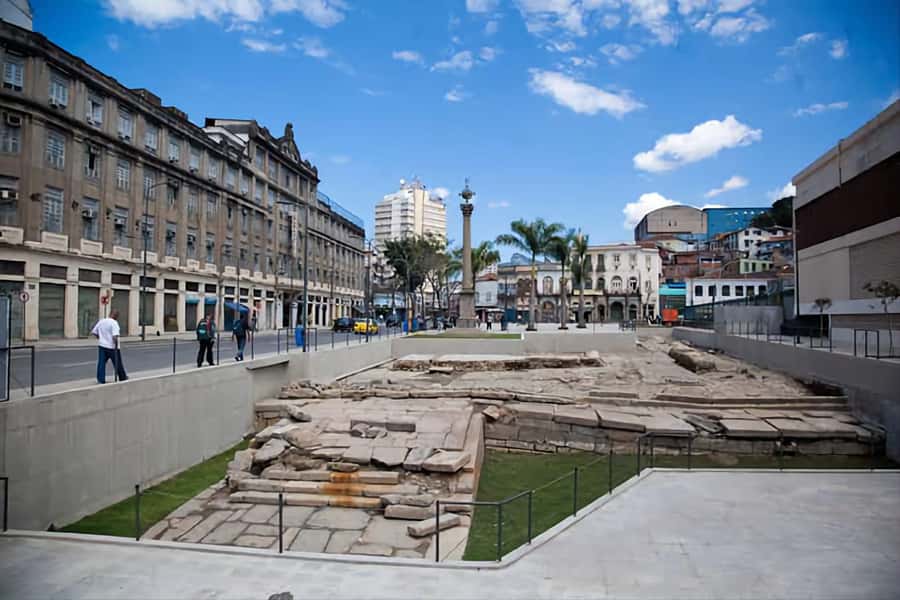
You begin in Largo de São Francisco da Prainha, a main gathering area close to Pedra do Sal. This location is useful because it keeps you from wasting time commuting across Rio. You’re already in the historic zone, and the evening feels like one continuous story.
From here, the walk is guided and intentional. You’ll get oriented to the neighborhood’s identity as “Little Africa,” and you’ll hear about why this port region mattered. That context keeps the later samba from feeling random. When you reach Pedra do Sal, it won’t just be a dance stop—it’ll feel like the destination your walking explanations were pointing toward.
Also, bring shoes you can rely on. This is not a sit-and-smile tour. Comfortable walking shoes help you focus on the story and the street life, not your feet.
Saúde district footnotes and the power of a guide-led story
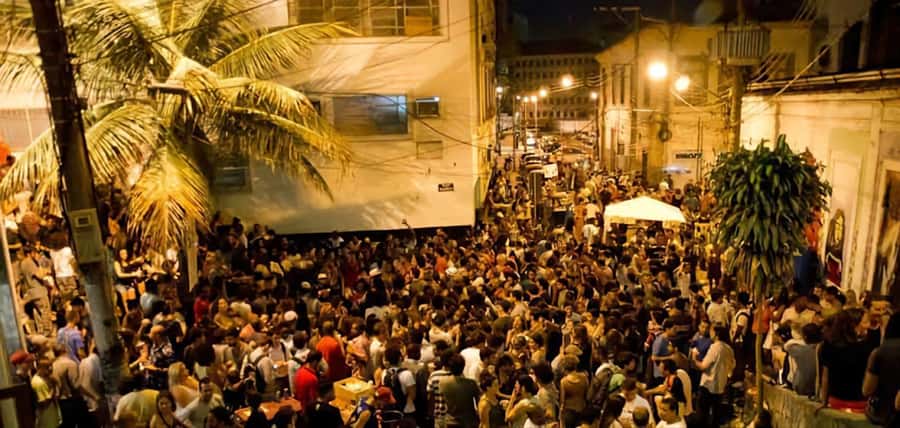
As you move through the Saúde area, you’ll learn how African culture influenced Rio’s music and religion. That’s a key promise of the experience, and it shows up in the way the guide frames what you’re seeing and hearing later.
This kind of guided storytelling is more valuable than it sounds. Without it, Pedra do Sal can feel like a cool night out—good samba, good energy, maybe a few facts you forget right after. With the narrative, you start noticing the cultural patterns the guide points to: the way music connects to community resilience, and the way traditions survive by adapting.
If you get the guide named Bruno (multiple verified bookings praised him), you’ll likely experience an upbeat, attentive style. One booking highlighted that he spoke Spanish well and coordinated smoothly even with short-notice timing. Another emphasized how he kept people comfortable while still letting the night feel relaxed and celebratory. That mix—history with warmth—makes a difference.
Cais do Valongo: visiting a UNESCO slave port site with care
A major reason this tour is worth the money is the inclusion of Cais do Valongo, a UNESCO World Heritage site. This wasn’t a random stop. It’s tied to Rio’s former slave port, and the guide explains the influence of African culture that followed.
How you experience this stop matters. You’re not just looking at a marker and moving on. You’re learning about the port’s role in the forced movement of people, and the guide connects that to what survived: community strength, cultural practices, and the rhythms that became part of Rio’s identity.
That balance is important. It prevents the evening from turning into history-as-a-photo-op. You’re walking into a place that carries real weight, and you’re given context so you know why the samba later is more than entertainment.
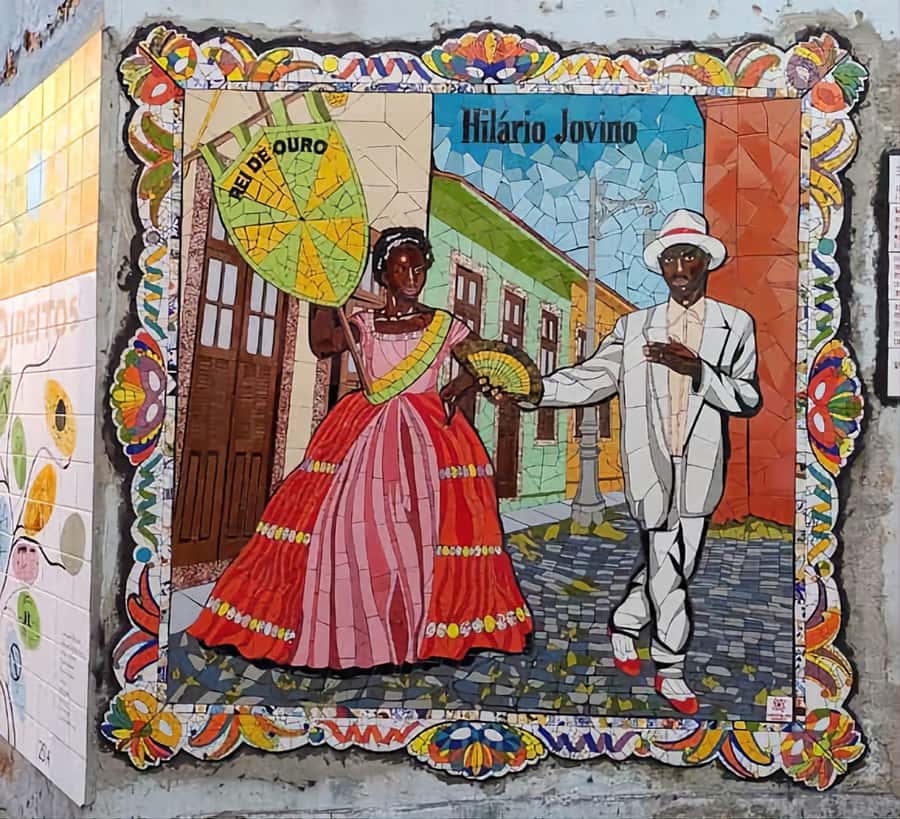
Practical tip: bring your camera, but also pause long enough to actually listen. Street art and neighborhood details are there for photos, yet the emotional “why” behind Cais do Valongo is the real souvenir.
Pedra do Sal: the birthplace-of-samba atmosphere you can join
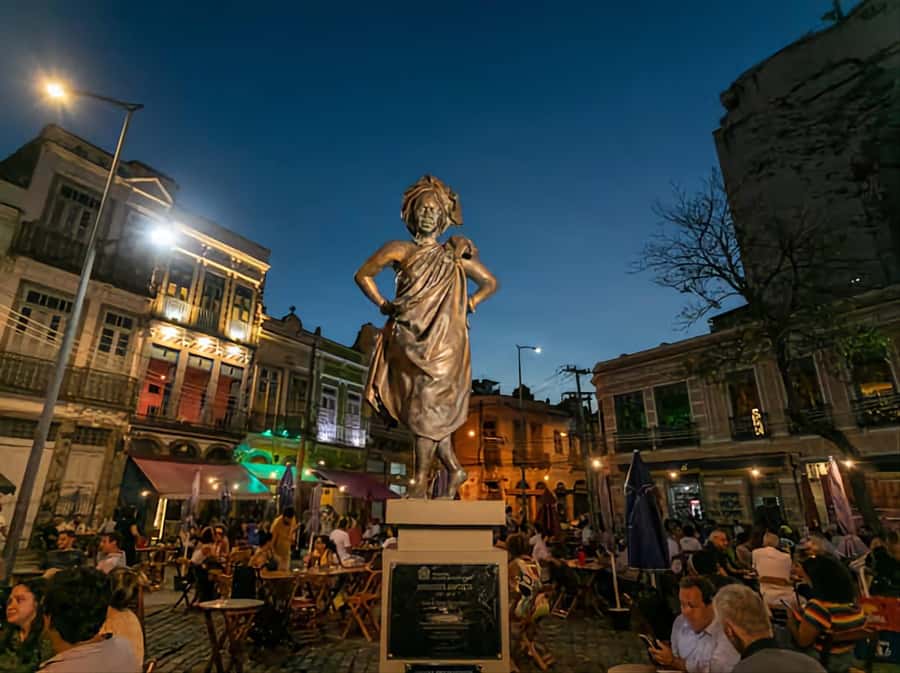
After the historic grounding, you arrive at Pedra do Sal, often described as the birthplace of samba. The most important detail is the day-of-week feel. On Monday nights, the square comes alive with street samba.
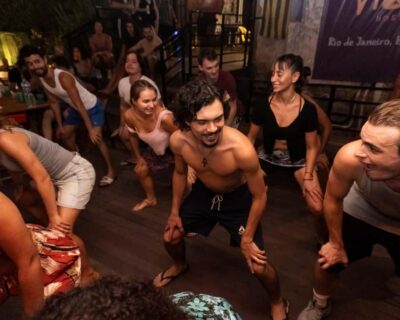
This is where the tour stops being purely educational and becomes social. You’ll hear live street drums, and you’ll see locals dancing. That’s the difference between watching samba and participating in samba-adjacent life. Your guide encourages you to join in, and the vibe is meant to feel authentic and easy.
And yes, you’ll feel the rhythm in your body. You’re prepared for dancing, and that’s part of the expectation for the night. If you came to Rio for a real connection to local culture, this is the kind of place that helps you do more than collect stories—you get a memory made by movement.
One more plus: the tour is designed to keep the pace manageable while still delivering the atmosphere. It’s around 4 hours total, so you get enough time to absorb the context and then fully enjoy the party without feeling like your night is swallowed whole.





The included caipirinha: small cost, big mood
You get 1 welcome caipirinha included, and it’s not treated like an afterthought. Starting the evening with a drink helps you transition from walking-and-listening to dancing-and-mixing. It also gives you a simple way to connect with other people in your group without needing perfect Portuguese or a big conversation plan.
If you’re curious about flavors, one booking specifically mentioned caipirinhas with options like kiwi and maracuyá (plus others such as lima). Even if the exact flavors vary by evening, the included fact stays the same: you’re not paying extra just to start the fun.
There’s also an optional add-on souvenir: a Polaroid photo for $20. If you like physical keepsakes over more phone-storage, this is a neat way to capture the night’s energy.
Price and value: is $42 worth 4 hours of history plus samba?
At $42 per person for about 4 hours, the math works because you’re not paying for just one thing.
You’re paying for:
- guided walking time in Little Africa / Pequena África
- a visit to Cais do Valongo (a UNESCO site)
- a real live samba night at Pedra do Sal
- the included welcome caipirinha
- a live guide in English, Spanish, or Portuguese (depending on the group)
What that means for you: this isn’t a low-cost “meet the guide and walk around” deal. It’s also not an expensive dinner show where you mostly watch from seats. The value sits in the blend—meaningful context plus a genuine street-music setting you can actually take part in.
The main trade-off is that hotel pickup isn’t included. You’ll need to get yourself to the meeting area near Pedra do Sal. If you’re already planning to be in that part of Rio or you don’t mind short local transport, it’s a fair arrangement. If your plan relies heavily on door-to-door convenience, you’ll want to factor that in.
Meals also aren’t included. That’s normal for a walking night, but plan to eat before you go (or after, depending on your schedule).
What to wear (and how to act) so the night feels easy
This tour is built for walking and dancing, so dress and behave accordingly.
Bring:
- comfortable shoes
- comfortable clothes
- a camera for street art and the energy in the square
- sun protection (evenings can start warm, and you might still catch lingering daylight before full night sets in)
You’ll likely end up dancing at Pedra do Sal. The tour explicitly expects that. So don’t plan on hovering on the edges with a tight outfit you’re afraid to ruin. Loose, comfortable clothing helps you focus on the music instead of adjusting your gear every five minutes.
One more practical mindset: this is a place with real community spirit. Your best move is to stay open, follow your guide’s cues, and treat the experience as participation, not performance.
Who should book this samba night (and who should skip it)
This tour makes the most sense if you want your Rio night to include both:
- place-based history (UNESCO site + port story)
- live culture you can join (Monday street samba at Pedra do Sal)
It’s a strong fit for people who learn best by doing—walking through neighborhoods while hearing the why behind what you’re seeing.
Skip or rethink if:
- you have mobility impairments or need wheelchair-friendly routes (it’s not suitable for wheelchair users)
- you’re looking for a quiet, seated, low-energy experience
- you want meals included (this is mainly walking + samba + a welcome drink)
Should you book Samba Night in Pedra do Sal with 1 free caipirinha?
If you’re choosing between a generic samba show and a night tied to Pequena África, I’d book this. The reason is simple: you get the context first—especially at Cais do Valongo—and then you experience samba where locals create the atmosphere on Monday nights at Pedra do Sal.
It’s also a smart deal for $42, because the included caipirinha and live music aren’t extras you have to hunt down. And if you end up with a guide like Bruno, based on multiple strong bookings, you’ll likely appreciate the friendly coordination and the way the story stays clear and fun.
Book it if you want a real neighborhood night. Pass if you need minimal walking or meal-included convenience. Otherwise, it’s exactly the kind of Rio evening that gives you a memory with both rhythm and meaning.
FAQ
Where does the tour start?
The meeting point is Largo de São Francisco da Prainha, in the main square close from Pedra do Sal.
How long is the experience?
The tour lasts about 4 hours.
What’s included in the price?
It includes a walking tour of Rio de Janeiro’s Little Africa, a visit to Cais do Valongo and Pedra do Sal, a live samba music experience, and 1 complimentary caipirinha.
Is there hotel pickup?
No, hotel pickup and drop-off are not included.
What languages are available for the guide?
The guide is available in English, Spanish, and Portuguese.
Is this tour suitable for wheelchair users or mobility impairments?
No. It is not suitable for people with mobility impairments or wheelchair users.