
REVIEW · RIO DE JANEIRO
Learn the History of Rio with an Unforgettable City Center Walking Tour
Book on Viator →Operated by RFWTour · Bookable on Viator
Rio’s Centro moves fast, in a good way. This private walk strings together major landmarks that explain how the city grew, from Theatro Municipal to Paço Imperial. It is a practical intro to Rio de Janeiro and Brazil—walk a little, learn a lot, and still keep it manageable.
I especially like two things. First, you get a tight set of stops with no admission fees, so your money goes to the guide and not tickets. Second, it’s private for your party, with flexibility to adjust based on what you care about—architecture, streets, or the look-and-feel of old Rio.
One drawback to plan around: the tour runs during a limited daily window (listed Monday–Saturday 9:30 AM to 2:00 PM), and Rio heat can hit hard. If you want to linger, you’ll need to manage time and bring water.
In This Review
- Key highlights you will feel on the street
- Entering Rio’s Story at the Theatro Municipal
- Cinelandia: Movie-Era Buildings and Big City Ambitions
- Escadaria Selarón Tiles: When Art Becomes a Meeting Place
- Arcos da Lapa: Bohemian Energy Under Aqueduct Arches
- Metropolitan Cathedral of Saint Sebastian: Unique Architecture, Easy to Appreciate
- Largo da Carioca: Oldest Buildings and the Power of Squares
- Confeitaria Colombo: The Traditional Coffee-and-Bakery Break
- Paço Imperial: A Historic Square That Ends the Walk Strong
- Private and flexible: why that matters in Centro
- Price and value for $49.05 in 3 hours
- Before you go: meeting point, timing, heat, and comfort
- Should you book this Centro history walking tour?
- FAQ
- Where does the tour start?
- Where does the tour end?
- How long is the walking tour?
- Is this tour private?
- Are the attractions included with admission tickets?
- What is included in the price?
- What is not included?
- When does the tour run?
- Should I bring water?
- Do I need anything related to covid-19 documents?
- Is there free cancellation?
Key highlights you will feel on the street
- Private and customizable: it is just your group, and you can steer the walk a bit
- Free-entry landmarks: every listed stop has admission ticket free
- A smart Centro route: it links iconic sights without wasting time on long detours
- Real texture in the details: opera, movie-era buildings, tile art, aqueduct arches, and cathedral design
- A classic coffee-and-sweets finish: a traditional bakery stop is part of the flow
- Stops are walkable near transit: you are close to public transportation throughout
Entering Rio’s Story at the Theatro Municipal
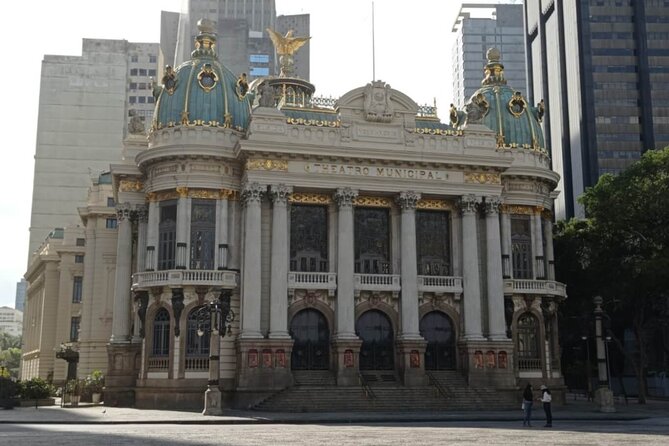
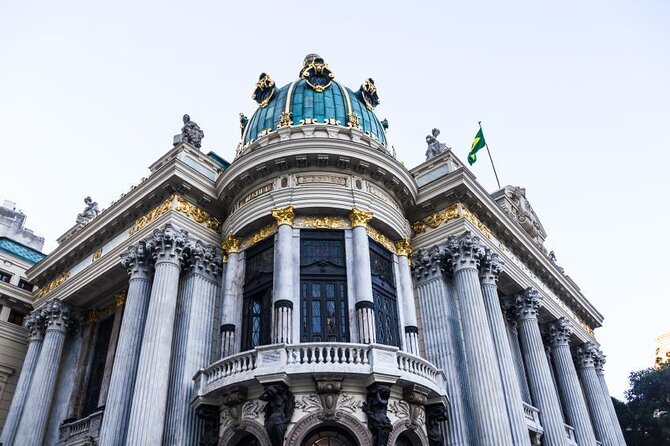
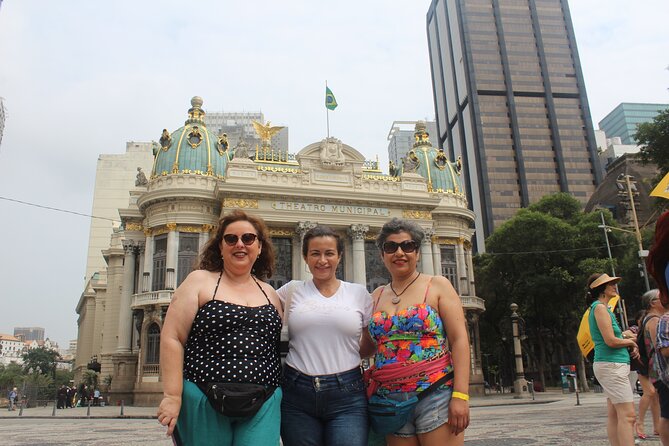
The tour starts at Theatro Municipal do Rio de Janeiro, a fitting opener for a city where arts and public buildings helped shape identity. Even if you are not a theater person, you can’t miss the way this landmark signals formality and status—like Rio wanted the world to pay attention.
This is the kind of first stop that gets you oriented fast. Your guide usually sets the tone right away: what this area was doing in the city’s development, and how the next blocks connect visually and historically. You also get a clear checkpoint for the day, so you know you’re on the right track before the streets get more interesting.
A practical tip: arrive with comfortable shoes and a water plan. The tour is about 3 hours on foot, so you’ll walk more than you might expect just from the number of stops. And because the operation window is listed only until early afternoon, you’ll feel the sun more if you start later in the day.
You can also read our reviews of more walking tours in Rio de Janeiro



Cinelandia: Movie-Era Buildings and Big City Ambitions
From there, you move into Cinelandia, a square tied to the first movie theaters in Rio and surrounded by important historical buildings. This stop is about contrast. One moment you’re grounded in opera and grand architecture, and the next you’re looking at how Rio turned new entertainment technology into culture.
What I like here is how your guide can connect form to function. Movie theaters are not just venues—they change crowds, street life, and what the city builds around people gathering for spectacle. You’ll see the square as a stage, not just a place to stand and take photos.
A quick reality check: because this is a public square area, you’ll want to keep a little awareness of your surroundings while stopping for pictures. Nothing complicated—just the same common-sense you use anywhere busy near major landmarks.
Escadaria Selarón Tiles: When Art Becomes a Meeting Place
Next comes Escadaria Selarón, the staircase covered in colored tiles from all over the world. This stop is pure visual energy. It’s also easy to understand why people call it a must-see: the staircase does not quietly sit in the background. It pulls you into it.
This is where the tour turns from “seeing buildings” to “feeling a place.” You can look at the surface like art, but you can also read it like a city message—how public spaces can become landmarks even when they are not official museums. If you like street-level creativity, this will be your favorite stop.
The time you get here is about 20 minutes, which is enough to enjoy the details without feeling rushed. Still, if you’re traveling in heat, do yourself a favor: plan for a slow pace up and down, not a sprint for the next photo. Tile stairs are fun, but they can be slick or tiring in summer.
Arcos da Lapa: Bohemian Energy Under Aqueduct Arches
Then you reach Arcos da Lapa, in Lapa, the bohemian neighborhood known for the famous arches. The arches are former aqueduct structures, which adds a neat layer: infrastructure that once served a practical purpose now frames nightlife and neighborhood character.
I like this stop because it changes your mental map of the city. You start seeing Rio as layers—old engineering repurposed into a visual icon. Your guide’s explanations matter here because the arches look iconic even before you know what they were for.
This stop is short—about 10 minutes—so be strategic. Take a few photos, glance up and along the arches, then listen. If you try to do everything at once, you’ll miss the story that ties the arches to how Lapa developed.
Metropolitan Cathedral of Saint Sebastian: Unique Architecture, Easy to Appreciate
At The Metropolitan Cathedral of Saint Sebastian, you’ll see unique architecture and a very different vibe than the tile stairs or the aqueduct arches. The cathedral is one of those stops where your guide can help you understand why the design feels unusual—without turning it into a lecture.
This is your 20-minute breathing-and-looking stop. It’s a good time to slow down and really observe how structure and space shape mood. If you like architecture, this will reward you. If you don’t, it still works because the building is visually distinctive.
One caution: cathedrals can have rules about where you can stand or how you move. The tour data confirms listed admissions are free, but it does not list any extra entry requirements, so just follow posted signs on the day.
You can also read our reviews of more city tours in Rio de Janeiro






Largo da Carioca: Oldest Buildings and the Power of Squares
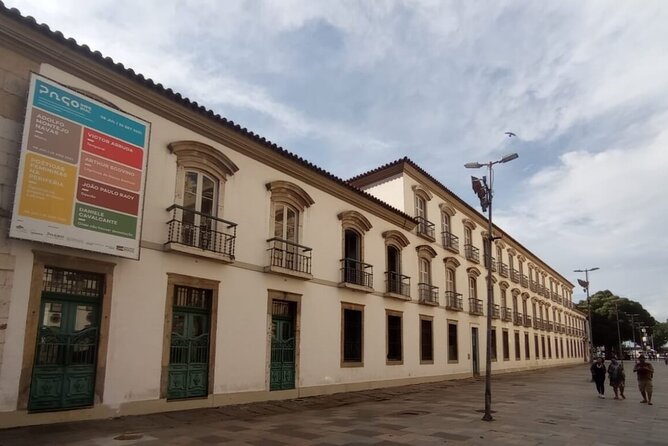
Next up is Largo da Carioca, the square with the oldest buildings in the city. Squares like this matter because they are time machines you can walk into. Even without specific dates laid out, you can feel the role of the space: a place people have met, moved through, and used for daily life.
This stop lasts about 15 minutes. That’s enough to capture the atmosphere and understand why squares become anchors. Streets shift, buildings change, but the square keeps pulling you back like a magnet.
If you like photography, this is a smart stop to pause and frame wide shots. Concentrate on the relationship between buildings and open space rather than just snapping close-ups. It will help your brain read the city’s layout.
Confeitaria Colombo: The Traditional Coffee-and-Bakery Break
After all the architecture and streets, the tour includes Confeitaria Colombo, described as the most traditional coffee shop and bakery in Rio. This is not just a snack stop—it’s part of how you experience the city’s everyday culture.
The tour does not include food and drinks, so you’ll pay for what you order. Still, the value here is that you’re guided to a classic spot with history in its role as a social place. Even if you only grab something small, it ties the walking theme to real life: people gather, talk, and reset during the day.
Timing tip: bring water first, then consider your coffee or pastry. Rio can get hot, and a sugary break can feel extra good—but dehydration still ruins the day faster than you think.
Paço Imperial: A Historic Square That Ends the Walk Strong
The tour finishes at Paço Imperial, starting from Praça Quinze de Novembro. This is listed as one of the most important historic squares in Brazil, and it’s a fitting ending: you end in a space designed for major public presence.
Stopping at the end matters because your route is not just a random stack of sights. It’s a sequence that keeps moving through different styles of “importance”—arts, entertainment, art-as-public-space, infrastructure-as-icon, religious architecture, and civic squares.
There’s also a practical note: the paço is not too far from the Cinelandia Station, and guides can lead you back there if you wish. That’s a handy extra if you’d rather hop on transit than walk back.
Private and flexible: why that matters in Centro
A private tour is not just a comfort perk—it changes how useful the experience becomes. On a group tour, you often get swept along. On this one, your guide can slow down when you care about something. Or skip lightly over what you don’t.
The flexibility is built in: your guide can customize based on your interests. If you love architecture, you can linger more at the cathedral or opera house. If you’re into public art, you can spend more time on the Selarón steps. If you just want a clean history orientation, you can keep it moving without overthinking it.
Names that came up in strong feedback include Danielle and Rafael—and the common thread is a friendly, informative walk where you feel like you’re getting real context, not just a photo route.
One consideration: if your priority is finishing the full flow comfortably, make sure your expectations are clear at the start. There’s a case where a shorter-than-expected experience left someone feeling taken advantage of. So if you booked for the full walk, it’s totally reasonable to ask your guide to cover the planned stops within the tour time.
Price and value for $49.05 in 3 hours
At $49.05 per person for about 3 hours, this is priced like a guided experience, not a discount sightseeing bus. The reason it can feel fair is that the listed admissions are free for every stop, so you are paying mostly for expertise and guiding you between sights at a human pace.
Still, factor in what’s not included. Transportation and food/drinks are not included, so you’ll likely cover transit to get to the meeting point, plus any coffee or snacks you choose. If you were planning to grab something anyway, the Confeitaria Colombo stop can offset that cost by putting you at a classic place at the right moment.
The rating is strong—4.9 with 82 reviews, and 98% recommended. When a tour is both private and high-rated, you generally get better timing and fewer “where are we going” moments.
One more value point: this is booked on average about 30 days in advance. That usually signals demand, and it’s a hint to reserve early if you want a specific day or time window.
Before you go: meeting point, timing, heat, and comfort
You’ll meet at Praça Floriano, S/N (Centro) at the Municipal Theater. The tour ends at Praça Quinze de Novembro, 48 (Centro) at Paço Imperial. If you like having your route mapped in advance, this start-to-finish pairing is easy to plan around in Centro.
Timing matters because the listed operating window is Monday–Saturday, 9:30 AM–2:00 PM (for the period shown). That means late starts can squeeze you, and summer heat can turn walking into a suffering contest. Bring bottled water—seriously. Rio can feel relentless, especially during warmer months.
Other practical notes from the tour info:
- Confirmation is received at booking.
- Service animals are allowed.
- It is near public transportation, which helps you get there and move on after.
- The tour data states that, as per city law, showing a covid-19 vaccination document is mandatory to visit the tourist attractions in the city. Bring it with you to avoid a scramble.
Also: come with a smile. It sounds silly, but a friendly group vibe makes a walking tour better for everyone.
Should you book this Centro history walking tour?
I think you should book it if you want a guided, structured way to understand Rio’s Centro without burning a whole day on logistics. The route hits major landmarks that represent different threads of the city—arts, entertainment history, public art, infrastructure, architecture, and civic space. And because it is private with a guide who can adjust to your interests, it’s a good match for couples, small groups, and anyone who hates being rushed.
Skip it or go in with eyes open if you are extremely time-sensitive and you need everything to be exactly on the clock. Like any walking tour, pace matters. Set your expectations up front, ask for the full set of stops, and plan to start within the stated daytime window.
If you want a calm way to get your bearings in Rio’s center, this is one of the more straightforward choices: free-entry sights, a real guide, and a finish at Paço Imperial with transit close by.
FAQ
Where does the tour start?
It starts at the Municipal Theater of Rio de Janeiro, Praça Floriano, S/N – Centro, Rio de Janeiro – RJ, 20031-050.
Where does the tour end?
It ends at Paço Imperial, Praça Quinze de Novembro, 48 – Centro, Rio de Janeiro – RJ, 20010-010.
How long is the walking tour?
The duration is about 3 hours.
Is this tour private?
Yes. It is a private tour/activity, and only your group participates.
Are the attractions included with admission tickets?
The listed stops have admission ticket free.
What is included in the price?
A tour guide is included.
What is not included?
Transportation and food and drinks are not included.
When does the tour run?
The listed opening hours are Monday through Saturday, 9:30 AM to 2:00 PM, for the period shown.
Should I bring water?
Yes. The tour info specifically suggests bringing bottled water because Rio can be hot.
Do I need anything related to covid-19 documents?
As per city law, showing a covid-19 vaccination document is mandatory to visit the tourist attractions in the city.
Is there free cancellation?
Yes. You can cancel up to 24 hours in advance for a full refund.