REVIEW · RIO DE JANEIRO
Rio’s city walking tour: a glimpse of history and olympic legacy
Book on Viator →Operated by Gray Line Brazil · Bookable on Viator
Old Rio feels different when you walk it. This 4-hour tour knits together historic churches, the Portuguese royal-era Paço Imperial, and the Olympic-era feel of downtown Rio into one easy route.
I love how the São Bento Monastery stop goes past the postcard view and into the Benedictine art and the Portuguese-style old-book library you won’t stumble on by accident. I also like the Mauá Square + Museum of Tomorrow stretch, with Olympic legacy murals like the Cobra designs and modern architecture that ties today’s Rio to older power centers.
One consideration: while it’s a walking tour, traffic and transfers can reduce pure walking time on some days. Bring comfortable shoes and expect an afternoon that’s more downtown-and-cathedral than beach-and-sun.
In This Review
- Key things that make this tour worth your afternoon
- From hotel pickup to Old Rio streets: how the timing really works
- Church of Our Lady of the Candelária: where neoclassical Rio starts
- São Bento Monastery: Benedictine art, gilt carvings, and the old-book library
- Mauá Square and the Olympic legacy: Rio’s new cultural pole
- Quinze de Novembro Square and the Paço Imperial: when emperors crowned Brazil
- Tiradentes Palace and downtown streets: history you can spot from the curb
- Confeitaria Colombo: a classic downtown stop that breaks the day up
- Metropolitan Cathedral of Saint Sebastian: a conical giant at the end
- Who this walking tour fits best (and who should skip it)
- Price and value: what $60.77 buys you in real terms
- Pace, group size, and what to watch for
- Should you book this Rio city walking tour?
- FAQ
- What time does the tour start?
- How long is the Rio city walking tour?
- How much does it cost?
- Where do hotel pickups happen?
- What are the main stops on the route?
- Are any of the entrances paid?
- Is food included in the tour price?
- How much walking should I expect?
- How big is the group?
- What if the weather is bad or the minimum number of travelers isn’t met?
Key things that make this tour worth your afternoon
- Hotel pickup/drop-off in key neighborhoods like Copacabana, Ipanema, and Leblon (so you can focus on the sights)
- São Bento’s Benedictine chapel + Portuguese library (great for architecture and art lovers)
- Mauá Square Olympic legacy with the Museum of Tomorrow area and Cobra murals
- Paço Imperial and Quinze de Novembro Square for the real “where Brazil was ruled” feeling
- Confeitaria Colombo as a classic downtown break, not just a photo stop
- The Metropolitan Cathedral of Saint Sebastian with its giant conical form and big interior space
From hotel pickup to Old Rio streets: how the timing really works
This is built as a guided downtown stroll with roundtrip transfers from Most Hotels in São Conrado, Leblon, Ipanema, and Copacabana. The tour starts at 1:00 pm, and it runs about 4 hours, with short-but-meaningful stops so you can actually absorb each place.
Even though the label says walking tour, the route includes a mix of walking plus short rides between downtown clusters. That matters because Rio’s traffic can change your pace. If you prefer long, uninterrupted walking stretches, plan to stay flexible. If you’re okay with a guided rhythm—stop, listen, look, move on—this format works well.
Group size is capped at 35, which usually keeps the vibe friendly and lets your guide answer questions without shouting. And if you get a guide like André, JB, or Melanie, the tour style tends to be energetic and adaptive to your interests—one reason people come away feeling like they got more than a checklist.
You can also read our reviews of more walking tours in Rio de Janeiro



Church of Our Lady of the Candelária: where neoclassical Rio starts
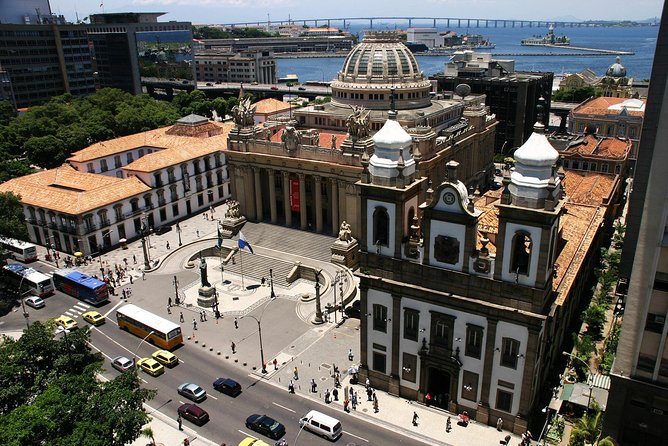
You begin at the Church of Our Lady of the Candelária, a neoclassical landmark that started construction in 1630 and finished in 1775. Even if you’re not chasing architectural details, this stop gives you a quick sense of how older Rio looked when European styles and religious institutions dominated the skyline.
What I like about this opening is the clarity. After this, the rest of the tour reads like a map: you’re moving from the deep past of church building into the civic and imperial story you’ll see at later squares and palaces.
You’ll have a short visit here (about 10 minutes), and the good news is admission is free for the stop. So you’re not spending your afternoon on ticket lines—just on looking.
São Bento Monastery: Benedictine art, gilt carvings, and the old-book library
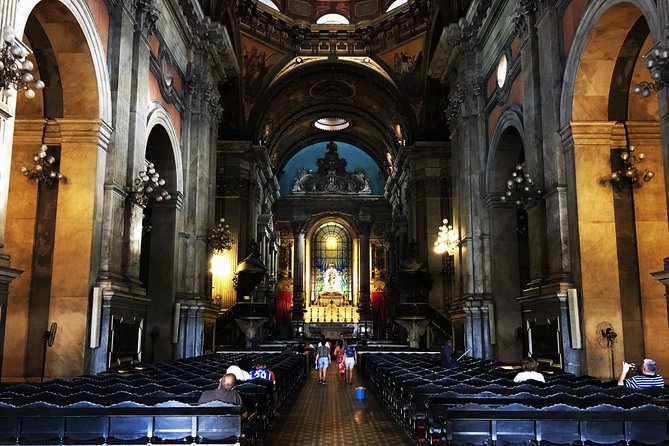
São Bento is the standout for many people, and it’s easy to see why. The monastery was founded in 1590 by two monks from Bahia and is widely treated as one of Brazil’s most important architectural heritage sites. The feeling you get here is part monastery stillness, part museum detail—thick history you can actually see.
This isn’t only about a building exterior. The tour is set up so you can view the monastery’s paintings and gilt carvings. The added draw is the Portuguese-style library. If you love old objects and quiet rooms, this is the moment when the tour stops feeling like sightseeing and starts feeling like Rio’s cultural memory.
On top of that, guides have been known to point out photo angles that connect São Bento’s world to modern Rio—so you might come away with a view of the Museum of Tomorrow area from a perspective you wouldn’t find on your own.
Time at São Bento is brief (about 10 minutes), but the density of what you’re seeing is high. If you’re the type who wants to linger over artwork, ask your guide a question early and use that as permission to slow down just a bit.
Mauá Square and the Olympic legacy: Rio’s new cultural pole
After church-and-monastery history, the tour shifts toward modern Rio with Mauá Square. This area is framed as a gift from the Olympic legacy—something that changed the daily life of Cariocas and created a new hub for entertainment and culture.
This is where you connect past power structures to present-day public life. Instead of only looking at old rulers’ buildings, you see how Rio now reuses waterfront energy for museums, street art, and people walking for fun.
Expect stops around:
- Mauá Square, with the Cobra mural work that’s become part of the area’s identity
- The Museum of Tomorrow, which you’ll view during the walk (timing is short, but it’s a real “modern counterpart” to the older religious stops)
- A nearby cultural center area, which helps you understand how the district is designed for ongoing public use
This section is also a nice pacing break. You’ve been inside churches and architectural spaces; now you’re out in the open, looking at contemporary structure and public art. If you’re traveling with someone who doesn’t always love history, this is often where their eyes light up.
Quinze de Novembro Square and the Paço Imperial: when emperors crowned Brazil
The tour then heads to a core downtown civic zone: Quinze de Novembro Square. This is the place where Brazil’s emperors were crowned in the 1800s, and it hosted many important historical events. Standing in this area makes the names feel real. Instead of reading about coronations, you see the physical geography of where power was performed.
Right after that, you pass by the Paço Imperial (Imperial Palace). This Portuguese-style building was constructed for Brazil’s rulers as both a home and a workplace in the 1700s, and it also ties to the arrival of the Portuguese Royal Family in Brazil. That royal connection matters because it explains why this isn’t just a random old palace—it’s linked to political relocation and the machinery of governance.
One practical note: your visit here is typically “see it as you go,” not a long inside tour. Still, the guided commentary is the difference. Without that context, you might not realize why this building matters so much.
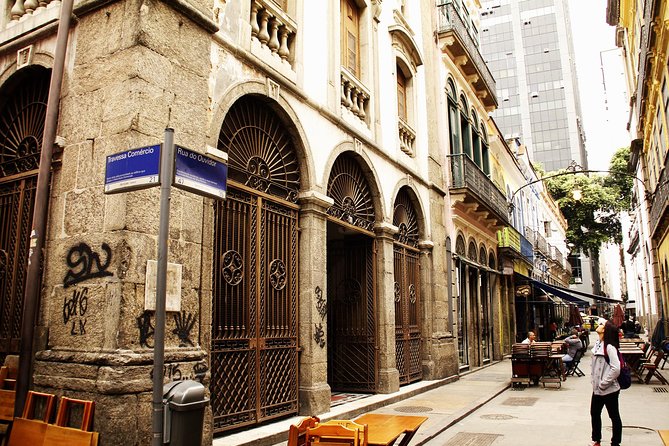
As you walk, you’ll also be moving through downtown market streets. That gives the day a grounded feel: it’s not only architectural monuments; it’s the working city in between.
You can also read our reviews of more city tours in Rio de Janeiro






Tiradentes Palace and downtown streets: history you can spot from the curb
At some point you’ll see Tiradentes Palace from outside. The tour format keeps it efficient: short exterior viewing, guided explanation, then back into the walking flow.
This “from outside” approach isn’t a downside if you like city orientation. It teaches you where the major historic civic buildings sit relative to one another. That helps later when you want to do a self-guided afternoon and don’t need to keep checking your map every two blocks.
Downtown Rio also has a rhythm. You’ll pass streets that feel like markets, with the city’s daily motion. Even though food and drinks aren’t included, the tour’s structure nudges you to notice where you could grab something after the formal walking ends.
Confeitaria Colombo: a classic downtown stop that breaks the day up
Halfway through your afternoon, you’ll stop at Confeitaria Colombo. This is one of Rio’s famous bakeries, and it works as a very human break in an otherwise architecture-heavy itinerary.
You’ll have about 20 minutes here, with admission listed as free. That timing is long enough to step inside, look around, and decide whether you want snacks or just a drink. Since food and drinks aren’t included, you control your budget. If you want a sweet treat, this is the moment.
This stop is also a useful reset for your feet and attention. Churches and palaces demand focus. Confeitaria Colombo gives you a chance to slow down, wander a bit, and let your guide’s talk settle into your head.
Metropolitan Cathedral of Saint Sebastian: a conical giant at the end
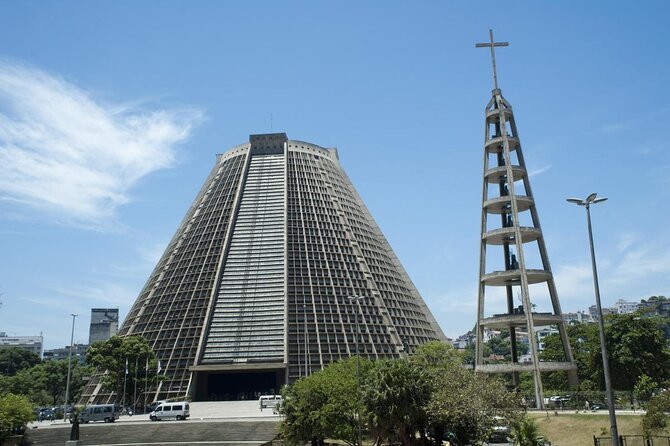
Your tour wraps up at the Metropolitan Cathedral of Saint Sebastian area, which you’ll visit during the final stop. The cathedral is famous for its conical form and enormous scale.
Here are the size markers the tour provides:
- 96 meters internal diameter
- 106 meters external diameter
- 75 meters overall height
Admission is free for the stop. Time here is about 10 minutes, so think of it as your “big finish” rather than a long sit-down. Even in a short visit, the interior volume and shape do something to your sense of space. It’s the kind of structure that makes you stand back, then look up, then realize you’re inside something designed to last.
The tour concludes here, and you’ll be free to explore the area on your own or take a ride back to your hotel. If you like finishing with an easy plan, this is a good place to do it—you’re in a central zone with onward options.
Who this walking tour fits best (and who should skip it)
This works best if you want a guided overview of Old Rio’s landmark architecture and don’t mind moving briskly between sites. The physical fitness requirement is listed as moderate, and the walking portion plus transfers means you’ll want to be comfortable on your feet.
It’s also a good first-day activity if you want a real layout of downtown. After this, you’ll understand where major zones sit relative to each other: monasteries, imperial-era buildings, and modern Olympic legacy culture all become points on the same mental map.
Skip it if:
- you hate guided pacing and want long, independent wandering
- your trip is mainly beach time and you’re not interested in downtown cathedrals and squares
- you expect a slow “coffee and stroll” style; this is more structured
If you’re unsure, think about how you handle cities with lots of churches. If you like architectural variety, you’ll probably have a strong afternoon.
Price and value: what $60.77 buys you in real terms
At $60.77 per person for about 4 hours, this isn’t a bargain snack. It’s priced like a real guided city service, and the value comes from two things you can feel during the tour:
1) Your guide handles the story. The stops are meaningful, but history in Rio lands better when someone explains it while you’re standing in the place.
2) Transfers are included for hotels in São Conrado, Leblon, Ipanema, and Copacabana. That saves you energy and reduces the chaos factor of getting downtown.
Add in the free admission stops and the fact that the itinerary covers both older landmarks (Candelária, São Bento, Paço Imperial, Metropolitan Cathedral) and newer ones (Mauá Square and the Museum of Tomorrow), and the price starts to make sense. You’re essentially paying for a guided thread connecting very different eras.
If you compare it to paying for taxis every leg plus buying separate tickets and guides, it often comes out as a practical deal—especially if you want a single afternoon route rather than lots of planning.
Pace, group size, and what to watch for
This tour is typically about efficiency with enough time to see what matters. That’s why many people come away happy: the pace is steady, and you’re not stuck in one place for too long.
That said, a few real-world things can affect your comfort:
- Downtown traffic can slow the schedule, and sometimes that means less pure walking than you expected.
- If your hotel pickup has you waiting, make sure you’re ready. One tip that shows up often: if you’re not at a hotel reception where your driver can clearly spot you, go inside reception and wait there rather than outside on the street.
On the tour experience side, guide styles vary. Some guides are known for being very energetic and for covering a lot while keeping the day coherent. Others may lean more toward a checklist pace. If you care about specific interests—street art, architecture, imperial history—tell your guide early. Good guides adjust.
Also, because this is downtown, keep your phone and small valuables secure like you would anywhere busy. Your guide can help with route awareness, but common sense still matters.
Should you book this Rio city walking tour?
Yes, if you want an organized way to understand Rio’s downtown and you’re excited by a mix of cathedral grandeur, monastery art, imperial-era buildings, and Olympic-era public culture. The combination of São Bento’s artistic interior + the modern Mauá Square/Museum of Tomorrow area is a strong pairing.
I wouldn’t book it if you’re looking for long, slow walking with frequent breaks, or if you mainly want coastal views and don’t plan to explore downtown at all. This tour spends its time where Rio’s institutions and public spaces live—churches, palaces, squares, and the cathedral finish.
If you can do one guided afternoon early in your trip, this gives you a clean foundation for the rest of your Rio days.
FAQ
What time does the tour start?
It starts at 1:00 pm.
How long is the Rio city walking tour?
It runs about 4 hours.
How much does it cost?
The price is $60.77 per person.
Where do hotel pickups happen?
Pickup is included for Most Hotels in São Conrado, Leblon, Ipanema, and Copacabana.
What are the main stops on the route?
You’ll visit the Church of Our Lady of the Candelária, the São Bento Monastery, Mauá Square and the Museum of Tomorrow area, Paço Imperial and Quinze de Novembro Square, Confeitaria Colombo, and end at the Metropolitan Cathedral of Saint Sebastian.
Are any of the entrances paid?
The stops listed with admissions are marked as free, including the churches/monastery and the Metropolitan Cathedral.
Is food included in the tour price?
No. Food and drinks are not included.
How much walking should I expect?
It’s a walking tour with a moderate physical fitness level requirement, and the route includes both walking and transfers between downtown areas.
How big is the group?
The tour has a maximum of 35 travelers.
What if the weather is bad or the minimum number of travelers isn’t met?
The tour requires good weather. If it’s canceled due to poor weather, you’ll be offered a different date or a full refund. If the minimum number isn’t met, you’ll also be offered a different experience/date or a full refund.