REVIEW · RIO DE JANEIRO
Museum of Tomorrow Guided Tour, Admission & Transfer
Book on Viator →Operated by Rio Carioca Tour Ltda · Bookable on Viator
A spaceship museum in Rio is not an everyday find. This guided tour combines Museu do Amanhã with smart transport, then adds two nearby stops that show off the city’s changing waterfront.
I really liked the way the museum connects science, art, technology, and culture through hands-on exhibits, not just posters on walls. I also loved the big-picture focus on how human choices shape the planet’s future. One thing to keep in mind: the day runs on a schedule, so you may need to pace yourself inside the museum.
The building is by famous architect Santiago Calatrava, and it looks like it could land anywhere. If you’re short on time, the tour’s overall value is strongest when you want a guided overview plus smooth getting-around by air-conditioned van. The main drawback is that your museum time can feel shorter if pickup runs late, so plan to be flexible.
In This Review
- Key points at a glance
- The spaceship-like museum that powers the whole day
- Price and logistics: what you’re actually buying for $58
- Entering Museu do Amanhã: interactive exhibits with a mission
- What you’ll notice right away
- The big theme: science, art, tech, and culture
- Plan your pacing for your 3 hours
- Stop 2: Mauá Square with Guanabara Bay views
- Stop 3: Boulevard Olímpico and Kobra’s Mural das Etnias
- Guide quality is the real make-or-break factor
- What kind of traveler should book this?
- How to plan your time in Rio (and not get hangry)
- Should you book the Museum of Tomorrow guided tour?
- FAQ
- How long is the Museum of Tomorrow guided tour?
- What’s included in the price?
- What’s not included?
- Where does the tour start and end?
- Do you offer pickup from neighborhoods outside Copacabana?
- How big is the group?
- What is the cancellation policy?
Key points at a glance
- Calatrava’s spaceship architecture: You’ll get the wow factor from both outside views and the guided museum approach.
- Interactive, future-focused exhibits: Expect lots of tech-driven ways to think about environmental and social risks.
- A guide can make the exhibits click: Names like Jaqueline, Renato, Marcos, and Christian were specifically praised for clear, organized explanations.
- Two quick Rio stops: Mauá Square for Guanabara Bay photos, plus Olympic Boulevard for Kobra’s Mural das Etnias.
- Small van group: Max 19 travelers, which helps keep things moving without feeling like a crowd crush.
- Museum entrance is included: You’re paying for guided time and transport, not just a ticket.
The spaceship-like museum that powers the whole day
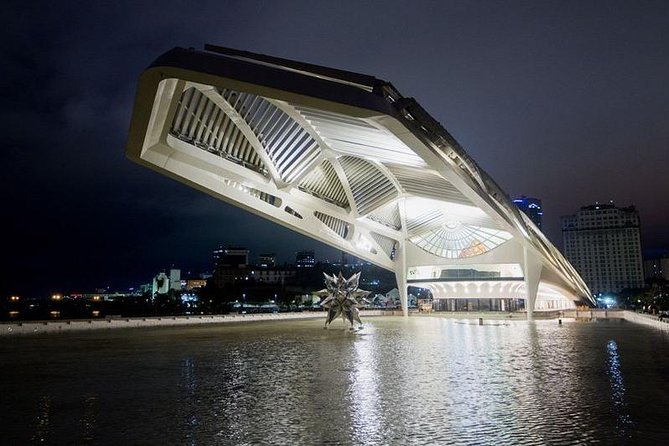
Museu do Amanhã (Museum of Tomorrow) is housed in an eye-catching, futuristic structure designed by Santiago Calatrava. Even before you go deep inside, the exterior helps you understand why this stop matters. It’s part of the Porto Maravilha regeneration area, so the museum feels like a marker for a new Rio—not just another building to check off.
What I like about this kind of architecture in a guided format is simple: you don’t just look. You learn how the design supports the visit and the themes inside. You also get chances to view the waterfront area from the surrounding neighborhood, including perspectives linked to the nearby cruise terminal and harbor.
If you’re the type who enjoys “place + meaning,” this tour delivers. It ties together the physical city shift (Porto Maravilha) with the museum’s message about the future.
You can also read our reviews of more guided tours in Rio de Janeiro



Price and logistics: what you’re actually buying for $58
At $58 per person, this tour isn’t just a museum ticket with a transfer stapled on. You’re paying for three things that reduce travel friction:
- Air-conditioned vehicle to move you between stops without figuring out routes on your own
- Museum of Tomorrow entrance included, so you don’t need to manage ticket logistics mid-day
- Guided time that turns big concepts into something you can follow while you’re standing in front of interactive displays
The tour runs about 4 hours total. The museum stop is 3 hours, which is generous enough to experience the interactive exhibits without feeling rushed. Still, keep in mind that the remaining stops are timed too (each around 30 minutes). If you want to linger, you’ll have to do it strategically inside the museum.
Pickup starts at Hotel Rio Othon Palace in Copacabana (Av. Atlântica 3264). If you’re staying in Barra or Recreio, there’s an extra USD 10 per person paid directly to the guide. That’s not a deal-breaker, but it does mean you should check your lodging location early and confirm your pickup time when they contact you.
Entering Museu do Amanhã: interactive exhibits with a mission
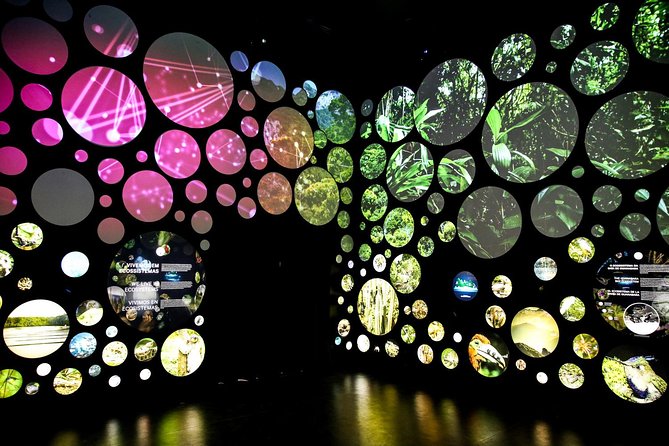
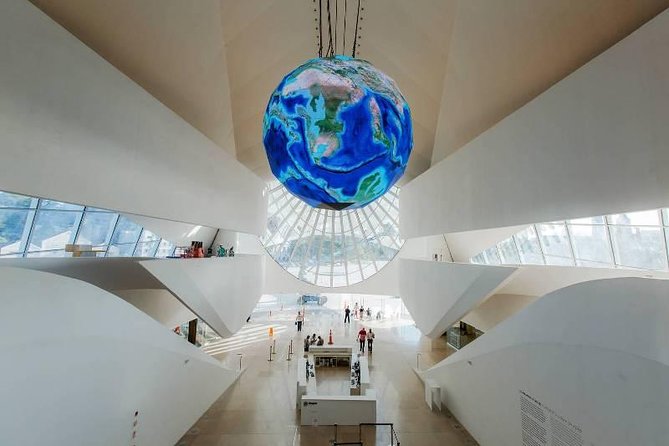
The heart of this experience is the museum visit, and it’s built around the idea of sustainability and future human choices. This isn’t a traditional museum where you walk past glass cases and call it done. The museum uses interactive experiences and technology to push you into thinking about how we live now, and what that leads to later.
What you’ll notice right away
You’re in a space designed to guide your attention. Many exhibits use visuals and simulations to highlight risks across themes like environmental change and ocean-related issues, with comparisons to present-day values. One description specifically pointed out risks such as oceanic, political, and environmental impacts, often shown with quantified comparisons.
That matters because it changes the tone from vague inspiration to something more concrete. You’re not just told that “the future might be bad.” You’re shown why and how, using current data and visual storytelling.
The big theme: science, art, tech, and culture
A key value here is how the museum blends disciplines. The exhibits link science, art, technology, culture, and the environment into one message. So if you’re worried you’ll get only one kind of content—like physics slides or only environmental science—you’ll likely feel the variety.
It also makes a difference for mixed groups. Someone who loves visuals tends to get engaged. Someone who likes tech also has plenty to work with. People who prefer human-centered topics can focus on how decisions affect society and life on Earth.
You can also read our reviews of more museum experiences in Rio de Janeiro






Plan your pacing for your 3 hours
Even with a 3-hour museum window, it helps to self-manage your time. Some visitors noted they were able to see a lot in about 2 hours, which suggests the tour pace inside can vary depending on the guide and how fast your group moves.
I’d use a simple strategy: aim to hit the main exhibit sections first, then circle back for anything you want to revisit. If you’re traveling with mobility needs, one of the guides (Marcos) was described as accommodating—so if you need slower movement or extra pauses, tell your guide early and don’t wait.
Stop 2: Mauá Square with Guanabara Bay views
Mauá Square is a short breather in the middle of the tour. You get around 30 minutes here, and the big payoff is the view of Guanabara Bay. It’s a good spot for photos and for getting your bearings on how Rio’s geography shapes daily life.
The square also includes a statue of Barão de Mauá. Learning about him gives the area a layer beyond scenery. He’s a visionary connected to the kind of progress that helped shape the modern city, and knowing that context makes the stop feel more grounded than just a photo break.
Practical tip: bring your camera-ready attitude, but also take a minute to look beyond the skyline. The bay is the point here, not only the buildings around it.
Stop 3: Boulevard Olímpico and Kobra’s Mural das Etnias
Next up is the Boulevard Olímpico, created for the 2016 Olympics. This is where street art becomes part of the city’s official public face. You’ll have about 30 minutes, which is enough to walk around and focus on the main artwork.
The star is Mural das Etnias by Kobra. One review-style detail called it the biggest graffiti in the world, which gives you a sense of scale before you see it. Even if you don’t keep up with street art, the mural’s size and public placement make it hard to ignore.
This stop is also a nice contrast to the museum. The museum is tech-and-concepts. The boulevard is real, visible, and immediate. You’re seeing how culture shows up in Rio’s urban space, not only inside institutions.
Guide quality is the real make-or-break factor
For a museum focused on big ideas, a guide isn’t optional. The exhibits can be thought-provoking, and the right explanation can turn them from interesting to meaningful.
In the feedback provided, guides were repeatedly praised by name:
- Jaqueline was described as transforming a visit into an immersive, tailored experience with strong explanations
- Renato received credit for organization and history
- Marcos was highlighted for guiding through exhibits and being accommodating with mobility needs
- Christian was noted for making the tour feel full and for helping with photos
That pattern tells me something important for your decision: you’ll benefit most if your guide gives you structure. The museum’s themes are broad, so having someone connect the dots while you’re in front of the displays is a big part of the value.
One small caution: not every experience will match the ideal. There was mention of a guide who spoke less English well and another case of a language mismatch. If you rely on English (or another specific language), you should confirm language expectations when booking and plan to use simple questions to steer the tour.
What kind of traveler should book this?
This tour fits best if you like:
- science-meets-arts thinking and future-focused questions
- tech-driven exhibits where you learn by interacting
- a planned route that reduces decision-making time
You’ll also enjoy it if you want a different side of Rio, beyond classic sights. Porto Maravilha is part of Rio’s ongoing urban change, and the route pairs the museum with two neighborhood anchors: a historic-feeling square and a modern Olympic-era promenade.
On the other hand, if your style is purely wandering and you hate schedules, you might feel constrained. The museum is the main event, but the remaining stops are timed too. This is a “good use of a half-day” experience rather than an “endless meander” kind of outing.
How to plan your time in Rio (and not get hangry)
Food and drinks are not included, so plan for that. With about 4 hours total, you’ll likely want a light meal before you start or a plan for lunch/late snack afterward.
Wear comfortable clothing and walking shoes. The museum is interactive and the stops include walking, even if distances are not described as huge. Also, the tour uses an air-conditioned vehicle, which helps if you’re doing it during warm hours.
If you want photos, aim to use Mauá Square and the boulevard timing well. The museum itself also has exterior views and tech displays, but the most natural “look-at-this-from-outside” moments are connected to the waterfront area.
Should you book the Museum of Tomorrow guided tour?
Yes—if you want an efficient, guided way to experience one of Rio’s most unusual modern attractions. The combination of museum entrance + transport + guided context makes the price feel fair, especially for a museum that asks big questions about how we live.
I’d book this tour if you enjoy thinking about sustainability without turning it into a lecture, and if you like pairing architecture with city views. I’d be more cautious if you’re very schedule-sensitive or you strongly depend on a specific language for explanations—then confirm language expectations in advance.
FAQ
How long is the Museum of Tomorrow guided tour?
It lasts about 4 hours total.
What’s included in the price?
You get an air-conditioned vehicle and entrance to the Museum of Tomorrow.
What’s not included?
Food and drinks are not included.
Where does the tour start and end?
It starts at Hotel Rio Othon Palace in Copacabana and ends back at the meeting point.
Do you offer pickup from neighborhoods outside Copacabana?
Yes. You’ll be contacted to provide your pickup time, and for pickup in Barra or Recreio there is an extra USD 10 per person paid directly to the guide.
How big is the group?
The tour uses a minivan with a maximum of 19 travelers.
What is the cancellation policy?
You can cancel up to 24 hours in advance for a full refund. If you cancel less than 24 hours before the start time, the amount paid is not refunded.