REVIEW · RIO DE JANEIRO
Rio de Janeiro: Tijuca Peak Guided Hike
Book on GetYourGuide →Operated by Nattrip Ecotourism and Adventure · Bookable on GetYourGuide
Rio changes when you walk into forest.
This guided hike takes you into Rio de Janeiro’s urban rainforest at Tijuca National Park, then climbs to Pico da Tijuca for big-city views from the highest point in the park. I love how the route turns the whole day into a nature reset, and I also love that you get a clear payoff at the top with viewpoints over Rio.
The second win is the cultural context. You’ll stop at the Tijuca National Park Museum to learn how the forest was shaped and protected, and you’ll finish with Cachoeira das Almas, a waterfall that cools the day down after the climb. One consideration: the trail involves walking on uneven ground and steps, so it’s not suitable for wheelchair users or people with mobility impairments.
In This Review
- Key things to know before you go
- Tijuca National Park: why this hike feels like a real escape
- Meeting at Praça Afonso Viseu and getting set up for the day
- Tijuca National Park Museum: the context that makes the trail click
- The climb to Pico da Tijuca: effort, pacing, and smart expectations
- Tijuca Mirim viewpoints: where Rio suddenly makes sense
- Cachoeira das Almas: the waterfall payoff after the climb
- Price and value for $56: what you’re actually paying for
- Fitness, timing, and what to pack for a smooth hike
- Who should book this, and who should skip it
- Should you book: my decision guide
- FAQ
- How long is the Tijuca Peak guided hike?
- Where do I meet the group, and is pickup available?
- What languages does the guide speak?
- What does the tour include?
- What should I bring, and what isn’t allowed?
- Is the hike steep, and is it wheelchair accessible?
Key things to know before you go
- Pico da Tijuca hits a high point (1,021 m), with views aimed right at the Rio skyline
- Bilingual guiding (Spanish, English, Portuguese) keeps the whole experience easy to follow
- Museum + waterfall + summit means this isn’t just a one-track hike
- Urban rainforest, real history: you’ll learn how Tijuca became a preserved forest near a massive city
- Bring water and a small daypack; luggage and large bags are not allowed
Tijuca National Park: why this hike feels like a real escape
Rio de Janeiro has a way of pulling your day outward: beaches, streets, traffic, noise. This tour reverses that. You’re heading into Tijuca National Park, where the air shifts as soon as you trade asphalt for trail, and the city sounds fade behind you.
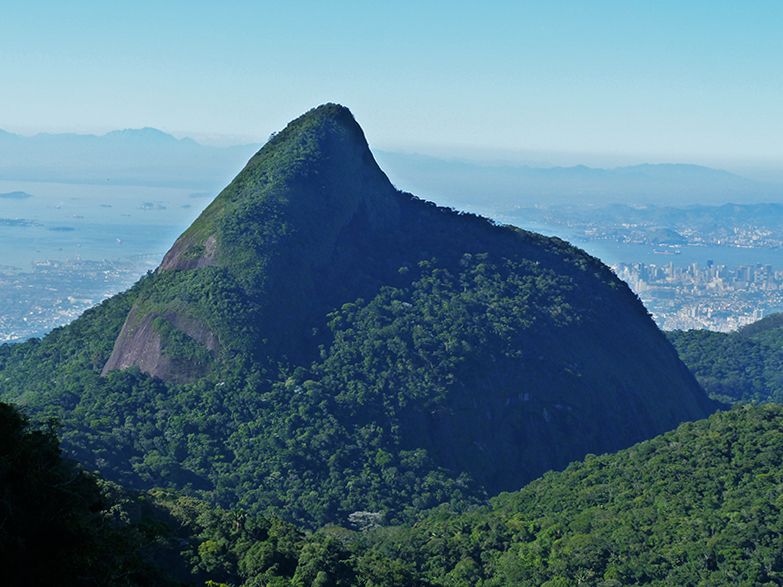
What makes this hike special is the contrast. You’ll climb to a high point (Pico da Tijuca) right from the edge of a protected forest, so the payoff isn’t just scenic. It’s proof that you can go from urban life to a true green pocket within hours. The tour also includes viewpoints tied to the forest’s high areas, including the peak experience around Tijuca Mirim, so you’re not just walking uphill for the sake of it.
The route isn’t described as steep, even though the altitude reaches 1,021 meters. That matters because it keeps the day from turning into a grind for most people with basic hiking comfort. You still get effort, but it’s effort with purpose: pauses for learning, time to look out, and a waterfall finish that feels like a reward.
You can also read our reviews of more guided tours in Rio De Janeiro


Meeting at Praça Afonso Viseu and getting set up for the day
Your day starts at Praça Afonso Viseu, 104 (Alto da Boa Vista), specifically on the corner opposite the park entrance. That’s a useful detail because it reduces confusion: you’re meeting right where you’ll transition into the park experience.
If you choose pickup, it’s available from parts of Rio including Copacabana, Ipanema, Barra da Tijuca, and Botafogo. That can be a big value add, especially in a city where getting in and out of trailheads can be time-consuming. If you’re staying outside these areas, plan on the meeting point and allow extra buffer for local traffic.
Once you’re together as a group, the guide keeps the day organized. Expect the itinerary order to shift based on weather or conditions. That’s normal in the forest, and it’s actually a good sign: you’ll be adapting to what the park allows that day rather than pushing through unsafe footing or poor visibility.
Tijuca National Park Museum: the context that makes the trail click
Before you go fully vertical, you’ll visit the Tijuca National Park Museum as part of the guided program. I like museum stops on hikes when they do one job well: they explain what you’re seeing right now.
Here, the museum is your shortcut to understanding why Tijuca matters. You’ll learn about the history of the forest, and that changes how you walk. Instead of seeing trees as scenery, you start noticing the forest as a protected landscape shaped by people over time. It also gives the guide an easy way to point out details along the trail, so your hike becomes more than exercise.
Even if you’re not a museum person, this stop tends to work because it’s brief and tied directly to the walking route. And since you’re already in the park, you don’t lose time to a separate detour later in the day.
The climb to Pico da Tijuca: effort, pacing, and smart expectations
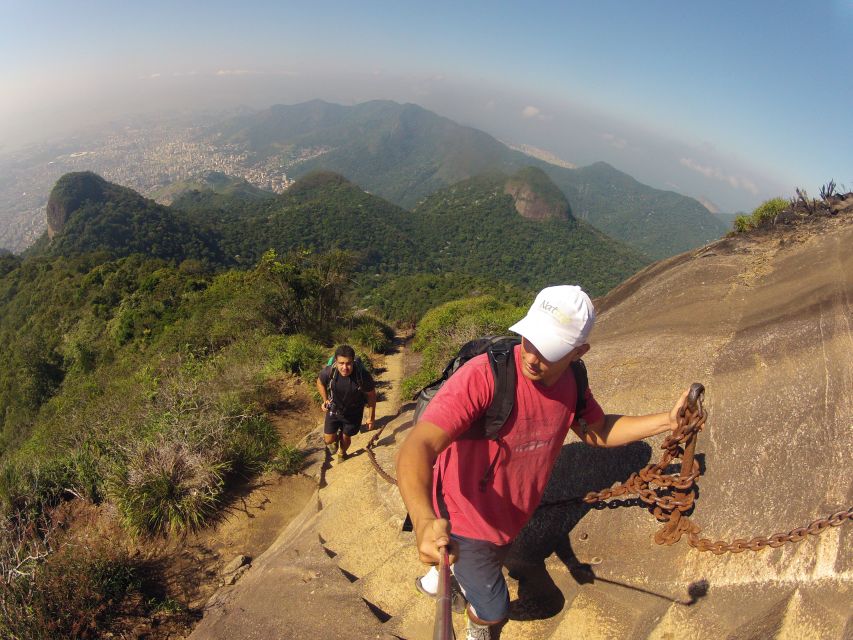
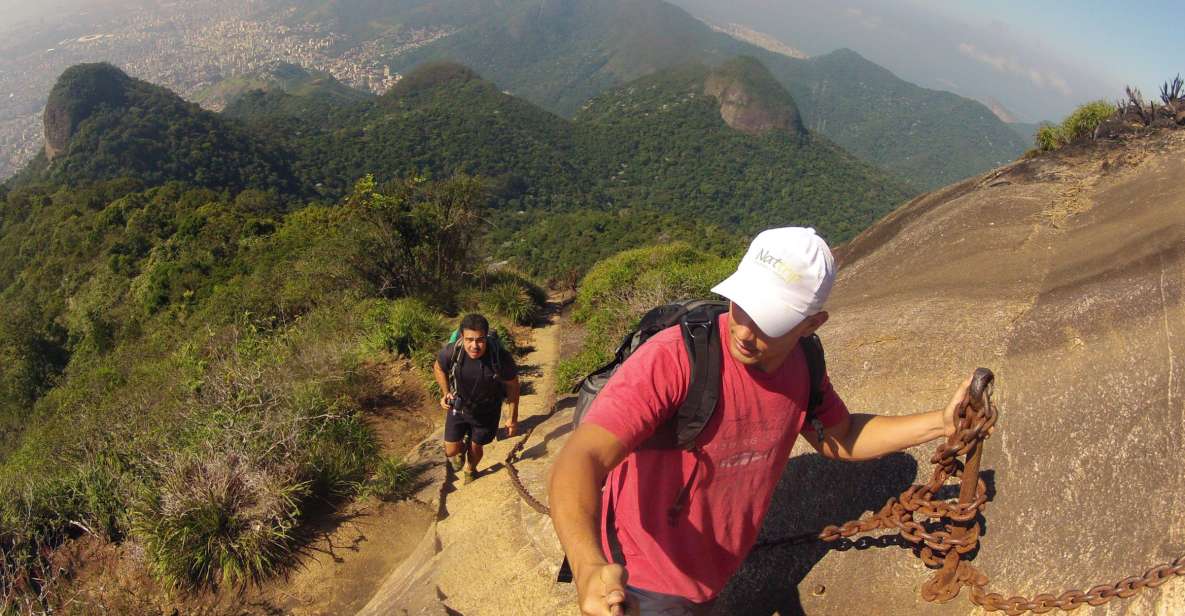
The core of the tour is your climb toward Pico da Tijuca. This is the highest point in the forest (at about 1,021 meters above sea level), and the climb is planned to keep you moving step-by-step through several sections of the park.
Here’s the expectation I’d set for you: treat it like a steady walk with changing scenery, not like an all-out sprint. The route is described as not steep despite the altitude, which is important for pacing. You’ll still feel the heat and humidity, especially in an urban rainforest, but you should be able to keep a consistent rhythm.
Along the way, you’ll pass elements that make the hike feel uniquely Rio. One is a legendary staircase carved into rock, which is exactly the kind of detail that helps you understand how access and human effort shaped the park trails. It’s also a natural moment for your guide to point out what’s next, what to watch for, and how to place your feet on uneven surfaces.
If you want a practical tip: take water seriously and keep your daypack light. The tour notes that you should bring a daypack and water, and that luggage or large bags aren’t allowed. That’s not just for rules. It’s so your movement stays easy and the group stays comfortable on narrow paths.
You might also spot small wildlife along the route. One consistent theme in how people describe the walk is how interesting the forest animals can be once you slow down and pay attention.
Tijuca Mirim viewpoints: where Rio suddenly makes sense
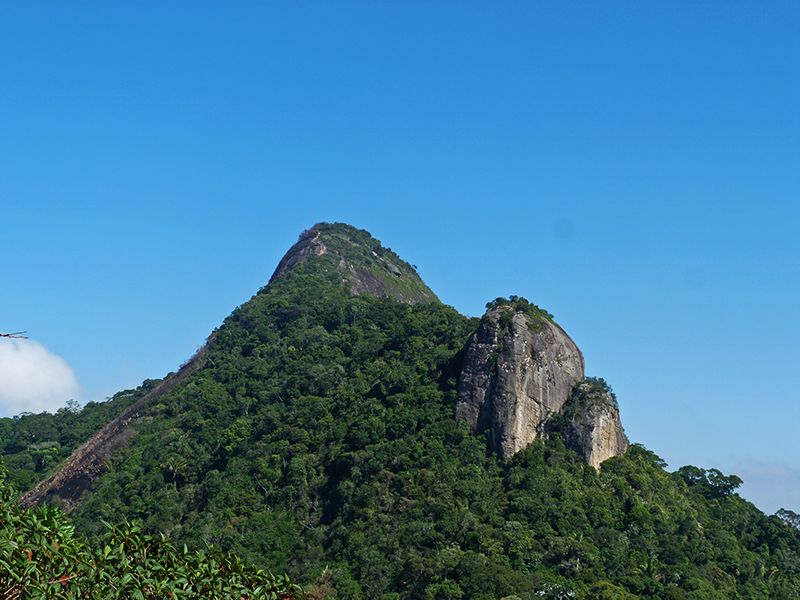
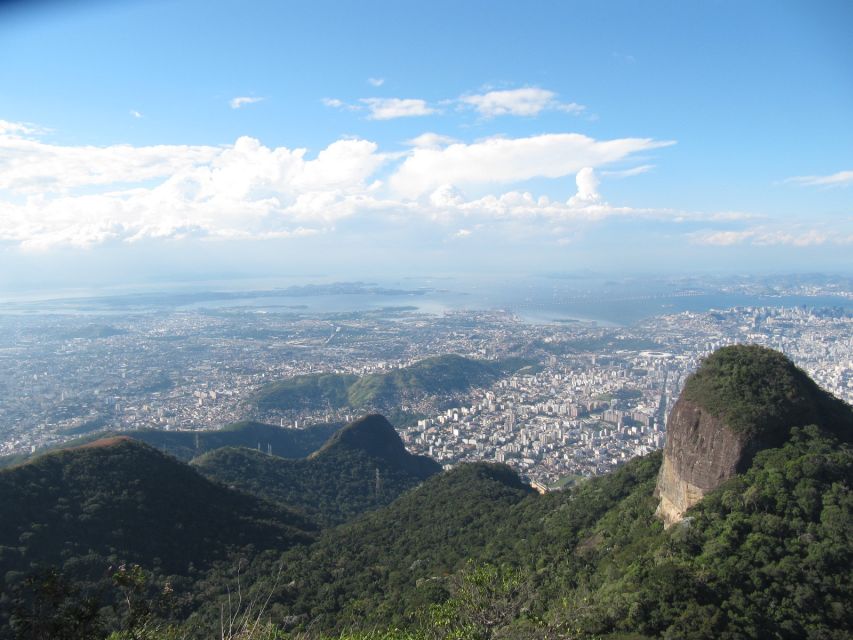
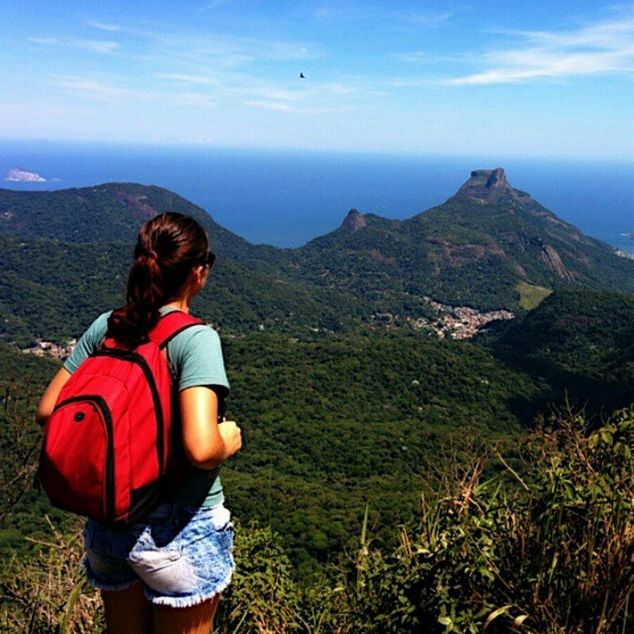
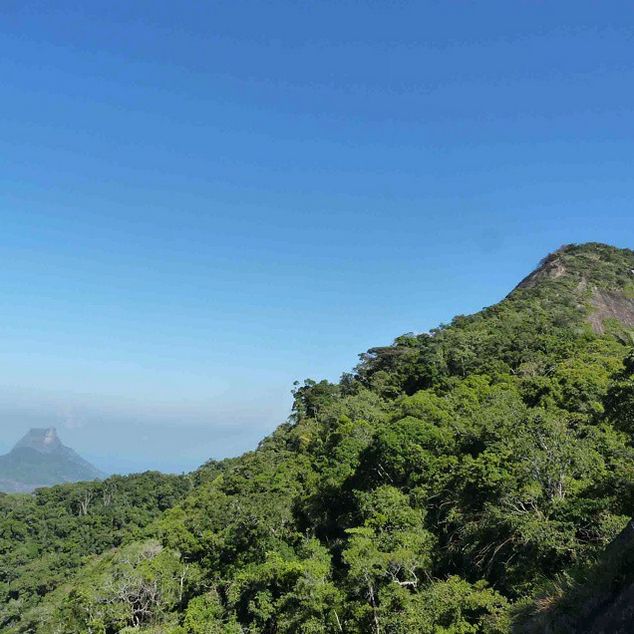
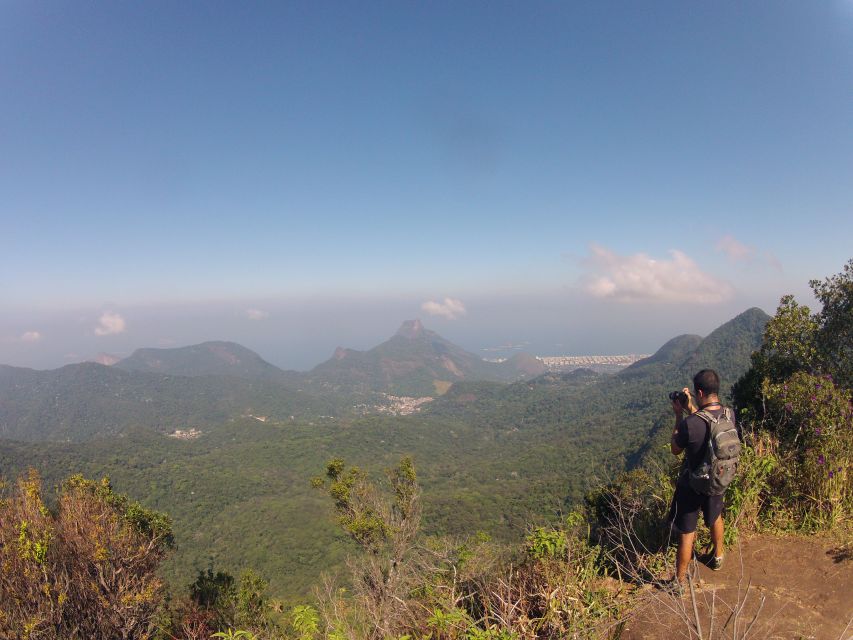
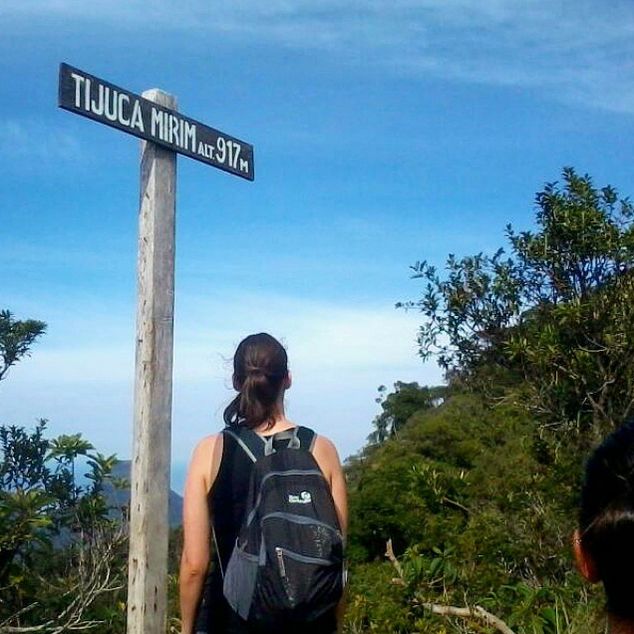
As you reach the high areas, the views begin to feel less like photos and more like orientation. The tour highlights viewpoints from the peak area of Tijuca Mirim, which is where you’ll really understand the scale of Rio from above.
This is why the hike is worth doing with a guide. From street level, Rio can feel chaotic. From the park’s high points, the city snaps into a readable pattern. You can see how neighborhoods relate to the terrain, how the coastline and hills connect, and how the city keeps pressing up against green space.
You’ll want to take your time here. It’s tempting to rush to the railing and then hurry back into the trees. Don’t. The best moment is when you step back, look, and let the city form in your mind. If visibility is limited due to weather, your guide may adjust the route order for safer conditions, so the goal becomes finding the best view you can that day.
In a few cases, guides even add small morale boosters. One example from a guide name mentioned is Denis, who was described as offering dried bananas along the way. That’s not guaranteed for every group, but it’s a good reminder that a little energy snack can make a sweaty stretch feel more manageable.
You can also read our reviews of more hiking tours in Rio De Janeiro



Cachoeira das Almas: the waterfall payoff after the climb
After time at the top viewpoints, you’ll head to Cachoeira das Almas, a waterfall inside the forest. For many people, this is where the day shifts from effort to reward.
Waterfalls in the Tijuca area do two things. First, they give you a cooling break, which matters in a humid hike. Second, they add a sensory reset: the sound changes, the air feels different near the water, and you’re surrounded by more constant forest shade.
The tour frames Cachoeira das Almas as a major highlight, and it makes sense as a closing act. You’ve earned the slower moments by reaching the summit area and learning the forest story. Then you can enjoy the payoff without racing against the clock.
Also, remember the footing. Even in a “not steep” hike, rainforest paths can be slippery. If you’re prone to ankle twists, take it slow on descents and steps. The tour itself notes that the itinerary order may change due to weather or adverse conditions, so your guide will be making real-time choices about where to step and how to keep the group safe.
Price and value for $56: what you’re actually paying for
At $56 per person for a roughly 6-hour guided experience (starting times vary), the value depends on what you’d otherwise do on your own.
This price includes several big components that add up fast if you try to DIY:
- A bilingual guide (Spanish, English, Portuguese)
- Guided hike covering Pico da Tijuca, Tijuca Mirim viewpoints, and Cachoeira das Almas
- Guided visit to the Tijuca National Park Museum
- Personal accident insurance
- Hotel pickup and drop-off if you select transportation from listed neighborhoods
The insurance part is easy to overlook, but it’s a practical value add. You’re also not just buying a viewpoint ticket. You’re buying someone to manage timing, keep you on the right paths, explain what you’re seeing, and adjust for weather.
One more practical detail: people often talk about the hiking feeling like a shorter segment than the total 6 hours. That fits how these tours work. The day includes park context, viewpoints, and the waterfall, plus time to get moving at the right pace.
Fitness, timing, and what to pack for a smooth hike
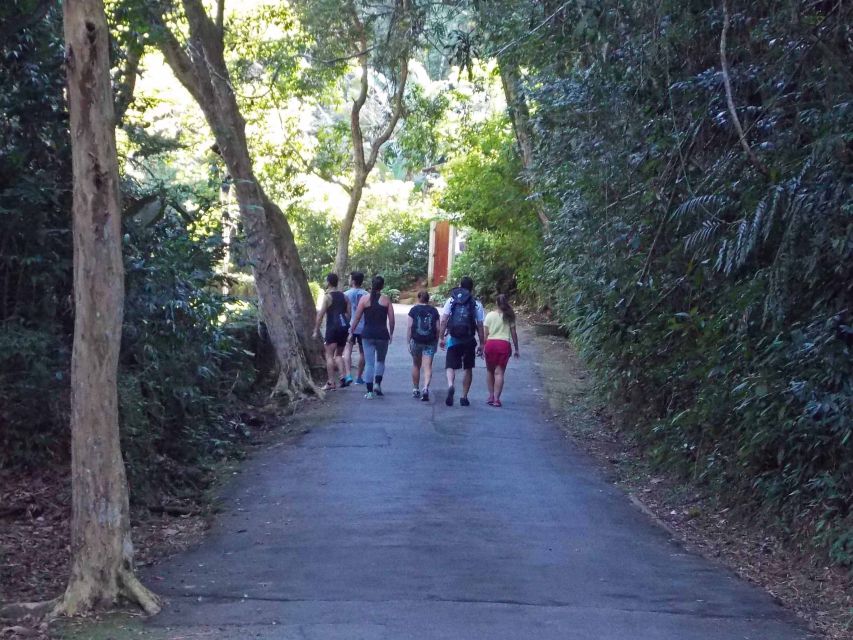
You don’t need to be a mountain athlete, but you do need basic hiking comfort. The tour specifies that despite the altitude, the trail is not steep. That’s good. Still, “not steep” doesn’t mean “easy.” Expect uneven ground, stairs, and a forest environment that can make everything feel warmer and more tiring than you expect.
Here’s what I’d advise you to plan for:
- Wear shoes with good grip for damp or uneven paths
- Expect sweat; rainforest hiking tends to heat you up even when it doesn’t look extreme
- Take your time on the way down; descending can be where ankles get unhappy
Packing is simple and deliberately minimal. Bring:
- A daypack
- Water
Leave behind:
- Pets
- Luggage or large bags
- Alcohol and drugs
That last point matters more than it sounds. You’ll be in a protected natural area and moving through different trail zones, so the tour is designed to keep the day focused and safe.
Timing-wise, the hike is listed as about 6 hours total. You can also plan around the fact that the visible trail time may feel shorter because the day includes museum learning and waterfall downtime. Either way, you’ll be glad you picked a full day rather than trying to stack another activity immediately after.
Who should book this, and who should skip it
This tour is a strong fit if you want:
- Nature time without leaving Rio behind
- A guided hike that includes viewpoints plus a museum stop
- Clear structure: pickup options, set meeting point, and someone managing the order based on conditions
It’s also a good choice if you like learning while you walk. The park museum stop and the guide’s forest explanations turn the hike into a story you can follow.
Skip it if you:
- Use a wheelchair
- Have mobility impairments that make stairs and uneven ground hard
The tour explicitly notes it’s not suitable for mobility impairments and wheelchair users.
Should you book: my decision guide
Book this hike if you want a day in Tijuca National Park that feels purposeful. The best reason is the combination: Pico da Tijuca for altitude views, Tijuca Mirim for the summit perspective, Cachoeira das Almas for a satisfying waterfall finish, and a museum stop that helps you understand what you’re walking through. At $56 with guide support and insurance, it’s also a practical value when you factor in pickup from parts of Rio.
Pass if you’re looking for a totally flat, no-effort walk, or if uneven forest paths would be a problem. In that case, you’d likely feel stressed during the descents and stairs rather than relaxed in the forest.
If you’re even mildly comfortable hiking for a few hours, this is one of those Rio experiences that makes the city feel bigger in the best way: you get the skyline, but you also get the forest behind it.
FAQ
How long is the Tijuca Peak guided hike?
The tour duration is listed as 6 hours, with starting times depending on availability.
Where do I meet the group, and is pickup available?
The meeting point is Praça Afonso Viseu, 104 in Alto da Boa Vista, across from the park entrance. Hotel pickup is optional from Copacabana, Ipanema, Barra da Tijuca, and Botafogo.
What languages does the guide speak?
The live tour guide speaks Spanish, English, and Portuguese.
What does the tour include?
It includes a bilingual guide, guided hike to Pico da Tijuca and the Tijuca Mirim peak viewpoints, a guided visit to the Tijuca National Park Museum, and a guided visit to the Cachoeira das Almas waterfall. Personal accident insurance is also included.
What should I bring, and what isn’t allowed?
Bring a daypack and water. Pets are not allowed, and luggage or large bags are not allowed. Alcohol and drugs are also not allowed.
Is the hike steep, and is it wheelchair accessible?
Even with the altitude, the trail is described as not steep. The activity is not suitable for people with mobility impairments and is not suitable for wheelchair users.