REVIEW · RIO DE JANEIRO
Rio: Tijuca Forest Small Group Hike to Caves and Waterfalls
Book on GetYourGuide →Operated by Jungle Me · Bookable on GetYourGuide
A rainforest hike that still feels like an adventure. This Tijuca Forest loop mixes waterfalls, caves, and real jungle trails with a strong history thread that helps you see Rio differently.
I especially like the way the hike is built for variety. You’re walking through forest and stopping for places like the Cascatinha Taunay waterfall, Mayrink Chapel (from 1850), and Morcego’s Grotto, while guides like Pietro and Vinnie keep the nature and history coming without turning it into a lecture.
One drawback to consider: animal sightings are never guaranteed. Some people spot sloths, coatis, or monkeys; others mainly enjoy the plants, geology, and water, so don’t book expecting wildlife every step.
In This Review
- Key reasons this Tijuca hike gets such high marks
- Entering Tijuca Forest: Why this hike feels different
- Hotel pickup from Copacabana, Ipanema, Leblon, and beyond
- Cascatinha Taunay: the first big taste of Tijuca’s water
- Mayrink Chapel (1850): history in the middle of the trees
- The suspension bridge and coffee-plantation traces (Cova da Onça)
- Eucalyptus forest and an old slave cemetery: the heavy part, handled with care
- Morcego’s Grotto: cave geology and the reality of “bat cave” expectations
- Baronesa Cascade: the waterfall shower moment
- Ruins, viewpoints, and the small “secret stop” energy
- Wallace Fountain (1870): Rio’s European touch in the rainforest circuit
- The part I’d plan for: rain, uneven ground, and smart gear
- Guides make the difference: names you’ll hear again and again
- Price and value: what $69 buys you in real terms
- Who should book this hike (and who should skip it)
- Final call: should you book the Tijuca caves and waterfalls hike?
- FAQ
- How long is the Rio Tijuca Forest hike tour?
- How challenging is the hike?
- Is hotel pickup included, and where does it operate?
- What languages are the tours guided in?
- What should I bring for the hike?
- What’s not included in the price?
- Is this tour suitable for everyone?
Key reasons this Tijuca hike gets such high marks
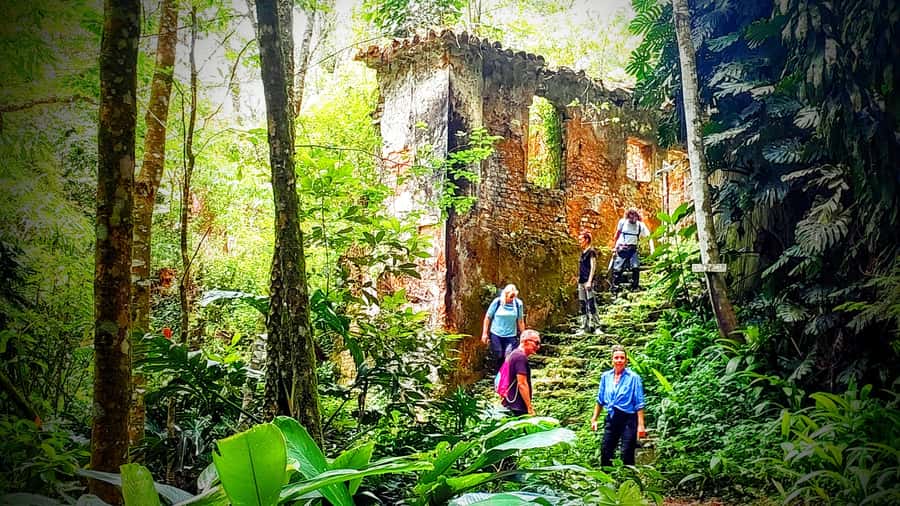
Small-group vibe** that keeps the pace human and the stops interactive.
19th-century coffee-plantation trails inside Tijuca National Park’s restored rainforest story.
Morcego’s Grotto plus suspension bridge scenery—less common stops than the usual waterfall-only circuits.
Cascas and a real waterfall shower at Baronesa Cascade.
Guides who connect nature to Rio’s past (often with extra history and geography coaching).
Hotel pickup from Rio’s South Zone makes the start smoother than self-guided hiking.
Entering Tijuca Forest: Why this hike feels different
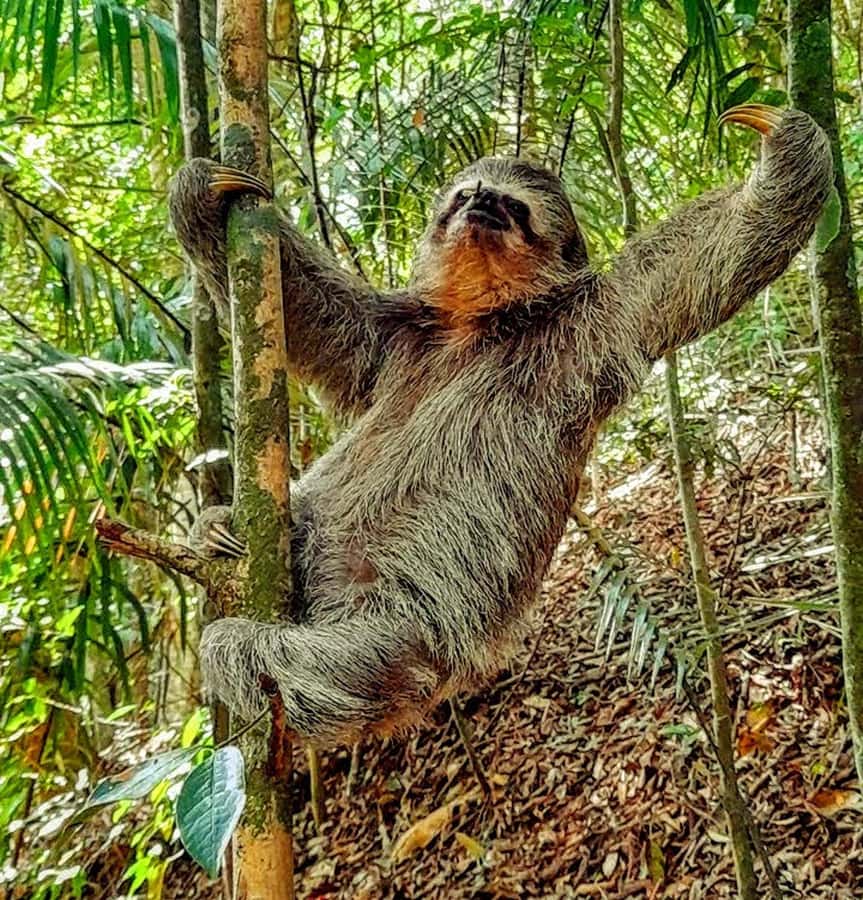
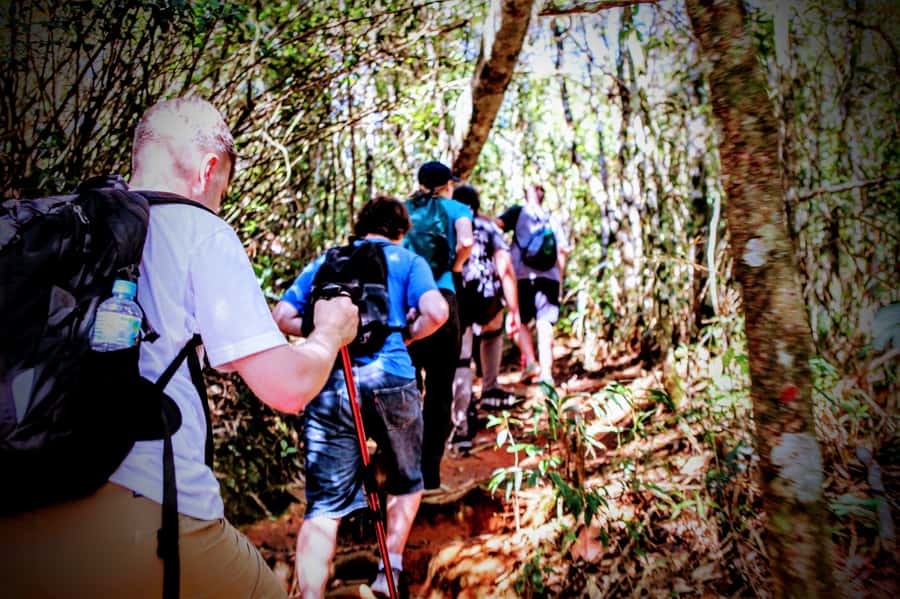
Tijuca National Park sits right above Rio de Janeiro, and that closeness is part of the magic. In a few hours, you go from city noise and sea air to a shaded jungle world with damp trails, steep bits, and water sounds around every corner.
What makes this hike especially memorable is the mix of sights that aren’t all the same type of attraction. Yes, you get major waterfall time. But you also get the in-between stops—chapels, old infrastructure like a suspension bridge, cave geology, and rainforest history—so your day doesn’t feel like a checklist. It’s more like walking through layers of Rio: environment, human use, and restoration.
The pace is moderate, not a casual stroll. You’ll cover about 6.2 km / 3.8 mi with around 448 m / 1,469 ft of elevation gain, typically spread across roughly 2.5 to 3 hours of hiking within a total 6-hour outing.
You can also read our reviews of more hiking tours in Rio De Janeiro


Hotel pickup from Copacabana, Ipanema, Leblon, and beyond
The practical win here is that you don’t have to fight Rio traffic before you even start hiking. Pickup is offered from a long list of South Zone hotels and hostels, including neighborhoods like Copacabana, Ipanema, Leblon, Leme, Flamengo, Santa Teresa, Glória, Catete, and Praia de Botafogo (and nearby Urca is mentioned as well). If your exact address isn’t in range, you’ll be given a nearby meeting point.
In reviews, people praise the pickup being punctual and the driver getting them to the park without drama. Still, one real-world consideration: some vehicles can feel tight, especially if you’re tall. If you’re sensitive to cramped seating, bring some patience—and plan to stretch when you can.
Cascatinha Taunay: the first big taste of Tijuca’s water
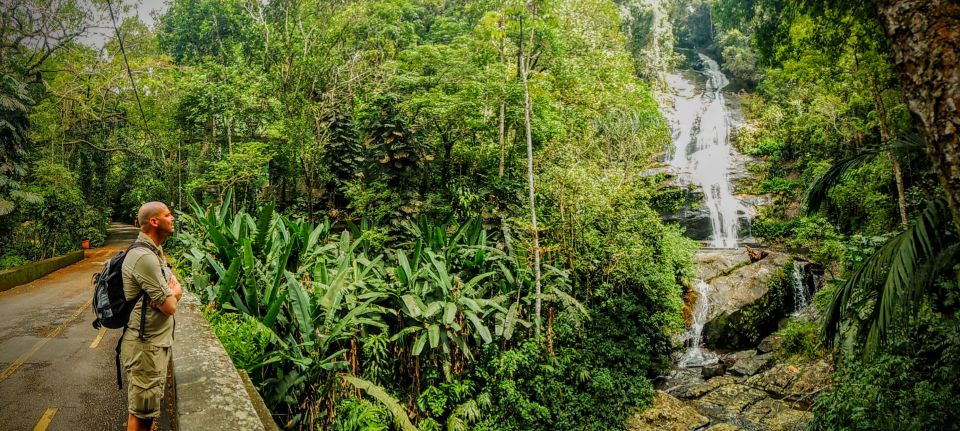
The day begins with a stop at Cascatinha Taunay, described as the park’s largest waterfall. This is a good early anchor because it sets the rhythm of the day: you’re not wandering in silence, waiting for a highlight later. You get a major payoff up front.
Expect a guided orientation here—time to look, take photos, and get oriented before the hike starts digging deeper into the forest circuit. Even if you’ve seen waterfalls before, Tijuca’s setting makes a difference. The water lands in a living, green system rather than a dry view corridor.
Mayrink Chapel (1850): history in the middle of the trees
Not every rainforest tour throws in a chapel. Mayrink Chapel, dating to 1850, is one of those stops that changes how you read the place.
Here’s the value: Tijuca wasn’t always a “pristine untouched” nature reserve. The park’s trails were built during the time when this area was occupied by coffee plantations. A site like an old chapel helps you feel the continuity—how the forest was reshaped, then how restoration worked over time.
A short photo stop and quick visit is all you need at this point. You’re not lingering for hours; you’re using the stop to add context so the later ruins and cave spaces land harder.
The suspension bridge and coffee-plantation traces (Cova da Onça)
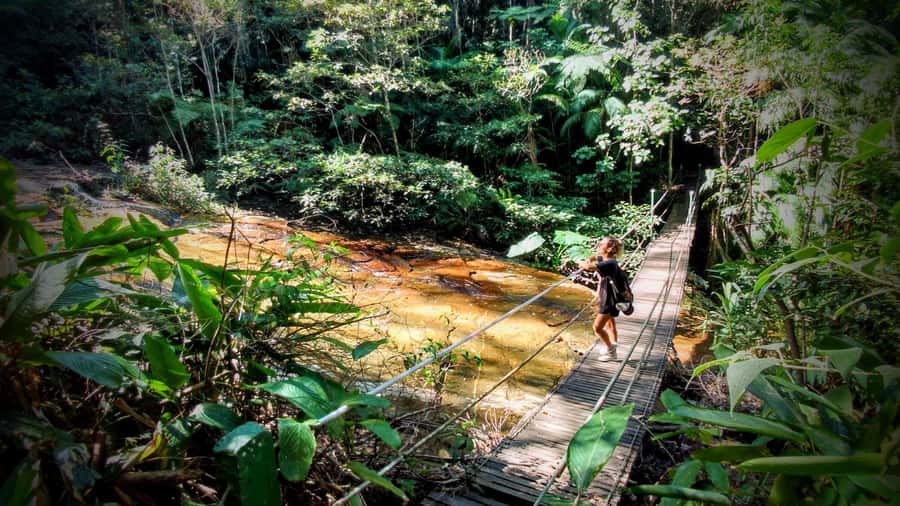
The hike circuit includes Cova da Onça, a suspension bridge that gives you a different kind of view—less “waterfall scene,” more “jungle corridor.” Bridges also help break the day into micro-moments. One minute you’re climbing; the next you’re crossing a span and noticing how the forest canopy and undergrowth change around you.
You’ll hear history tied to the 19th-century plantation era as you move through trails made in that period. That matters because it turns what could feel like generic walking into something more meaningful: you’re traveling on old routes, even if you’re doing it for recreation.





Eucalyptus forest and an old slave cemetery: the heavy part, handled with care
One stop you shouldn’t skip mentally is the Eucalyptus Forest, which houses an old slave cemetery. This is where you’ll get a reminder that rainforest history includes suffering, not just scenery.
Even when the physical stop is brief, it gives depth to the park’s “replanted urban forest” story. Tijuca is often framed as a nature recovery success. But part of understanding that success is acknowledging the people and systems that shaped the land before the forest grew back.
If you’re the type who likes your guides to treat tough history respectfully and clearly, this stop is one reason the tour performs well.
Morcego’s Grotto: cave geology and the reality of “bat cave” expectations
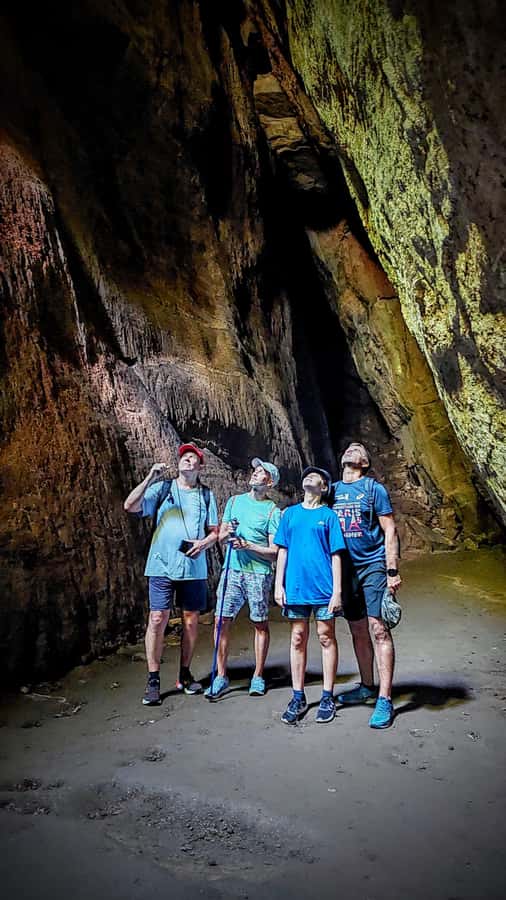
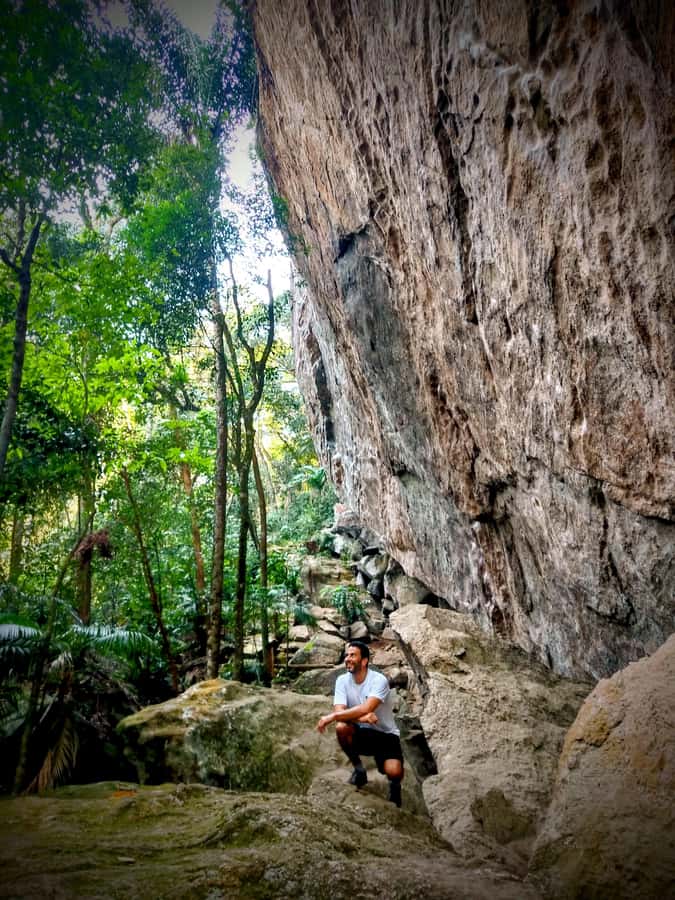
Next comes the cave experience: Morcego’s Grotto, described as the largest gneiss cave in Brazil.
This is the kind of place where the guide matters. A cave stop can turn into “go in, take a quick look, leave.” Here, you’re getting it in a broader context—geology and rainforest environment—so it feels more grounded than a novelty.
And here’s the honest expectation to set: a “bat cave” doesn’t guarantee you’ll see bats in action. One review notes the bats were hibernating, so there were none visible. In other words, don’t treat this as a wildlife guarantee. Treat it as a cool geology stop that happens to be associated with bats.
Baronesa Cascade: the waterfall shower moment
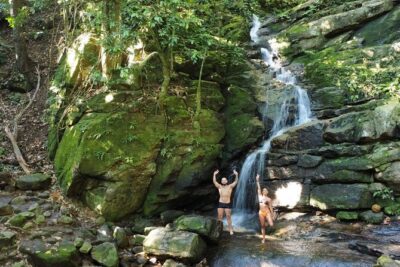
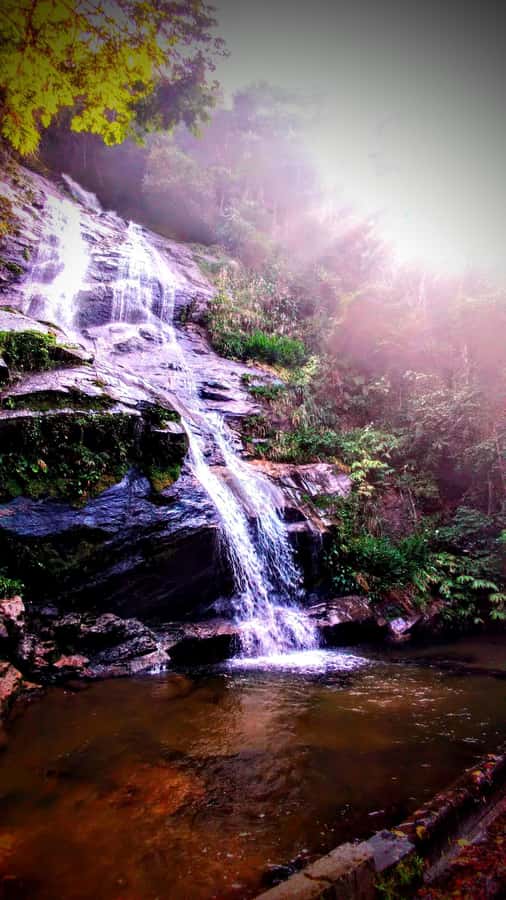
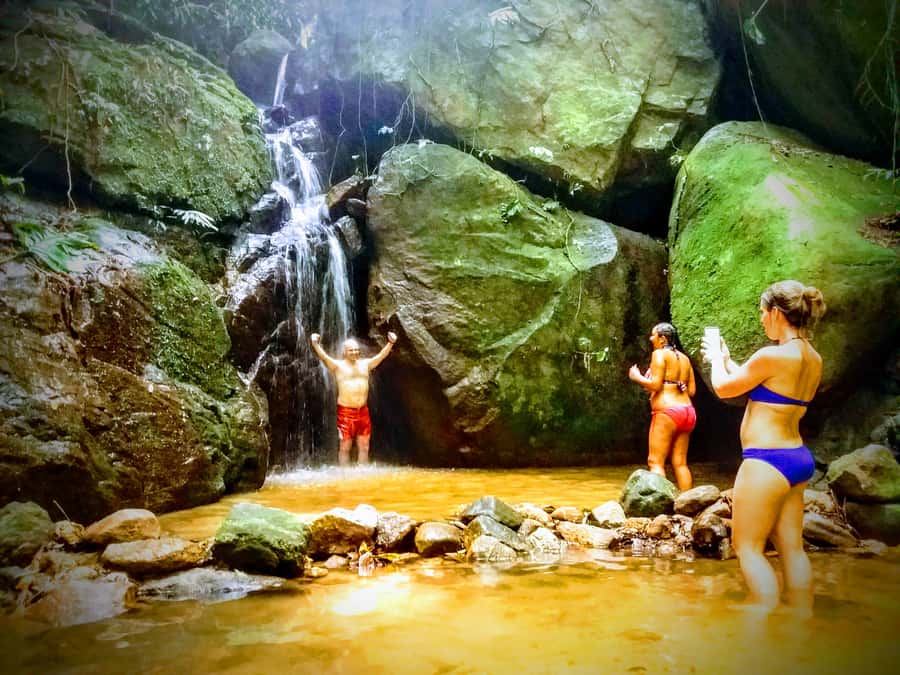
Then you cool off at Baronesa Cascade. This is where the tour earns its hype. The idea of a waterfall shower fits the day’s pacing: you’ve been hiking, then stopping to look, then hiking again—so water becomes a reset button.
This stop also tends to be a highlight because it gives you something physical. Even if you only get sprayed a little, it breaks up the “watching from a distance” feeling that some hikes can have.
If you hate getting wet, pack a mindset adjustment. Bring quick-dry clothes if you can. At minimum, wear shoes that can handle moisture without turning into sad, heavy anchors.
Ruins, viewpoints, and the small “secret stop” energy
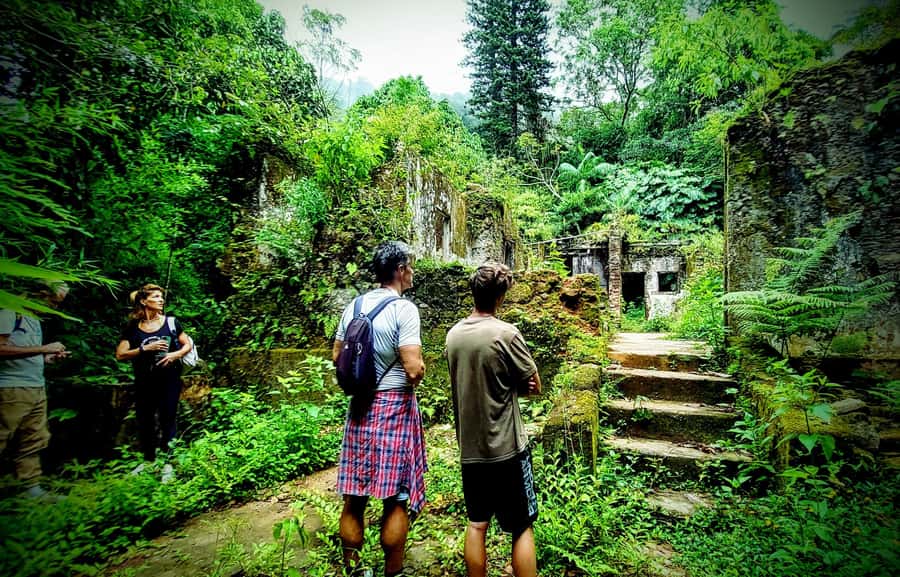
After Baronesa Cascade, the route loops back through more park highlights and scenic moments, including a viewpoint stop and what the itinerary calls a secret stop. Those shorter pauses are important because they keep your energy from crashing. You get walking, then you get a breather with a photo moment and a guided explanation.
One of the more distinctive historical waypoints is the former residence of Barão d’Escragnolle, a park manager in the past, now associated with The Esquilos restaurant. You’re not going there for a meal; you’re using the site to connect park management and human presence to the rainforest recovery story.
Wallace Fountain (1870): Rio’s European touch in the rainforest circuit
The circuit also includes Wallace Fountain, a sculpture representing goodness, charity, sobriety, and simplicity. It’s noted as a gift from the English philanthropist Richard Wallace, and it was produced in France in 1870.
This is one of those stops that surprises people in a rainforest tour—in a good way. It helps remind you that Rio’s identity has always mixed local and global influences. You’re still in Tijuca, still surrounded by nature, but your day is also showing how different cultures and values landed in Rio over time.
The part I’d plan for: rain, uneven ground, and smart gear
This hike is on rough rainforest terrain with up and down segments. You’ll want sports shoes, sportswear, and a daypack. The tour data also clearly recommends practical supplies: bring water, snacks/food, sunscreen, and insect repellent.
One small but useful nuance from reviews: conditions can change fast. Some groups reported rain and mentioned guides having ponchos ready. Don’t assume every guide will hand one to you, but do take the weather seriously. If clouds roll in, you’ll get slippery patches and darker trails.
Also, you’re not supposed to bring luggage or large bags, and pets are not allowed. Keep it light.
Guides make the difference: names you’ll hear again and again
This tour runs like a serious operation because the guides can connect the dots. People consistently mention leaders who stay warm, keep groups moving, and share both nature and Brazil context.
You’ll see guide names like Pietro, Vinnie/Vini, Riccardo, Renata, Tito, Luiza, Gustavo, Fernando, and others showing up in praise. The point isn’t the celebrity of it. It’s that the best part of the experience isn’t only the places—it’s the way someone turns those places into a story you can remember.
If you care about understanding what you’re seeing—plants, wildlife possibilities, geology, and how the coffee era fits—this guide-led structure is the value.
Price and value: what $69 buys you in real terms
At $69 per person for about 6 hours, this isn’t priced like a bare-bones transfer. You’re paying for:
- A bilingual guide (English/Portuguese)
- Insurance
- Transportation from designated South Zone hotels
What’s not included is just as important: food, water, and drinks. So factor in snacks and enough water for a half-day outdoors hike. If you show up empty-handed, the day will cost you more than the advertised price.
The best value is how packed the route is. You’re combining multiple attraction types—waterfalls, a suspension bridge, a major grotto, and several historical stops—without needing extra logistics. If you’re only in Rio for a short time, that “one booked morning/afternoon” convenience is a real win.
Who should book this hike (and who should skip it)
This tour fits best if you:
- Want an active half-day without going full-day marathon
- Like nature explanations paired with history
- Can handle 448 m of elevation gain on uneven ground
- Prefer a small group experience (some groups are reported as very small)
It’s not suitable for people with heart problems, and it’s not recommended for wheelchair users, based on the tour’s own constraints.
If you’re going with limited stamina, consider whether “moderate” matches your personal definition. Reviews include comments about steeper sections and people slowing down on climbs. You can absolutely go at your own pace in a guided group, but you still need basic fitness.
Final call: should you book the Tijuca caves and waterfalls hike?
I think you should book this tour if you want more than a simple waterfall visit. The “why” is the structure: you get water, caves, bridge scenery, and 19th-century plantation history in one smooth, guide-led loop, with hotel pickup from Rio’s South Zone.
Skip it only if you’re mainly chasing animals. Wildlife sightings can be luck-based, and some people end up focusing on the forest itself rather than spotting much movement.
If you go in with the right expectations—good shoes, snacks and water, a flexible attitude about weather—you’ll get a memorable slice of Tijuca that feels authentic, not rushed.
FAQ
How long is the Rio Tijuca Forest hike tour?
The tour lasts about 6 hours total, with a moderate hiking segment of roughly 2.5 to 3 hours.
How challenging is the hike?
It’s rated moderate. The route covers about 6.2 km (3.8 mi) with elevation gain of about 448 m (1,469 ft) on rough, up-and-down terrain.
Is hotel pickup included, and where does it operate?
Transportation is included from designated hotels/hostels in Rio’s South Zone. Neighborhoods listed include Copacabana, Ipanema, Leblon, Leme, Santa Teresa, Glória, Catete, Urca, Flamengo, and Praia de Botafogo. If pickup isn’t possible from your exact address, you’ll get a nearby meeting point.
What languages are the tours guided in?
The live guide provides interpretation in English and Portuguese.
What should I bring for the hike?
Bring food and drinks (snacks are recommended), sunscreen, water, insect repellent, sports shoes, sportswear, and a daypack.
What’s not included in the price?
Food and water/drinks are not included.
Is this tour suitable for everyone?
No. It’s not suitable for people with heart problems, and it’s not suitable for wheelchair users. Pets are not allowed, and luggage or large bags are not allowed.