REVIEW · RIO DE JANEIRO
Rio de Janeiro: Tijuca Forest Challenge Hike Full-Day Trip
Book on GetYourGuide →Operated by Jungle Me · Bookable on GetYourGuide
This hike turns Rio’s jungle into a classroom. You get a guided trek through the Tijuca Rainforest on an expert-built loop, with history stops and trail sections that most visitors never see. I especially like how the route targets Taquara Hill for serious viewpoint payoffs and pairs that with real rainforest education from guides such as Gustavo or Ricardo.
The second thing I love is the variety in one day: coffee-farm ruins, an actual cave/bat-cave moment, and a refreshing waterfall shower at the end. One possible drawback is the fitness level: you’re signing up for a hard hike, roughly 10.4km with an 848m elevation gain, and the operator can refuse anyone who can’t handle it safely.
In This Review
- Key things that make this hike worth your time
- Why Tijuca Forest feels like another world from Rio
- Fitness Test: What the 10.4km and 848m climb really means
- Pickup, timing, and why a max-6 group is a big deal
- First steps: Cascatinha Taunay, then into Tijuca National Park
- Taquara Hill: the viewpoint that ties the whole day together
- Coffee farm ruins and the trail that feels almost off-limits
- Grottos, the cave moment, and the bat-cave stop
- Cascata da Baronesa: your waterfall reset (bring the right things)
- Vista Chinesa on working days: a bonus viewpoint
- Guides who turn a tough hike into a story you’ll remember
- Price and value: is $86 fair for a 9-hour active day?
- Packing list: what to bring and what to skip
- Weather, wildlife, and safety without turning it into stress
- Should you book this Tijuca Forest Challenge Hike?
- FAQ
- How long is the hike and how far do we walk?
- What elevation gain should I expect?
- Is food and water included?
- Can I swim at the waterfall?
- What are the age and health requirements?
- Is Vista Chinesa included every day?
Key things that make this hike worth your time
- Small group (max 6) keeps the pace human and the forest stops more personal
- Expert-designed off-the-typical trails means you’re not just walking the busiest paths
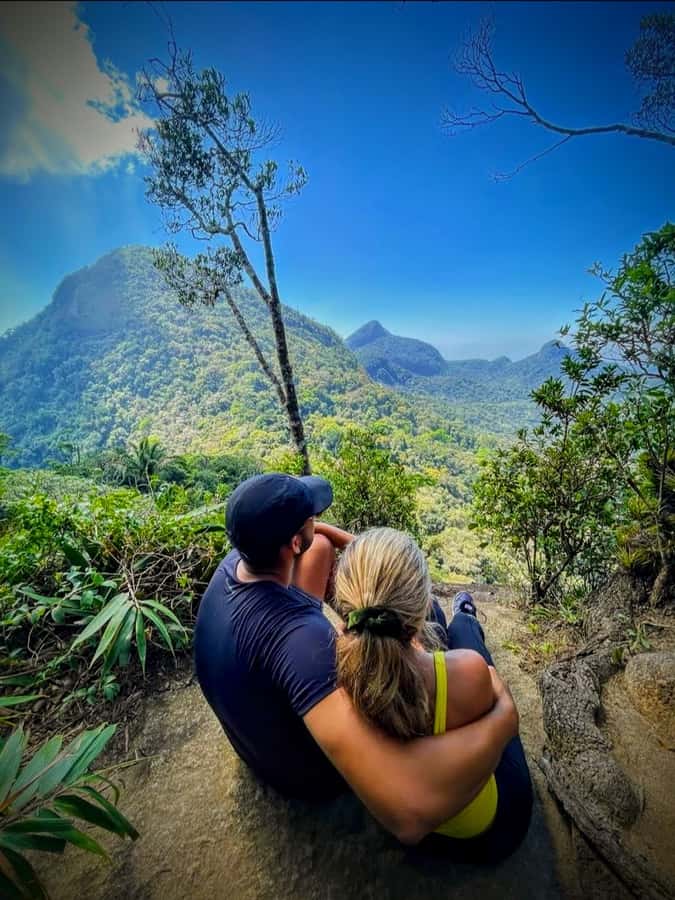
- Taquara Hill viewpoints can show you the forest valley and Rio coastline on clear days
- Coffee farm ruins + grottos/caves add story and texture beyond typical rainforest sightseeing
- Waterfall refresh at the end is one of the best moments of the full day
- Guide quality matters here, and names you might get include Gustavo, Ricardo, Roberto, Tito, Pietro, and Alex
Why Tijuca Forest feels like another world from Rio
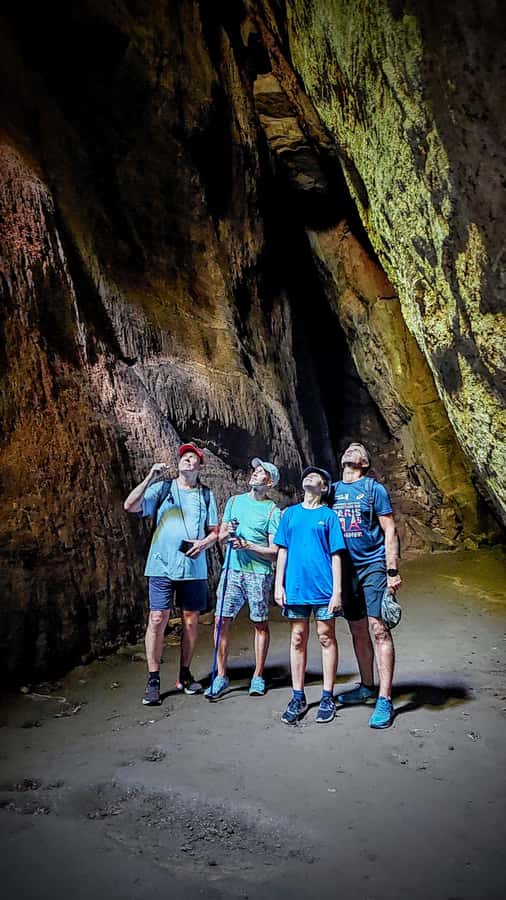
Rio is famous for views you can get fast. This trip flips that. You spend the day working your way through the Tijuca Rainforest, which feels a lot bigger and wilder once you’re walking inside it.
One practical plus: a lot of the route is shaded for long stretches. That can make the heat more manageable than you’d expect in a city that’s famous for sun and humidity. And when the weather turns foggy or rainy, the forest still delivers. One hiker described the day as misty, yet they still saw monkeys and other wildlife.
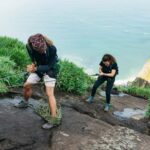
This is also one of the reasons I like a challenge hike over a quick nature walk. You don’t just look at the jungle. You get to experience how it changes underfoot—steep climbs, rougher trail sections, and narrow paths that feel less controlled.
You can also read our reviews of more hiking tours in Rio De Janeiro
Fitness Test: What the 10.4km and 848m climb really means
Let’s be honest: this is not a stroll. The full day includes about 4 to 5 hours of hiking on a 10.4km route (about 6.5 miles) with an elevation gain of 848m (2,782 feet). That climb is the main event, and the pace is built for people who hike regularly.
The good news is that the route is designed as a circuit. You get ups and downs, not just one brutal straight climb. The footing can be uneven, especially on a rainforest trail where surfaces can be slick after rain, so hiking shoes matter.
If you have a history of cardiovascular or pulmonary issues, or you’re not confident with sustained effort, this tour is not recommended. It’s also not suitable for wheelchair users, and it’s not for kids under 14. I’d treat this as a serious outdoor day, not a casual sightseeing add-on.
Pickup, timing, and why a max-6 group is a big deal
The trip runs about 9 hours total, with hotel pickup and drop-off in Rio’s South Zone neighborhoods. You can be picked up around places like Flamengo, Copacabana, Ipanema, Glória, Leme, Catete, Botafogo (and Botafogo Beach), Leblon, and Santa Teresa, depending on where you’re staying.
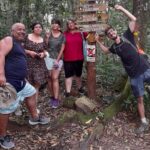
Why this format works: small groups mean less waiting and more attention. Multiple guides are known for adjusting the pace, and one older participant said their guide adapted so they still reached the top and made it back on time. That’s the kind of flexibility you typically don’t get on big group tours.
Also, the tour asks you to keep your kit practical. Luggage and large bags aren’t allowed, so you’ll want to travel light with what you actually need for a full day outside.
First steps: Cascatinha Taunay, then into Tijuca National Park
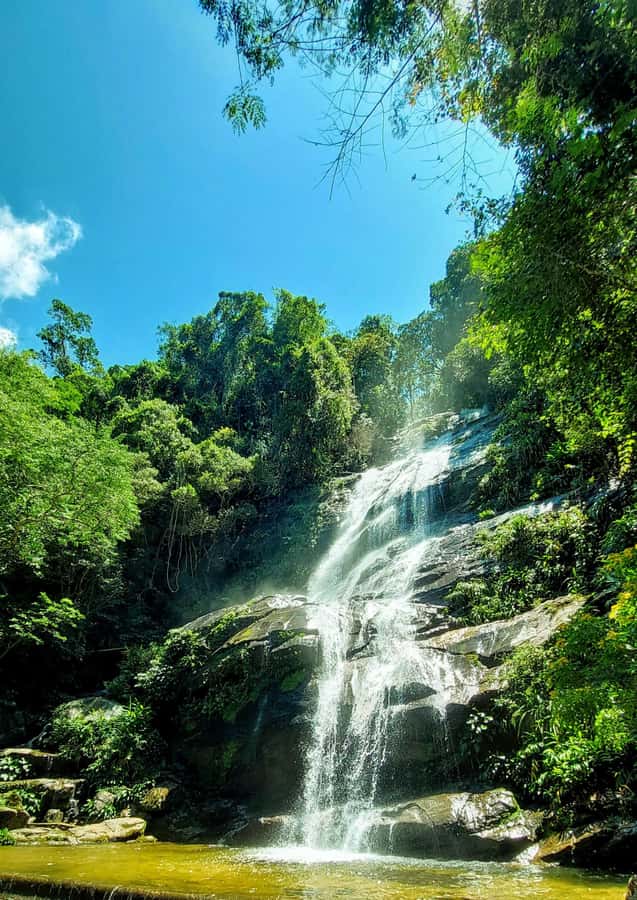
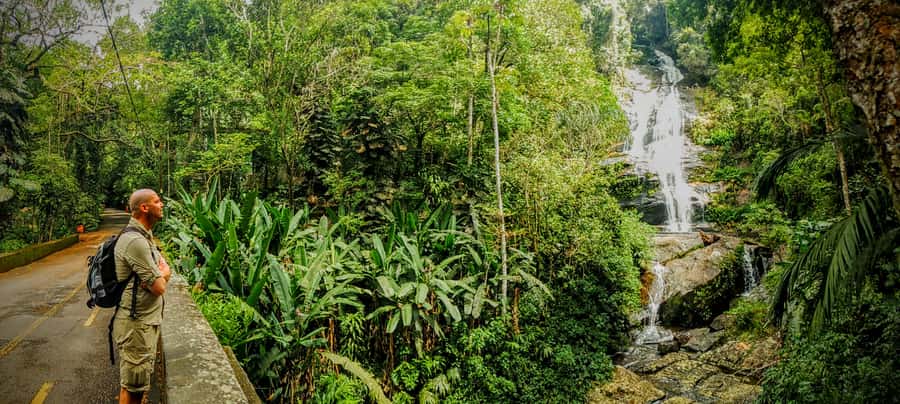
You start with a guided stop at Cascatinha Taunay. It’s a short guided moment, but it sets the tone: this hike isn’t only about getting to a viewpoint. You’re already moving through the forest ecosystem early in the day.
Next comes entry into Tijuca National Park, where you get a guided introduction and a short hike segment. This matters because the rainforest can look like one big green wall if you don’t know what you’re looking at. A good guide helps you read the place—plants, forest structure, and the human history that shaped this area.
One more thing you’ll feel early: the day is active from the start. Even when you’re not climbing hard yet, the walking adds up. If you try to pace yourself like it’s half-day sightseeing, you’ll probably feel it later.
Taquara Hill: the viewpoint that ties the whole day together
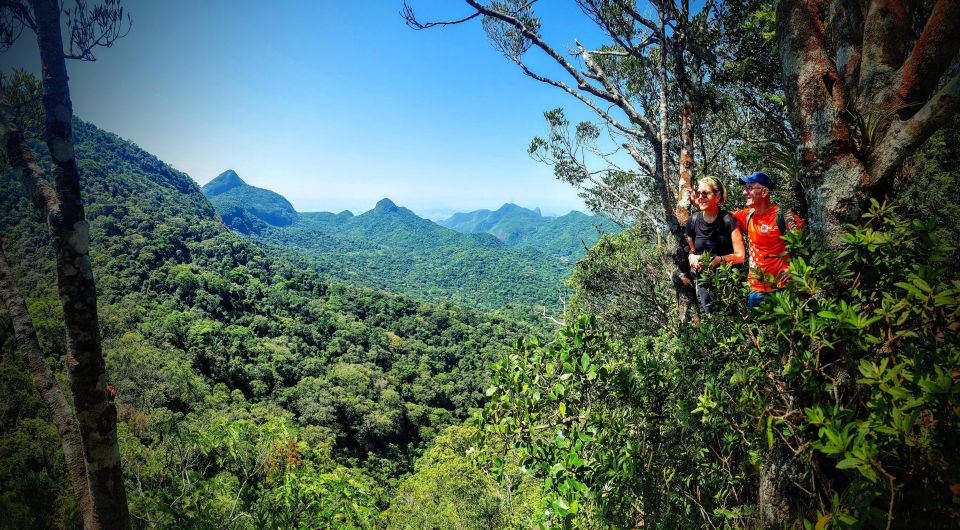
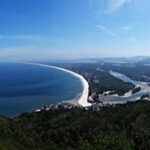
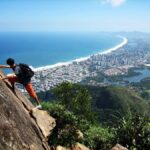
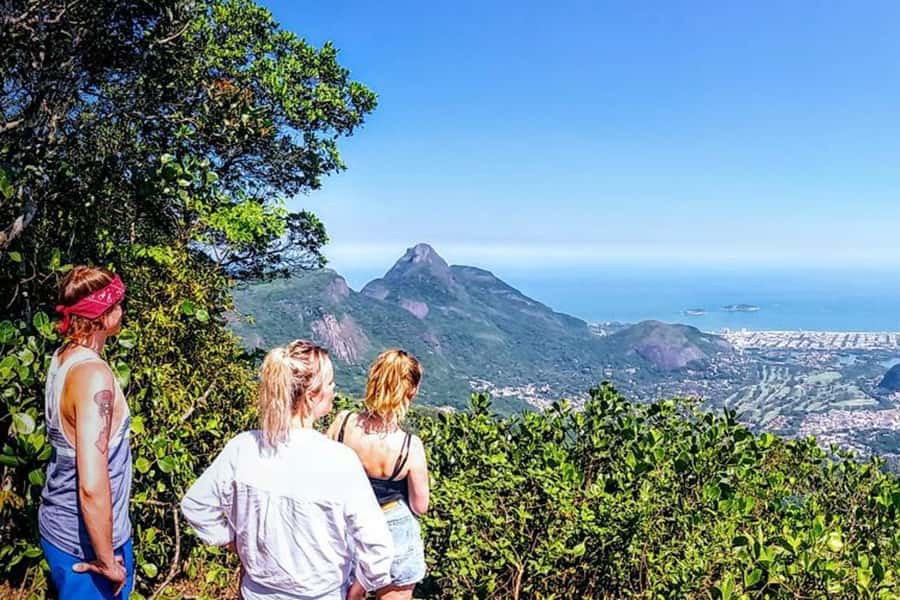
The highlight climb is toward Taquara Hill, which sits at about 814m (2,670 feet). The elevation payoff is real: on clear days, you can see two big perspectives—one over the forest valley and another over the west side of Rio, including coastline and lagoons.
Even if the weather is less cooperative, the viewpoint stop still has value. Fog and low cloud can shrink the distance, but they can also make the forest layers feel more dramatic. And if visibility is good, this is where the day earns its keep.
Along the way, you’ll get history context tied to the forest. The route includes education about the area’s past, including the coffee farms that once occupied these slopes before reforestation in the 1800s. That story gives the trees meaning. You start thinking about how the forest recovered, not just what it looks like today.
You can also read our reviews of more tours and experiences in Rio De Janeiro



Coffee farm ruins and the trail that feels almost off-limits
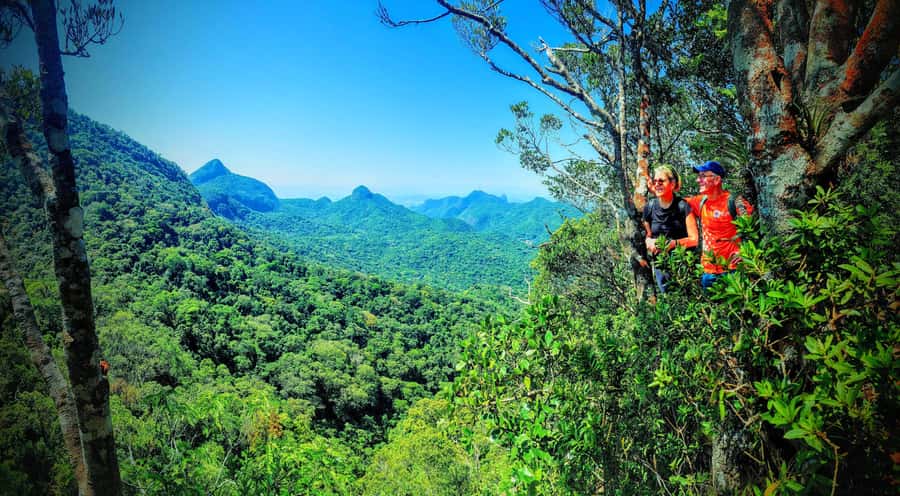
After you’ve climbed and reset your breathing, the route goes deeper into the rainforest on a section that’s described as rare to see others on. That’s the difference between doing Tijuca as a checklist versus experiencing it as a walk through a living place.
You reach the ruins of an old coffee farm roughly within the first hour of continued uphill and downhill hiking. Even if you don’t know coffee history, the ruins help you picture earlier land use. The forest has grown back, but the built traces remain.
This is also where wildlife spotting becomes more likely. People have mentioned monkeys, raccoons, frogs, and raccoons during their hike days. You still need to stay focused on footing first, but the quieter trail sections tend to make it easier to notice movement or calls.
Grottos, the cave moment, and the bat-cave stop
The middle-late part of the day leans into “you’re actually in the rainforest” territory. You’ll go to a grotto and a cave in the heart of the forest, including a bat cave visit. It’s guided and short, which is perfect. You get the experience without getting stuck there for long.
These stops work best when you treat them like pauses, not sightseeing chores. The temperature in caves can feel cooler and damp. The air can shift. Your guide’s interpretation helps you understand why this place matters ecologically, not only as a photo spot.
Practical note: if you’re wearing anything that’s easily scuffed, watch your footing and don’t rush into dark spaces. This tour is outdoors first, photos second.
Cascata da Baronesa: your waterfall reset (bring the right things)
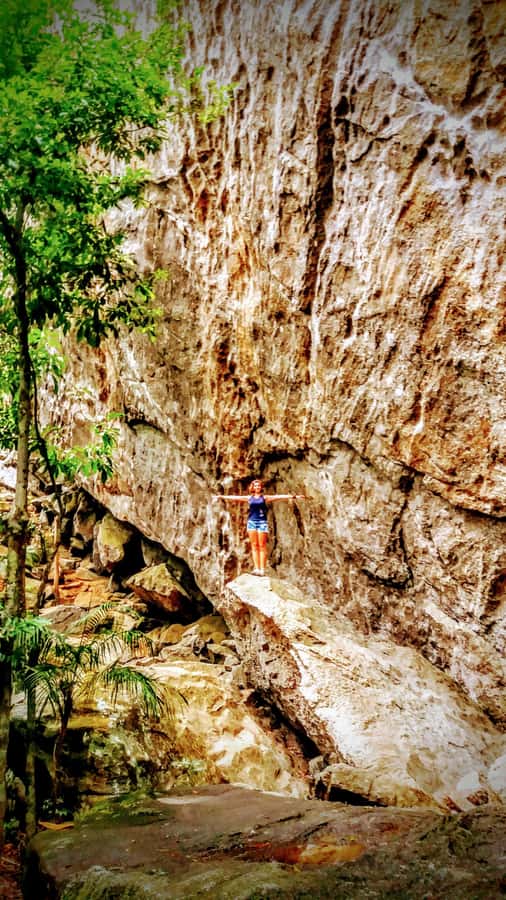
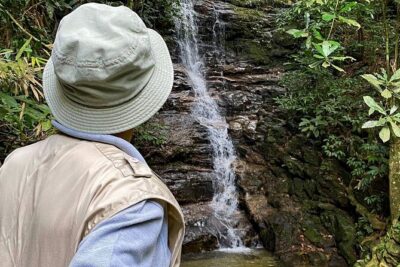
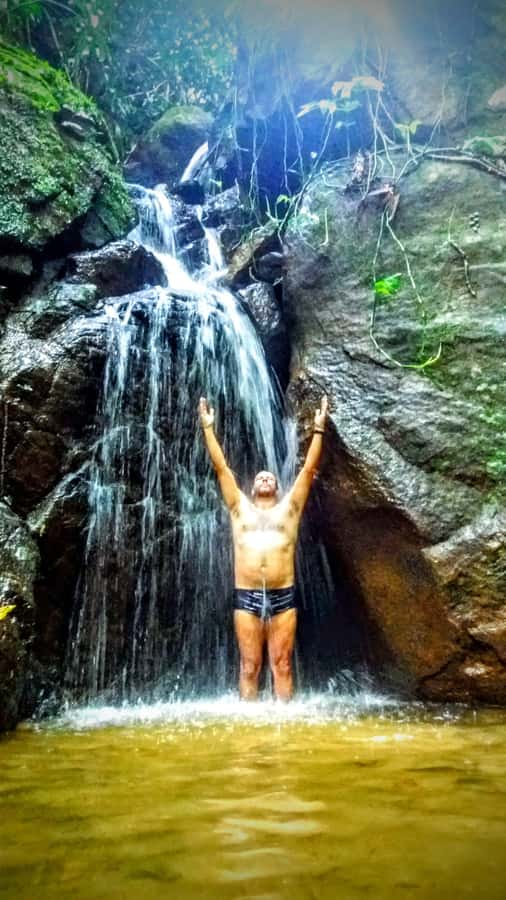
Near the end, you reach Cascata da Baronesa for a guided stop and time to refresh. The tour includes a waterfall shower concept, so yes—you’ll want to bring a towel and a bathing suit if you actually plan to cool off.
One practical detail: waterfall flow depends on rainfall. On wet days, you’ll get more water action. On drier days, the waterfall may be gentler. Either way, the point is the reset after hours of uphill effort.
There’s also a viewpoint photo stop on the way back, built into the day so you don’t feel like you’re only doing strenuous walking with no breaks.
Vista Chinesa on working days: a bonus viewpoint
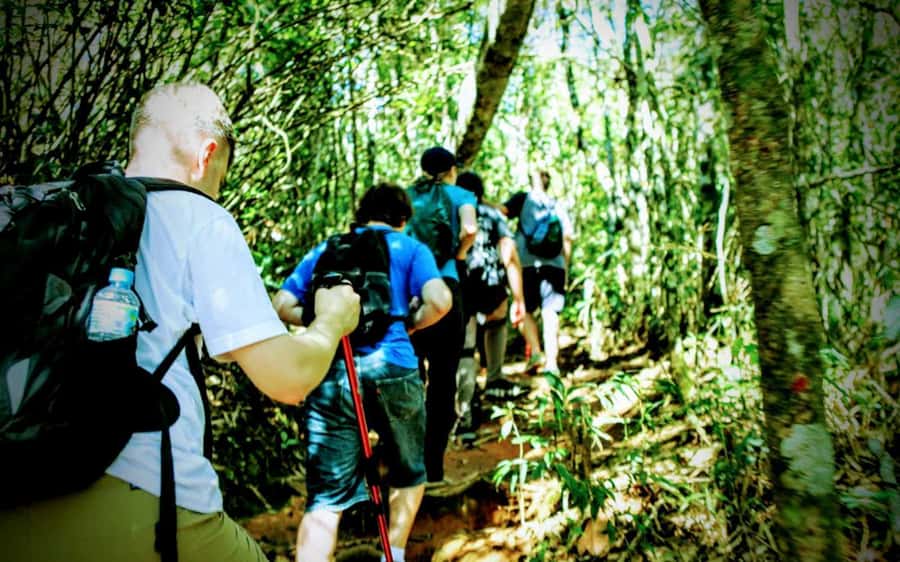
After the main forest portion, there’s an additional viewpoint stop at Vista Chinesa. It’s included only on working days, since on weekends and holidays vehicles are closed. If you’re traveling on a weekend, you might want to keep expectations flexible and accept that this part depends on the calendar.
This is still worth considering because Vista Chinesa can add that “Rio from above” feeling again after you’ve been surrounded by trees for hours. It also helps you tie the rainforest experience back to the city’s geography.
Guides who turn a tough hike into a story you’ll remember
The guiding is a big part of why people come back impressed. Names that appear in successful days include Gustavo, Ricardo, Roberto, Tito, Pietro, and Alex. Different guides have different personalities, but the recurring theme is the same: they connect the forest to Rio and to Brazil as a whole.
I like the way guides handle the “challenge” side without turning it into a military exercise. One account said the guide was chill and helped with pacing for someone who wasn’t as fast. Another said the guide took endless pictures and kept things fun with jokes, even when weather made the hike feel harder.
If you care about context, you’ll probably appreciate the historical framing around the coffee farms and the evolution of the forest. One hiker specifically highlighted how their guide covered Brazil’s political and geographical background alongside the hike. That kind of storytelling turns “walking” into “understanding.”
Price and value: is $86 fair for a 9-hour active day?
At about $86 per person for a 9-hour outing, value depends on what you want from the day.
Here’s what you get for that price:
- a bilingual guide (English and Portuguese)
- hotel pickup and drop-off in Rio’s South Zone
- insurance that requires participant details (passport number, birth date, full name)
- a full-day experience that combines serious hiking with multiple guided stops and a waterfall refresh
What you don’t get:
- food
- water and drinks
So the value question becomes: can you handle a hard, guided hike and do you want a day that feels like a real experience, not a quick drive-by? If yes, $86 starts to look reasonable. You’re paying for guided access to a route that’s not the busiest, plus transport and safety coverage.
If you want comfortable sightseeing only, you might be happier with something shorter and less vertical. This one is built for movement.
Packing list: what to bring and what to skip
This is where you set yourself up for success.
Bring:
- hiking shoes (non-negotiable for uneven, possibly slick rainforest trails)
- water (there’s no water included)
- snacks (food isn’t included)
- sunglasses and sunscreen
- sun hat
- insect repellent
- a towel and bathing suit if you want the waterfall shower
- a light layer if you’re sensitive to cooler, damp conditions near caves
Skip:
- luggage or large bags, since they aren’t allowed
One small but important mindset shift: you’re in the forest for hours. Gear that works in a city can fail outside. Keep it functional, not fashionable.
Weather, wildlife, and safety without turning it into stress
Tijuca can be rainy and humid, and some days bring fog. That’s not a reason to skip; it’s just a reason to hike smart.
From accounts of past days, the hike still delivered wildlife sightings even with poor visibility—monkeys and raccoons showed up, and people also mentioned frogs and birds. That suggests you’re not wasting the day if the viewpoint is cloudy. You might just experience the forest differently.
For safety:
- walk carefully on steep and uneven sections
- take your guide’s pacing cues seriously
- don’t assume a “short stop” means the trail will be easy right afterward
Also, because it’s a challenging hike, the operator can refuse participants who they feel can’t endure the trek. That’s not meant to be dramatic. It’s to keep the day safe for everyone in the group.
Should you book this Tijuca Forest Challenge Hike?
Book it if you want a full day outside where the forest feels real, not staged. You’ll like this if you enjoy steep effort, care about history beyond a quick stop, and want to see a chain of experiences—Taquara Hill viewpoints, coffee-farm ruins, grottos/caves, and a waterfall reset.
Skip it if your idea of a good day includes minimal elevation gain. The 10.4km with 848m climbing is a clear signal. And if you have health concerns compatible with difficult physical activity, this tour isn’t for you.
If you’re deciding last-minute, pick based on your hiking comfort. This trip doesn’t try to be gentle. It tries to be memorable—and for the right fitness level, it delivers.
FAQ
How long is the hike and how far do we walk?
The hike is about 4 to 5 hours of hiking time and covers approximately 10.4 kilometers (6.5 miles) round-trip.
What elevation gain should I expect?
You’ll climb about 848 meters (2,782 feet) during the hike.
Is food and water included?
No. Food and water and drinks are not included, so bring your own snacks and hydration.
Can I swim at the waterfall?
You can cool off at the waterfall and the tour notes you should bring a towel and bathing suit if you want to use the waterfall shower.
What are the age and health requirements?
It’s not recommended for children under 14. It also isn’t recommended if you have a history of cardiovascular, pulmonary, or any illness or condition incompatible with difficult physical activities.
Is Vista Chinesa included every day?
Vista Chinesa is included only on working days. On weekends and holidays, Vista Chinesa is closed for vehicles, so that stop may not happen.