
REVIEW · RIO DE JANEIRO
Rio Samba Bus: hop-on hop-off city tour in Rio de Janeiro
Book on GetYourGuide →Operated by C2RIO TOURS & TRAVEL · Bookable on GetYourGuide
Rio can feel like a lot on day one. This route is a fast way to see the big icons from Copacabana to Christ the Redeemer while also getting a guided tour vibe (in Portuguese, English, and Spanish). I especially like that it’s truly hop-on hop-off, so you can linger at places that catch your eye, and that it includes onboard cultural energy with live music. One thing to keep in mind: the schedule at stops can be looser than you’d expect, so treat this as a smart overview, not a tight, timed appointment.
The bus starts in the South Zone and works its way through Rio’s center, so you’re not bouncing around with multiple transfers right away. You’ll pass more than 10 tourist sights as the day unfolds, and the stops are set up so you can pop off for photos, landmarks, and quick looks—then rejoin when it fits your pace. My only caution is about planning your day around timing-heavy attractions, since a missed bus connection can throw off your whole flow.
In This Review
- Key Points at a Glance
- Why this hop-on bus works for a first Rio day
- The route: Copacabana to Sugarloaf, then into Rio center
- Waterfront views that set the mood: Copacabana and Aterro do Flamengo
- Historic center highlights: Cinelândia, Lapa, Cathedral, and Paço
- Sugarloaf Mountain from the cable car park: Morro da Urca photos
- Christ the Redeemer via Corcovado Railway: the part you plan around
- The central-city passes: Maracanã, Sambódromo, AquaRio, and big landmarks
- Back to the South Zone: Lagoa, Flamengo Museum, Garcia Dávila, and Ipanema
- Comfort, Wi-Fi, and how to use the onboard music
- Price and value: what $31 buys in real life
- Timing choices: when departure time affects your day
- Who should book Rio Samba Bus
- Should you book this bus tour?
- FAQ
- How long is the Rio Samba Bus tour?
- Is it hop-on hop-off?
- Where does the tour start?
- What languages does the guide use?
- Does the price include tickets to attractions like Christ the Redeemer or the cable car?
- Is Wi-Fi included on the bus?
- What departure times are available?
Key Points at a Glance

- Hop-on hop-off freedom across a route with 24 stops, including beachfront viewpoints and major landmarks
- South Zone + city center coverage in one go, so you get the “Rio feel” without hopping on taxis all afternoon
- Christ the Redeemer access via the Corcovado Railway with dramatic forest-and-city views on the way up
- Sugarloaf area stop at the cable car park, built for great photo timing with Morro da Urca
- Live guide commentary (Portuguese, English, Spanish) plus onboard music to match Rio’s rhythm
- Free Wi-Fi on board, handy for maps while you decide where to hop next
Why this hop-on bus works for a first Rio day

If you land in Rio and you want to stop thinking and start looking, this is the kind of tour that helps. In about two hours of touring time, you cover a lot of ground that normally takes more planning: beachfront icons, the historic center, and the city’s biggest “postcard” views.
I like that it’s not just a drive-by. The guide talk is live and offered in three languages, so you’re not stuck reading a headset. You also get onboard musical performances tied to Rio’s sound—MPB, samba, and other Brazilian rhythms—so the ride feels like part of the experience, not just transportation.
The value is strongest for people who want orientation first. If you’re the type who likes to build a day plan after you see what’s where, this tour earns its keep. If you need very exact timing to catch specific entry windows, you’ll still enjoy it—but you’ll want backups.
You can also read our reviews of more city tours in Rio De Janeiro



The route: Copacabana to Sugarloaf, then into Rio center

The tour’s outward leg begins in Copacabana, then pushes from the sea toward the city’s core. Early on, you’re on the waterfront—easy to appreciate even if you only stay seated with the window views. Then it pivots inland, where Rio’s architecture and big public buildings start showing up.
You’ll reach key central stops like Cinelândia, the cluster with the Municipal Theatre and the Museum of Fine Arts, plus the National Library nearby. From there, the route goes to Lapa—famous for the Arcos da Lapa and the Selarón staircase—two “walk-around” spots where you can hop off and get your bearings fast.
Later, the itinerary moves past landmarks like the Rio de Janeiro Metropolitan Cathedral and the Imperial Palace, then continues to Candelária Church and the AquaRio/Yup Star area. After that, the big-ticket moment comes: Christ the Redeemer via the Corcovado Railway.
The return route keeps the sightseeing momentum instead of ending abruptly. You swing back through places like Largo do Boticário and Parque Lage, then toward Lagoa and Flamengo Museum, and finish with Ipanema beach stops (including Post 9 and Post 8). It’s a strong loop for the way most visitors actually move through Rio.
Waterfront views that set the mood: Copacabana and Aterro do Flamengo
Copacabana is where Rio first shows its scale. From the bus, you get the sea line, the promenade energy, and that classic shoreline geometry without having to fight for a prime location on foot. Even if you hop off only briefly, you can still soak up the vibe and figure out where you want to spend more time later.
From there, you pass Aterro do Flamengo, one of the best-known waterfront stretches in the city center. The value here is perspective. From the road, the waterfront reads like a continuous ribbon—park, sea, and skyline—so you quickly understand how Rio built itself around views.
If you’re trying to decide between staying “mostly on the bus” versus hopping off often, these waterfront areas are the best compromise. Stay aboard for orientation when you want ease. Hop off if you want a quick walk for photos and to feel the street-level rhythm.
Historic center highlights: Cinelândia, Lapa, Cathedral, and Paço

When the route hits the center, the feel shifts from beach energy to civic Rio—public buildings, historic streets, and neighborhoods that look like they’ve always been part of the city’s identity.
Cinelândia is a highlight because it’s compact and impressive. On the bus, you can spot the big landmarks, then hop off if you want to see façades up close. The Municipal Theatre and the Museum of Fine Arts bring the grandeur; the National Library adds a sense of old-school importance.
Then comes Lapa, which is all about character. The Arcos da Lapa are instantly recognizable, and the Selarón staircase is the kind of place you can’t really understand until you’re standing next to it. This is a good area for short hop-offs: hop off, take your photos, walk a loop, and then re-board before you lose momentum.
The Cathedral of Rio de Janeiro and the Paço Imperial add another layer. These aren’t “quick photo” spots only; they help you understand how Rio’s religious and colonial-era landmarks anchor the center’s story.
Sugarloaf Mountain from the cable car park: Morro da Urca photos

Sugarloaf is one of those Rio stops where the bus is just your front door. The bus heads you to the Sugarloaf Cable Car Park, which sets you up for the cable car ride to Morro da Urca.
Here’s the practical part: tickets to attractions aren’t included, so plan on buying separately if you want the actual cable car experience. The good news is that the bus stop placement makes it easy—you’re not trekking across town with vague directions. You’re dropped off where the action happens.
For photos, this stop is all about timing and angles. Morro da Urca gives you that classic view with Sugarloaf Mountain in the background. If the weather is clear, it looks like the whole city lays out beneath you. If clouds roll in, you can still appreciate the scale from lower visibility—Rio is still dramatic even when the sky changes its mind.
Also, if you’re lucky with the ride style, you might get better sightlines depending on the bus setup that day. One trip can feel more “open view,” another more “AC comfort,” but either way you’re in the right place for the main attraction.






Christ the Redeemer via Corcovado Railway: the part you plan around

This is the emotional center of the itinerary. After you pass through the route’s return segments, you reach the Christ stop where you take the Corcovado Railway up to Christ the Redeemer.
Two key things matter for planning:
- The Corcovado Railway ride happens through the Tijuca Forest, so you’ll get that mix of greenery and city views rising as you climb.
- Tickets to attractions aren’t listed as included, so you should assume you’ll pay separately for the train/cable-style access if required.
That climb is the reason to choose this day tour instead of only looking from the street. Even from the bus, you’ll see Rio’s scale, but the railway adds the “in-between” scenery—forest, viewpoint shifts, and the gradual reveal of the city below.
If your goal is photos that don’t look rushed, give yourself breathing room. This stop is where a late rejoin can hurt, so either commit to spending time here or decide that you’ll keep it as a shorter visit and re-board quickly.
The central-city passes: Maracanã, Sambódromo, AquaRio, and big landmarks
Rio has sports and spectacle built into its geography, and this route passes several of those anchors.
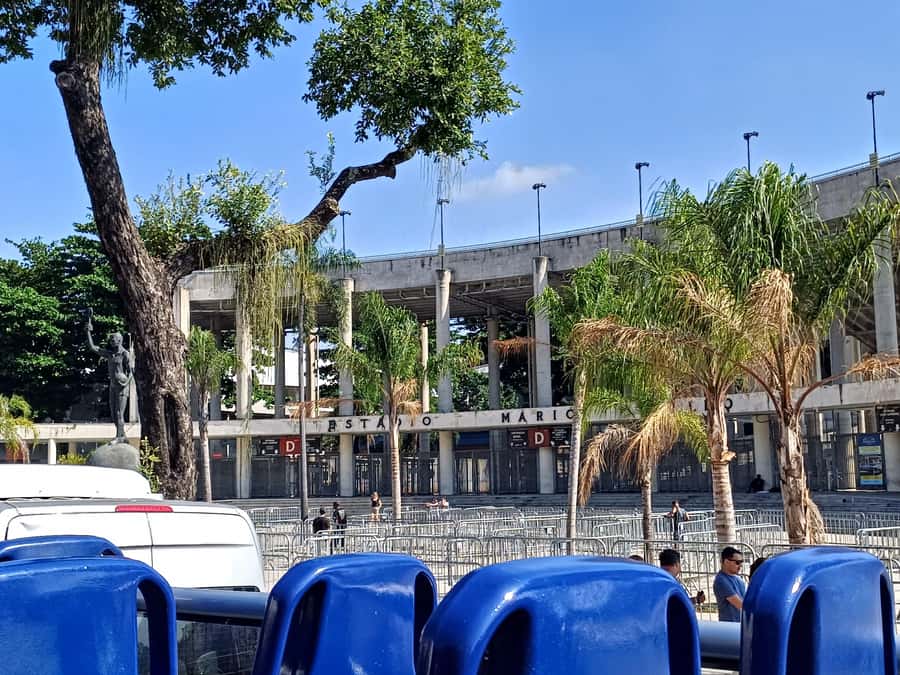
The outward list includes Maracanã, and even though the route framework includes it, you should still plan as if it may not be your guaranteed “hop off and walk” stop. Build your day so the rest of the sightseeing still works if you don’t get the exact experience you expected there.
On the return side, you pass the Sambódromo and the Biopark area. You also see the Aquarium/AquaRio and the Yup Star vicinity. These are useful from the bus because they give you a mental map. Once you understand where these places sit, you can decide later whether you want to return for a focused visit.
In short: treat these as orientation wins. If you want a deep dive later, you’ll have the locations pinned and the bus tour will have done the heavy lifting.
Back to the South Zone: Lagoa, Flamengo Museum, Garcia Dávila, and Ipanema

The return trip is a strong finish because it brings you back toward the places where you’ll likely want to spend a few extra hours on your own.
Largo do Boticário and Parque Lage are good scenic pauses. Lagoa is another key stop area; there’s even a Lagoa Skate Park listed, which tells you the route passes by lively public spaces, not only postcard monuments.
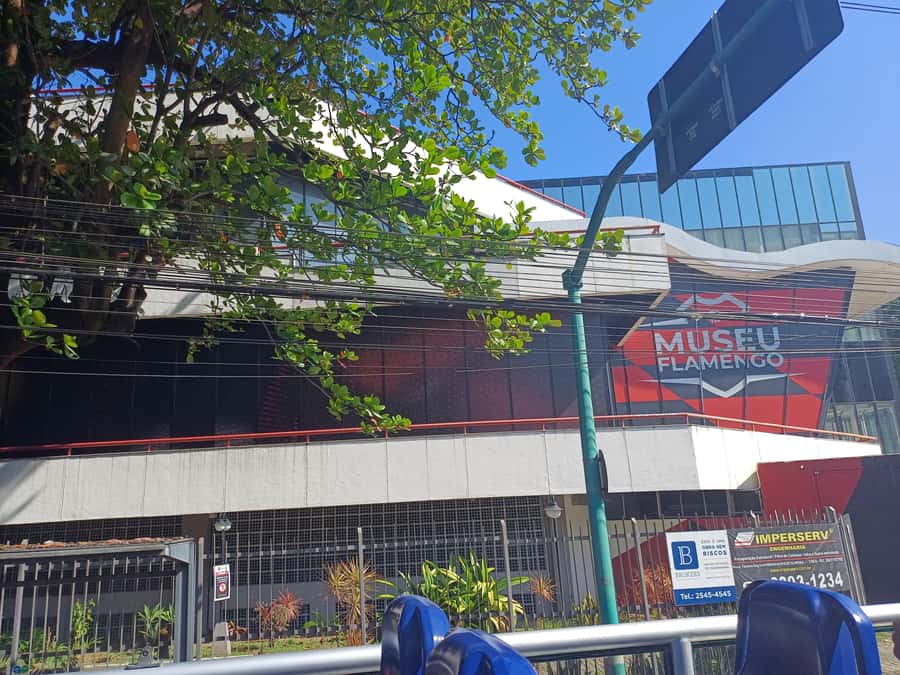
The Flamengo Museum stop helps you connect Rio’s culture to place. Even if you don’t step inside, seeing it on the route is useful. It helps explain why this area keeps pulling people back.
Finally, you reach Ipanema beach, with stops at Post 9 and Post 8. This is a satisfying end because you close the loop: ocean views on one side, city icons on the other. If your feet are tired, it’s a nice way to wrap up with minimal effort—hop off, stroll a bit, then settle into your evening plans.
Comfort, Wi-Fi, and how to use the onboard music
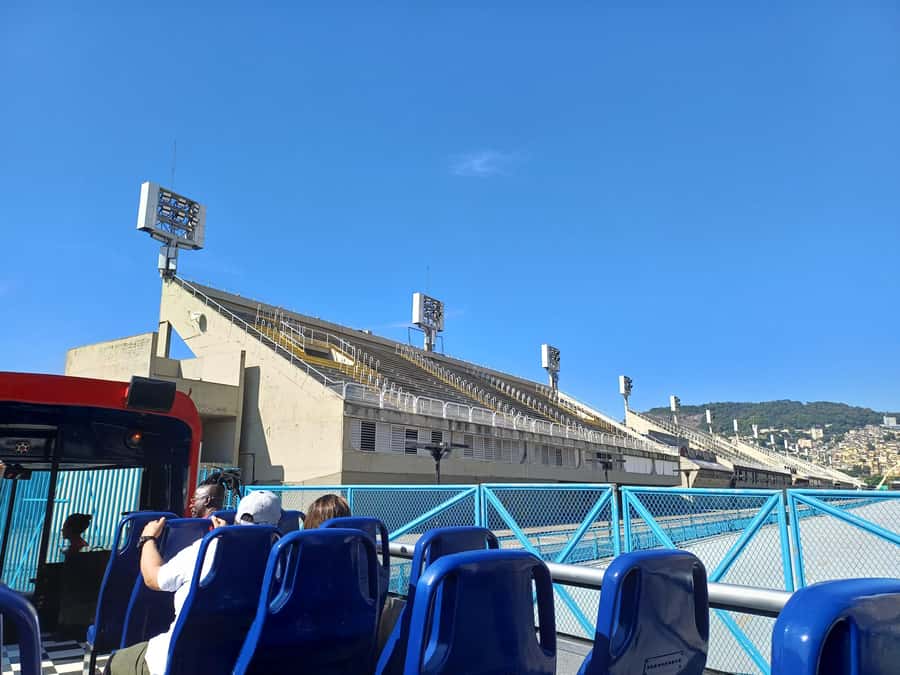
This is a panoramic bus experience with onboard guide talk and free Wi-Fi. Wi-Fi matters more than you’d think in Rio, because it helps you re-check where you want to hop next and compare it with what you’re seeing from the window.
You may also notice differences in bus style depending on the day. One common pattern is that you can ride in a more closed coach for comfort (including air-conditioning) or in a setup that gives better open-air sightlines. Either way, the bus design is meant for views and photo spotting while you stay seated.
The tour includes musical performances on board. Music is one of the best parts of a Rio day tour because it makes the city feel like itself. Still, don’t build your whole day around a specific song or exact time for the show. If you’re flexible, it becomes a fun extra, not a stress point.
Price and value: what $31 buys in real life
At about $31 per person for a 2-hour hop-on hop-off style tour, this can be a good value if you want guided orientation plus major landmarks in one afternoon. What you’re paying for isn’t just the bus ride. You also get live commentary in Portuguese, English, and Spanish, musical programming, and onboard Wi-Fi.
The important tradeoff is that tickets for the actual attractions aren’t included. That means you still budget for separate entry or transport pieces when you want the cable car or the train up to Christ. However, the route’s stop locations are practical. You’re brought close to the entrances, so you don’t spend half your time figuring out logistics.
So think of it like this: the tour helps you decide what’s worth paying for next. You’ll likely use it as a map maker day—then come back later for the one or two sights you truly want to linger on.
Timing choices: when departure time affects your day
Departure times vary across the day (for example, starting in the morning and continuing into the afternoon). If you’re trying to avoid crowds, consider choosing a time that gives you enough daylight for Christ and Sugarloaf views without feeling rushed back for your night plans.
Also, since hop-on hop-off connections can be less predictable at the stops, I recommend you avoid planning a tight second activity right after your last rejoin. Instead, give yourself a buffer so a delayed bus doesn’t force you into last-minute scrambling.
And here’s a simple tactic that works in Rio: set your priorities for each zone. For example:
- South Zone priorities: Copacabana or Sugarloaf
- Center priorities: Lapa + one major civic landmark
- Big-ticket priorities: Christ Redeemer, with extra time
If you do that, the rest of the route becomes bonus time rather than a countdown.
Who should book Rio Samba Bus
This tour fits best if you:
- Are visiting for the first time and want a clear, guided picture of Rio’s geography
- Prefer a low-effort way to see big icons without planning multiple separate transfers
- Like the idea of hop-on hop-off flexibility, so you can adjust on the fly
- Want onboard context and cultural rhythm, not just scenic driving
It may be less ideal if you:
- Need very strict timing for entry-based attractions
- Plan to rely entirely on bus stop precision for multiple timed activities in one day
If you fall in the first group, this is a strong way to get oriented fast.
Should you book this bus tour?
I’d book it if your goal is a first-day overview: Copacabana, Sugarloaf, Rio’s center highlights, and Christ the Redeemer, all connected by a guided route with onboard culture. At $31, the value is strongest when you use the bus as your map and decide later what deserves a longer visit.
Skip it—or plan extra flexibility—if your schedule is razor-thin and you can’t afford waiting between stops. Also, if you’re counting on the onboard music being a big moment, treat it as a bonus, not the anchor of your itinerary.
If you’re ready to keep your day fluid and let Rio’s sights set your pace, this one earns its spot.
FAQ
How long is the Rio Samba Bus tour?
The experience is listed as 2 hours.
Is it hop-on hop-off?
Yes. It’s a hop-on hop-off style tour, and you can get on and off at the attractions along the route.
Where does the tour start?
It starts in the Copacabana area.
What languages does the guide use?
The live commentary is offered in Portuguese, English, and Spanish.
Does the price include tickets to attractions like Christ the Redeemer or the cable car?
Tickets to attractions are not included. The tour takes you to major attractions, but you should expect to purchase tickets separately.
Is Wi-Fi included on the bus?
Yes. Free Wi-Fi is included on board.
What departure times are available?
Departure times vary by day, including 9:15 am, 10:00 am, 10:45 am, 11:30 am, 12:15 pm, 1:00 pm, 1:45 pm, 2:30 pm, 3:15 pm, 4:15 pm, and 5:15 pm.