
REVIEW · RIO DE JANEIRO
Walking tour of the bohemian neighborhoods of Santa Teresa and Lapa
Book on Viator →Operated by Good Guide In Rio · Bookable on Viator
Yellow tram views make Rio feel close up. This Santa Teresa + Lapa walking tour pairs a classic yellow Bonde tram ride with street-level scenes that feel like real neighborhood life, not a staged postcard. It’s built as a relaxed morning loop with a small group size, so your guide can actually point out what matters.
I especially love the local, people-first guiding style I’ve seen from guides like Edmundo, Lorena, and Ivan, all tied to Santa Teresa’s art scene. I also love that the route mixes major icons (Parque das Ruínas, Selarón steps, Arcos da Lapa) with shorter stops where you can slow down and look at houses, viewpoints, and everyday street culture around Largo dos Guimarães.
One thing to consider: the day includes a lot of walking, and Santa Teresa’s streets are steep, so you’ll want comfortable shoes and a steady pace for the stairs and hill-hopping along the way.
In This Review
- Key highlights worth showing up for
- Santa Teresa to Lapa: the half-day that turns Rio on its head
- Meet at Copacabana Palace and get moving fast
- Stop 1: Santa Teresa tram at the station (the panoramic warm-up)
- Stop 2: Largo dos Guimarães and the calm side of Santa Teresa
- Stop 3: Parque das Ruínas and the gazebo view over Rio
- Stop 4: Escadaria Selarón at street level (more than a photo stop)
- Stop 5: Arcos da Lapa aqueduct and the street-art walls
- Stop 6: Cinelândia square and the civic buildings on parade
- The guide is the real value (Edmundo, Lorena, Ivan make it personal)
- Price and time: what $72.09 buys you in real terms
- What to expect on the ground (pace, walking, and comfort)
- Who should book this Santa Teresa and Lapa walk
- Should you book it? My decision guide
- FAQ
- FAQ
- What is the duration of the Santa Teresa and Lapa walking tour?
- What does the tour cost?
- What time does the tour start, and where do we meet?
- How big is the group?
- Which stops are included, and is there any admission cost?
- Is the tour near public transportation?
- Will I get a confirmation at booking?
- Does the tour end at the same place it starts?
- Is the experience refundable if plans change?
Key highlights worth showing up for
- Historic yellow Bonde tram ride up from the Santa Teresa tram station for panoramic views
- Parque das Ruínas gazebo viewpoint with sightlines toward Christ, Botafogo, and the Arcos of Lapa
- Escadaria Selarón and its story-driven wall of color at the foot of the hill
- Arcos da Lapa aqueduct plus graffiti-covered facades that make the area feel lived-in
- Cinelândia architecture walk-by focusing on major public buildings and the Teatro Odeon still operating
Santa Teresa to Lapa: the half-day that turns Rio on its head
Most first-time Rio plans stay glued to the beach line. This route does the opposite. You’ll start where the city starts climbing, then work your way down toward Lapa’s music-and-arts energy, with views that change every few minutes.
What makes this combo work is that Santa Teresa and Lapa aren’t just “pretty neighborhoods.” They connect through the terrain and through Rio’s layers: hills, old water infrastructure, street art, and civic buildings all in one morning.
You can also read our reviews of more walking tours in Rio de Janeiro



Meet at Copacabana Palace and get moving fast
You meet at Copacabana Palace, a Belmond Hotel (Av. Atlântica, 1702) at 9:00 am, and the tour ends back at the meeting point. Starting here matters because it keeps the whole morning structured; you’re not guessing transit routes or timing your own transfer from one hillside zone to another.
The tour is also designed to fit around public transit. It’s near public transportation, and the experience includes transport tickets tied to the plan, including the tram ride up to Santa Teresa (and in some cases, metro access is included in the tour experience).
For your day, the main “logistics win” is that you’re not juggling multiple ticket types while you’re trying to enjoy the views. You just meet, walk, look, and keep going.
Stop 1: Santa Teresa tram at the station (the panoramic warm-up)
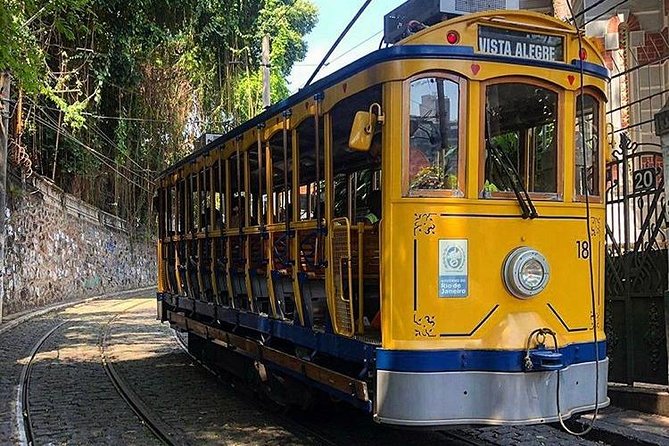
The morning kicks off at the Santa Teresa tram station for the famous yellow Bonde tram ride. This leg is short enough to keep energy high, but it’s long enough to feel the hill open up in front of you—an easy way to transition from “I’m in Rio” to “I understand how Rio sits.”
This part is also ticketed and included. You’re not hunting down admissions right when you’re still getting your bearings.
A practical tip: treat the tram ride as your chance to slow down and watch the streets shift below you. When you later walk the neighborhoods on foot, you’ll spot the same streets from new angles.
Stop 2: Largo dos Guimarães and the calm side of Santa Teresa
Next comes Largo dos Guimarães, in the heart of Santa Teresa. This isn’t about one single monument. It’s about the atmosphere—houses from the late 1800s and early 1900s, plus the mix of viewpoints and places where people actually eat and meet.
This stop is valuable because it trains your eye. Santa Teresa can look like it’s all hills and charm, but the Largo helps you see the human rhythm: residential architecture, local bars and restaurants, and the kind of streets that feel walkable because they’re built for everyday wandering.
If you like photos, this is where you’ll get them without forcing it. If you don’t like photos, you’ll still enjoy it because you can just look around and feel the pace.
Stop 3: Parque das Ruínas and the gazebo view over Rio
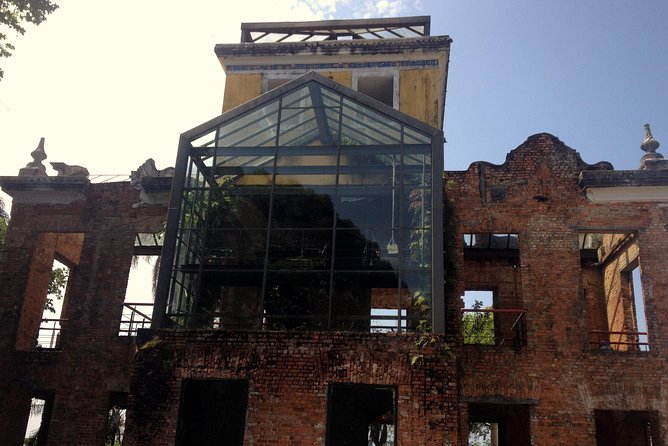
Then you reach Centro Cultural Municipal Parque das Ruínas, one of the Santa Teresa landmarks. The site is tied to Laurinda Santos Lobo’s former home, later transformed into a gazebo built for views.
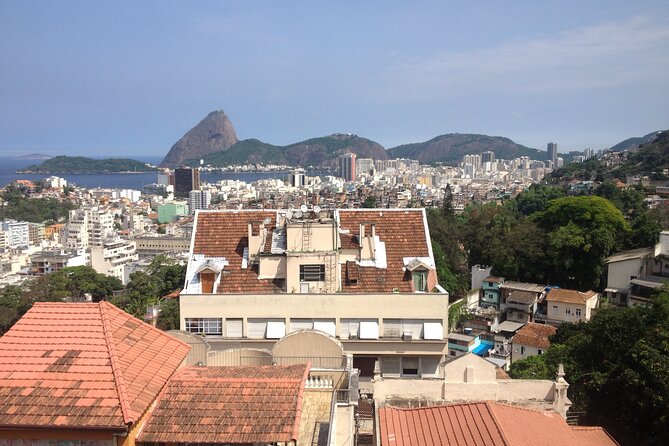
What you’re here for is the sightline. From this point, you can take in the Arches of Lapa, plus views toward Christ and Botafogo, with a wide look over the Centro area in the background. Even if you’ve seen Rio from overlooks before, this angle helps connect the neighborhoods you’re about to walk through.
One nice detail in how the stop is framed: it sets up the rest of the morning. After you see where you’re headed, the next stops hit harder, because you’re not just collecting landmarks—you’re watching the city assemble.




Stop 4: Escadaria Selarón at street level (more than a photo stop)
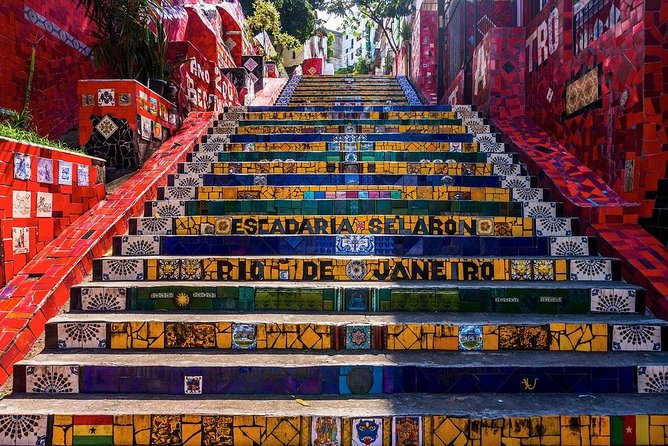
Next is Escadaria Selarón, the multicolored staircase created by the Chilean artist George Selarón over about twenty years. Yes, it’s instantly recognizable in photos. But walking past it with a guide turns it into something else: a story you can feel in the texture of the tiles and the way people gather around it.
This is also where the tour becomes more “Rio” than “Rio highlights.” You’re moving from lookout points into the kind of public art that people experience as part of daily movement—on a hill you have to navigate, not a museum path you glide through.
Practical angle: give yourself a little time here. Don’t rush the step-by-step look, because the small visual details are what make the staircase memorable.
Stop 5: Arcos da Lapa aqueduct and the street-art walls
From Santa Teresa’s descent, you reach Arcos da Lapa, the old Rio aqueduct dating back to the 1700s. The aqueduct supplied water to the city until the end of the 1800s, so you’re not just seeing old stone. You’re seeing infrastructure that shaped daily life long before the neighborhood became a cultural stop.
The tour also connects this to the tram route: the tram passes through the aqueduct as it accesses Santa Teresa. That connection is smart, because it helps you understand why this place is positioned the way it is—built for function, later repurposed into city movement and views.
And yes, the walls are covered with graffiti. That matters too. Lapa’s street art isn’t just decoration here; it’s part of the district’s identity, so you’ll want to look at the area like you’re studying a living wall, not a blank backdrop.
Stop 6: Cinelândia square and the civic buildings on parade
Last stretch is Cinelândia, where you get a guided introduction to a cluster of major attractions. You’ll pass key buildings like the Teatro Municipal (Rio’s opera house), Museu das Bellas Artes, the city’s municipal building, the Biblioteca Nacional, and the Teatro Odeon.
The Odeon is highlighted as the only cinema in the square still in operation. That kind of detail is worth paying attention to because it’s a reminder that this isn’t only about what’s old. It’s also about what’s still used.
Why this stop works after Lapa and Santa Teresa: you go from street art and hillside textures into a more formal public square. It gives you a full sense of Rio’s scale—from small streets up a hill to a civic center built to project the city’s identity.
The guide is the real value (Edmundo, Lorena, Ivan make it personal)
A tour like this rises or falls on who’s holding the thread. This experience has a strong pattern: the guides don’t treat the neighborhood like a checklist. They talk like people who belong there.
You’ll see it in how guides operate. Edmundo, for example, is an artist himself and has the kind of local familiarity that helps you feel welcome quickly. Lorena is known for humor and candor, and she’ll adjust on the fly if the morning hits a snag—like when tram access is affected by activity in the neighborhood. Ivan is described as a Santa Teresa local who knows people, places, and small details that most outsiders miss.
For you, the practical benefit is simple: you get context without slowing the whole tour down. Your guide can point out why a building matters, why a view is framed the way it is, and where to look next.
Small group size helps here too. With a maximum of 12 travelers, questions don’t get lost, and the pace stays human.
Price and time: what $72.09 buys you in real terms
At $72.09 per person for about 3 hours and 30 minutes, you’re paying for more than walking. You’re paying for a guided route that strings together Santa Teresa and Lapa’s best-known elements with transit support and ticket coverage.
The value angle is that part of the admissions are handled for you. The tram ride is ticketed and included, while the other stops are listed as free. Also, the schedule includes time for each anchor point, not just quick photo stops.
Given that this tour is commonly booked around 21 days in advance on average, it’s a sign it’s a popular slot. If you want it on your preferred morning, plan early.
Is it “cheap”? Not really. But for a route that includes transit and guided interpretation across multiple areas, it’s a fair way to buy time and confidence—especially if you’re not planning to figure out hills, tram connections, and local storytelling on your own.
What to expect on the ground (pace, walking, and comfort)
This is a walking tour, but it’s paced like a guided stroll with specific stops. You’ll spend set time at places like the tram ride and viewpoints, then move through neighborhoods on foot.
Because you’ll pass Selarón steps and move through the hillside-to-downhill transition, I’d treat the day as “active.” Comfortable shoes aren’t optional if you want the experience to feel easy. Also, keep your phone/camera ready but don’t let gear slow you down at tight spots.
One more thing: if your trip overlaps a busy season, just be mentally flexible. One review highlighted that scheduling can shift when neighborhood conditions affect tram access, and the guide adjusted quickly. Build in that mindset and the day will feel smooth.
Who should book this Santa Teresa and Lapa walk
This tour is a great fit if you want:
- a compact morning covering Santa Teresa + Lapa without wasting time
- a guide who can explain what you’re seeing at street level
- a blend of famous Rio icons and smaller neighborhood moments
- a small group setting that keeps the energy friendly
It’s also a strong choice if you already have a beach plan later and want a morning that feels more cultural and more local.
If you prefer to move at your own pace with no guidance, you might find it less satisfying. But if you enjoy context—why a place looks the way it does—this format makes sense.
Should you book it? My decision guide
Book it if you want the simplest path to Santa Teresa’s hillside charm and Lapa’s dramatic street-art and aqueduct history in one focused morning. The biggest reason I’d choose it is the combination of a real tram ride plus a local guide with neighborhood connections, not just a list of stops.
Skip or think twice if stairs and steep walking are a problem for you, since the route includes major staircase territory and hillside movement. Otherwise, this is a smart value buy for a first-time Rio visitor who wants more than beaches and more than a single landmark.
FAQ
FAQ
What is the duration of the Santa Teresa and Lapa walking tour?
The tour lasts about 3 hours 30 minutes.
What does the tour cost?
It costs $72.09 per person.
What time does the tour start, and where do we meet?
It starts at 9:00 am at Copacabana Palace, a Belmond Hotel, in Copacabana (Av. Atlântica, 1702).
How big is the group?
The tour has a maximum of 12 travelers.
Which stops are included, and is there any admission cost?
The Santa Teresa tram ride includes an admission ticket. The stops at Largo dos Guimarães, Parque das Ruínas, Escadaria Selarón, Arcos da Lapa, and Cinelândia are listed as free.
Is the tour near public transportation?
Yes, it is near public transportation.
Will I get a confirmation at booking?
Yes, confirmation is received at the time of booking.
Does the tour end at the same place it starts?
Yes, the activity ends back at the meeting point.
Is the experience refundable if plans change?
No. This experience is non-refundable and cannot be changed for any reason.