REVIEW · RIO DE JANEIRO
Explore Little Africa : Unveiling Afro Heritage in Rio de Janeiro
Book on Viator →Operated by Agência Etnias Turismo e Cultura · Bookable on Viator
Rio’s Little Africa hits harder than you expect.
This 3.5-hour guided walk weaves Afro-Brazilian history into real street corners, port relics, and sacred landmarks. I love that it’s not just “facts on a map,” it’s a decolonial narrative that helps you read the city differently. I also like the way the route connects multiple sites tied to slavery memory and Black culture in Rio. One drawback: there’s a fair amount of walking and standing, so plan for comfortable shoes and take breaks when you need them.
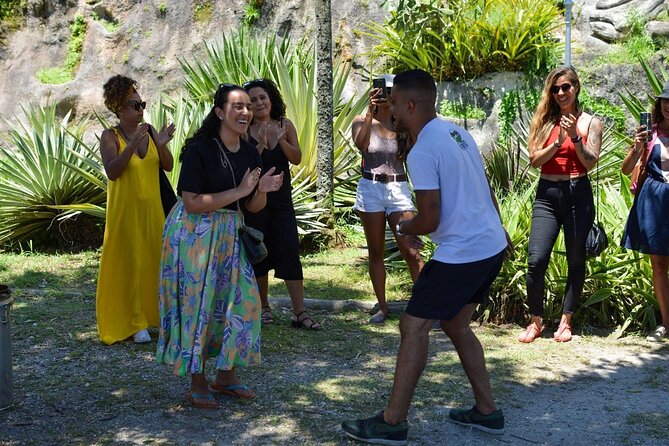
You’ll start at Santuário de Santa Rita in Centro and finish near Largo da Prainha in Saúde. The group is capped at 20 people, and you’ll even get a short ride on the VLT public transport as part of the experience price. Guides like Raphael and Carolina come up again and again in the feedback for being sharp on details and warm with questions, including pacing adjustments for visitors who needed a slower rhythm.
In This Review
- Key things I’d pencil in for your plan
- First Stop: Santa Rita and the decolonial frame you carry all day
- Pretos Novos: turning archaeology and memory into something you can feel
- MUHCAB in Gamboa: Afro-Brazilian history beyond the postcard
- Cais do Valongo: the port district that changes your whole understanding of Rio
- Pedra do Sal and Prainha: sacred landmark to neighborhood memory
- What 3.5 hours feels like (and what to bring)
- Guides are the difference, and this route shows it
- Value check: $82.53 makes sense if you care about meaning
- Weather and closed museums: plan smart around Rio dates
- Who should book this Little Africa tour
- Should you book it?
- FAQ
- How long is the Little Africa tour in Rio de Janeiro?
- What’s included in the price?
- Where does the tour start and end?
- Is the New Black Institute open every day?
- Are museums open during Carnival or around New Year?
- What if the weather is bad?
Key things I’d pencil in for your plan
- A decolonial, Afro-centered lens that changes how you interpret Rio’s landmarks
- Big-significance stops in a compact route, including Cais do Valongo and Pedra do Sal
- Museum time where it counts, with admission for the New Black Institute covered
- Small group energy (maximum 20 people), so questions don’t get lost
- Short VLT ride included, which keeps you from fighting Rio traffic on foot
- Not just “looking,” but learning what the places mean for Black life in Brazil
First Stop: Santa Rita and the decolonial frame you carry all day
I like starting this tour where it makes you pay attention fast: at Santuário de Santa Rita in Centro. You’ll do an external look at the church area and get cultural and heritage-based context that the guide frames through a decolonial narrative. It’s an important warm-up because the rest of the day deals with heavy history, and you’ll get better at reading the city once you understand how the story is told.
This is where you’ll start noticing that “monument” is only one layer. You’re also looking at who had power to publish, narrate, and define memory. The tour’s wording connects this stop to a historical publisher figure, and the guide uses that thread to set up the rest of the route as a story of erased voices and recovered context.
Practical tip: since this is an outdoor start, bring sunscreen and water. Rio can surprise you even when the morning starts mild.
You can also read our reviews of more historical tours in Rio de Janeiro


Pretos Novos: turning archaeology and memory into something you can feel
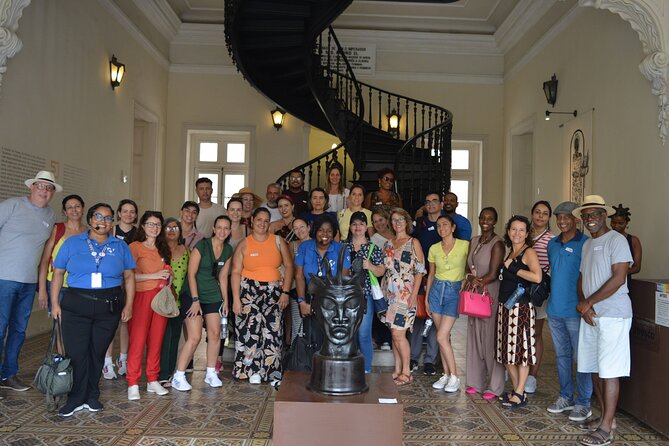
Next comes the Instituto de Pesquisa e Memória Pretos Novos (IPN). You’ll have about 40 minutes here, with admission included. Even if you’re not an archaeology person, this stop works because it’s about memory and research—how a society keeps track of people who were brutalized and denied dignity.
The feeling here is different from a standard museum stop. You’re seeing the past treated as evidence and as responsibility. The guide’s job is to connect what you’re looking at with what it represents: the forced migration and suffering tied to the transatlantic slave trade, and the way Brazilian institutions now treat those stories as part of national history.
One more practical note: IPN is included, so you don’t have to worry about squeezing ticket logistics into a half-day schedule. You can just show up ready to listen.
MUHCAB in Gamboa: Afro-Brazilian history beyond the postcard
From there, you head to MUHCAB (Museu da História e da Cultura Afro-Brasileira), a museum focused on Afro-Brazilian history and culture in the Gamboa region. You get around 40 minutes there, and this stop is listed as free for the experience.
This museum portion is where I’d expect a lot of visitors to recalibrate. You start with streets and port-related history, then you shift to culture, identity, and how Black communities shaped Rio’s neighborhoods and social life. The key is the transition: the tour doesn’t keep everything trapped in slavery history. It keeps the focus on heritage, not only tragedy.
Also, pay attention to your day-of timing. The tour mentions that the New Black Institute is closed on Sundays, so if you’re planning a weekend visit, you’ll want to pick a different day or check with the operator at booking. (Closed museum days can also affect what’s available during major city shutdown periods—more on that in the FAQ.)
Cais do Valongo: the port district that changes your whole understanding of Rio
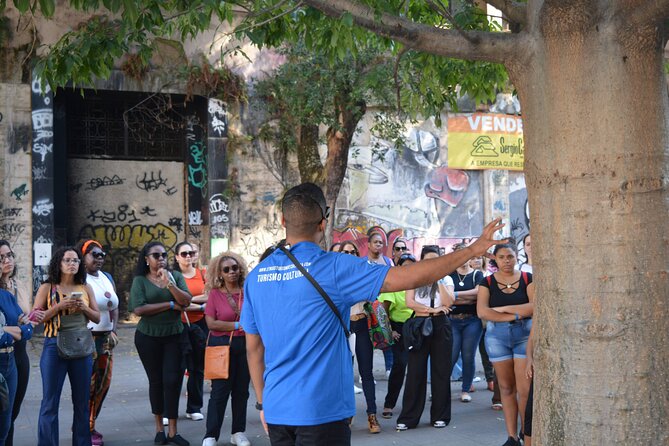
Then you get to one of the most important stops on the route: Cais do Valongo, the former wharf in Rio’s port district. You spend about 30 minutes here, and admission is free.
This is the kind of site that doesn’t need extra drama. The context is what hits you: where ships arrived, where suffering began, and where history still shows up in the way the city remembers—or fails to remember—its past. The stop description places it between the present-day Coelho and Castro and Sacadura Cabral streets, which helps you orient yourself and understand that you’re not just wandering randomly through an old-feeling area. You’re standing in a specific node of the city’s maritime story.
What I like about this stop on a guided walk is the pacing. It’s short enough to keep you moving, but long enough for the guide to give you the “why” behind the location. If you only do top-tier viewpoints in Rio, you miss this whole dimension of the city’s reality.
Pedra do Sal and Prainha: sacred landmark to neighborhood memory
After the port story, the tour shifts toward Saúde, where you’ll visit Pedra do Sal, a historical and religious landmark near Largo da Prainha. It’s an external stop with about 25 minutes set aside, and it’s listed as free.
Then you finish at Largo São Francisco da Prainha, the square tied to Little Africa’s Black presence and the zungus, with today’s reputation for being one of the cooler spots in town. You get around 20 minutes here, and it’s free.
I really like the emotional logic of this ending. Cais do Valongo forces you to face the system that brought people here. Pedra do Sal and Prainha show you the other side: community life, religious landmarks, and spaces where Black culture took root and kept moving forward. Even if you’re not sure what zungus refers to in every detail, the guide’s explanation gives you a foothold to understand the square as a social geography, not just a pretty corner.
Photo note: if your tour ends with less daylight, you may wish you’d planned for your best camera moments earlier in the route. This area can still look great at dusk, but lighting always depends on the day.






What 3.5 hours feels like (and what to bring)
The tour runs about 3 hours 30 minutes. That’s long enough to create a real “story arc,” but short enough that you won’t feel like you’ve been gone all day. It’s also the right length for a group capped at 20: you get interaction without turning it into a stop-and-go traffic jam.
From the start to the finish point, you’ll do a mix of museum time and street time, plus a short VLT ride. The experience also lists that it’s near public transportation, which is useful because you can plan a smooth connection after you finish at R. São Francisco da Prainha, 7.
What you should bring:
- Comfortable shoes (you’ll be walking more than you expect for a half-day)
- Water and sunscreen, because Rio heat is real
- A small bag with your essentials so you’re not juggling things at every stop
What you should consider: it’s not recommended for disabled people, which usually means the route involves uneven walking and mobility demands. If someone in your group has limited mobility, ask the operator about pacing and options before you book.
Guides are the difference, and this route shows it
One thing the feedback makes clear is how much guide quality matters on a tour like this. Names like Raphael, Carolina, Val, Malu, Carol, and Rafael show up with praise for making sites make sense and for explaining not only what you’re seeing, but why it matters.
I also love the practical detail that some guides actively adjust pacing when needed. One review notes a guide adapting so a family member who couldn’t handle all the walking still got the full experience. That tells me this isn’t just a scripted route where you’re stuck with the same pace no matter what.
If you’re the type who likes to ask basic questions—what happened here, who lived here, what does this term mean—this style of guide is exactly what you want. The whole point is to connect places to lived reality, not memorize a timeline.
Value check: $82.53 makes sense if you care about meaning
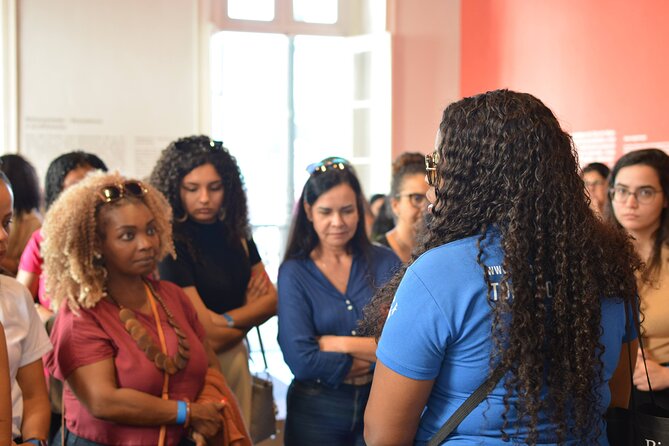
At $82.53 per person, this isn’t a “grab-and-go” activity. But it does include several things that add real value. The price lists all fees and taxes, includes the ticket for the New Black Institute, includes the IPN admission ticket, and covers the short VLT ride.
Also, most outdoor sites are listed as free admission, so your money is really going into guided interpretation and the museum admission pieces where you’ll get context. In other words, you’re paying for someone to help you read the city like a local and not like a tourist pass-holder.
Is it worth it? If you’re curious about Rio beyond the usual highlights and you want the city’s Afro-Brazilian story treated with seriousness, yes. If you want a light, purely sightseeing tour with no heavy themes, you might find the subject matter more intense than expected.
Weather and closed museums: plan smart around Rio dates
This experience requires good weather. If it’s canceled because of weather, you’ll be offered a different date or a full refund.
There are also schedule landmines tied to the calendar:
- The New Black Institute is closed on Sundays.
- From 16th December to 5th January, and during Carnival season, all the museums will be closed.
If you’re traveling during those windows, you should treat “museum closure” as likely and choose a plan that won’t leave you disappointed if indoor stops are reduced.
Who should book this Little Africa tour
Book it if:
- You want Afro-Brazilian history in Rio told with a decolonial lens
- You’re comfortable with history that deals directly with slavery and its aftermath
- You like guided context more than wandering alone
- You appreciate a small group experience where you can ask questions
Skip it or be cautious if:
- Your mobility is limited and the walking route could be hard
- You want only major panoramic viewpoints and minimal standing
- You’re visiting on a Sunday and the New Black Institute being closed would ruin the day for you
Should you book it?
I think you should book this tour if you want Rio to feel real fast. The route links port history, memory institutions, and Black cultural landmarks into one coherent walk, and that does something major for your understanding of the city.
If you can, pick a day when the New Black Institute is open, bring comfortable shoes, and come ready to listen. This is one of those experiences where the “tour” part matters just as much as the places themselves.
FAQ
How long is the Little Africa tour in Rio de Janeiro?
It runs for about 3 hours 30 minutes (approximately).
What’s included in the price?
The price includes all fees and taxes, the ticket for The New Black Institute, and the IPN admission ticket. It also includes a short ride on the VLT public transport. Lunch and tips are not included.
Where does the tour start and end?
It starts at Santuário de Santa Rita in Centro and ends at R. São Francisco da Prainha, 7 near Largo da Prainha.
Is the New Black Institute open every day?
No. The New Black Institute is closed on Sundays.
Are museums open during Carnival or around New Year?
No. From 16th December to 5th January, and during Carnival season, all the museums will be closed.
What if the weather is bad?
The experience requires good weather. If it’s canceled due to poor weather, you’ll be offered a different date or a full refund.