REVIEW · RIO DE JANEIRO
Rio de Janeiro: Sugarloaf Mountain Hike and Climb
Book on GetYourGuide →Operated by Nattrip Brasil · Bookable on GetYourGuide
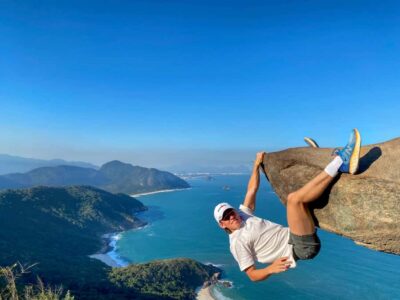
Sugarloaf Mountain looks close from Rio, until you climb it. This guided hike and rock-climb route takes you up Pão de Açúcar with real hands-on technique, then rewards you with big views over Guanabara Bay and iconic beaches. I especially like the mix of effort and payoff: a fast early lookout off Pista Claudio Coutinho, followed by a 20-meter vertical wall taught with certified gear. One consideration: this is an active route with steep scrambling, and it is not recommended if you have heart issues or other serious medical conditions.
The best part is how the guide shapes the whole experience. Guides like Sergio, Didi, Thomas, Tommy, and Eduardo are clearly focused on pace, safe movement, and showing you the useful hand and foot holds, even if you have little or no climbing experience. You’re not just hiking to a view; you’re climbing for it, then dropping back down on the cable car with Rio spread out below you. A drawback to plan for is the practical stuff: you’ll need solid grip shoes, bring water, and avoid anything loose like sandals or flip-flops.
If you’re ready for a challenging morning (or afternoon slot) with guidance, this is one of the more memorable ways to experience Sugarloaf beyond the usual cable-car-only routine.
In This Review
- Key things you’ll notice on this Sugarloaf hike and climb
- Sugarloaf Mountain from Urca: the route starts fast
- What to expect physically (and how to prepare)
- From Guanabara lookouts to stone ramps and belvederes
- The 20-meter vertical wall: basic climbing, real technique
- Is it hard if you’ve never climbed?
- Pedra Filosofal and the Sugarloaf summit payoff
- Cable car descent and a calmer finish at Urca Hill
- Price and value: is $68 worth it?
- Group size and guides: why the right pace matters
- Who should book this Sugarloaf hike and climb
- Who should skip it
- Should you book this Sugarloaf hike and climb?
- FAQ
- Where is the meeting point?
- How long does the experience take?
- What languages are the guides available in?
- What should I bring for the hike and climb?
- Are sandals allowed?
- Do you provide climbing equipment?
- Is hotel pickup included?
- Is this activity suitable for everyone?
- What is the cancellation policy?
Key things you’ll notice on this Sugarloaf hike and climb
- A fast early lookout near Guanabara Bay and Niterói in about 20 minutes
- Stone ramps and belvederes that keep the scenery changing before the climb
- 20-meter vertical wall taught as basic rock climbing with certified equipment
- Pedra Filosofal views toward Copacabana, Pedra da Gávea, and Morro Dois Irmãos
- Monkeys in the wild during the hike segments near the end
Sugarloaf Mountain from Urca: the route starts fast
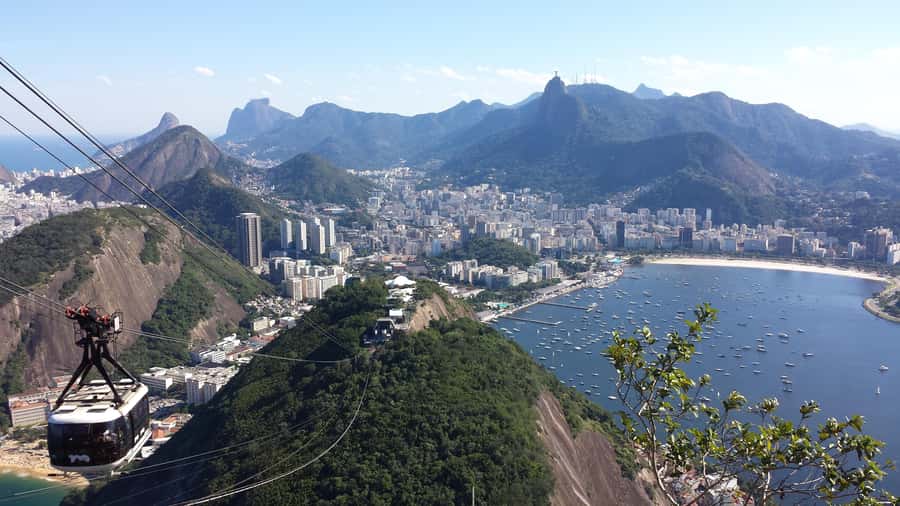
Most Sugarloaf trips begin with a cable car line. This one starts on foot, meeting your guide at Praça Gen. Tibúrcio, 75 in Urca, near the obelisk. From there, you’re moving toward Pista Claudio Coutinho, a trail that gets you into position quickly. The pace is guided, so you’re not wandering, and you’ll know what to look for as you climb.
In roughly the first 20 minutes, you reach a lookout with a wide view over the entrance to Guanabara Bay and the city of Niterói across the water. That early “wow” matters. It breaks up the energy drain of climbing and gives you something real to photograph before things get more technical.
You can also read our reviews of more hiking tours in Rio De Janeiro


What to expect physically (and how to prepare)
Your comfort level will come down to footing and stamina. Wear shoes with good grip because the route includes rocky trail and scrambling. Bring a daypack, water (3 liters is recommended), and a light snack so you can keep steady energy as the climb asks more of your legs and core.
The route is best suited for people who can handle uphill steps and uneven stone without needing constant stops. If your breathing and legs slow dramatically on hills, you’ll want to plan a slower pace with your guide.
From Guanabara lookouts to stone ramps and belvederes
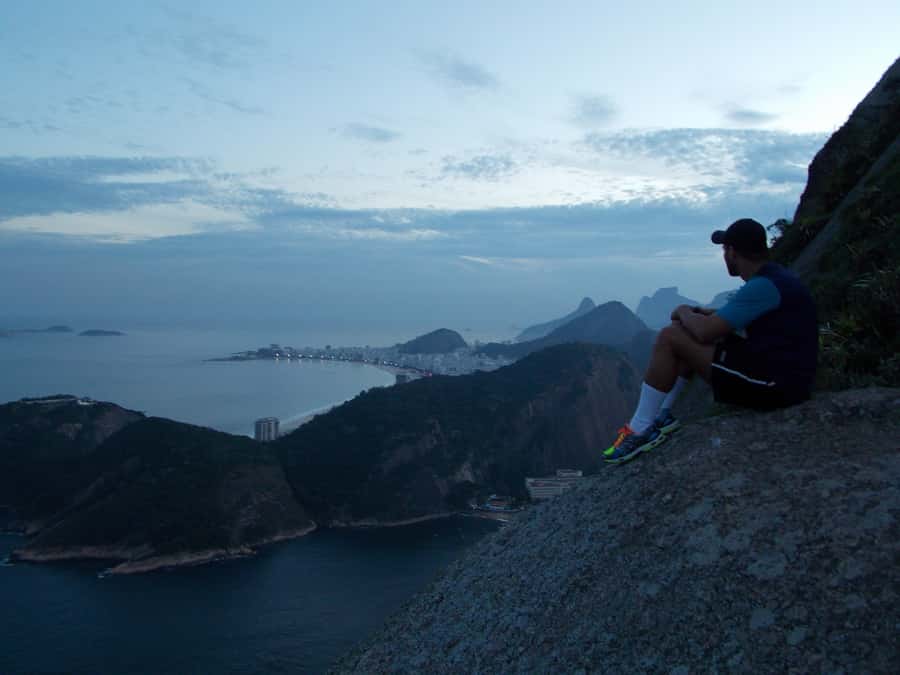
After the first lookout, the trail gets more demanding. You’ll head onto a more technical path, then move across stone ramps that lead to a series of smaller vantage points, or belvederes. These stops aren’t just for photos. They let you catch your breath, adjust your footing, and take in how Sugarloaf sits above Rio.
This part of the hike is where the route feels like an outdoor experience, not a sightseeing conveyor belt. You’re learning how to move on the kind of rock and terrain that’s common in Rio’s hills and outcrops. Guides also tend to point out safe ways to step and where to place your hands if the terrain asks for balance.
One quiet perk: the changing viewpoints keep you from getting “stuck” mentally in the idea of only reaching the top. Even before you face the climbing wall, you’re collecting lookouts that stretch across the bay and toward the city.
The 20-meter vertical wall: basic climbing, real technique
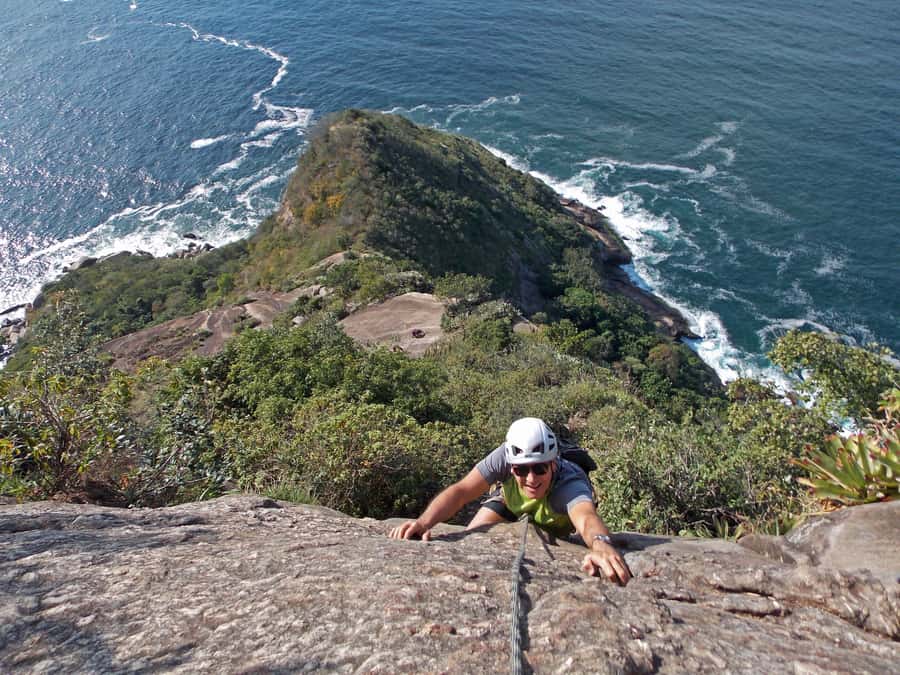
This is the star moment. You’ll face a 20-meter-high vertical wall, and this is where your guide’s job goes from storytelling to coaching. The climbing sections are set up for basic instruction, using certified climbing equipment, so you’re not thrown into something technical without support.
What you’re likely to feel here is a mix of nerves and relief. Nerves, because it’s vertical rock. Relief, because your guide shows you what to use: hand and foot holds, body positioning, and how to keep calm when the wall stops looking “climbable” for a second.
A recurring theme from guide experiences (Sergio and Didi especially come up) is encouragement and clear guidance. You’re not left guessing. The best guides pace you, help you find the holds that matter, and make sure you’re comfortable with the safety rhythm of the climb.
Is it hard if you’ve never climbed?
Plan for a physical challenge, but not a gym-style test of athleticism. The climbing sections are described as fun and not difficult, but the overall hike leading to the wall is steep enough that some people treat it like an advanced hike with scrambling. If you’re an average hiker, you’ll likely manage it by keeping your effort steady and letting the guide set the tempo.
Also, be honest with yourself about heights. You don’t need fearless bravery, but you do need the willingness to focus and move while looking at real drop-offs.






Pedra Filosofal and the Sugarloaf summit payoff
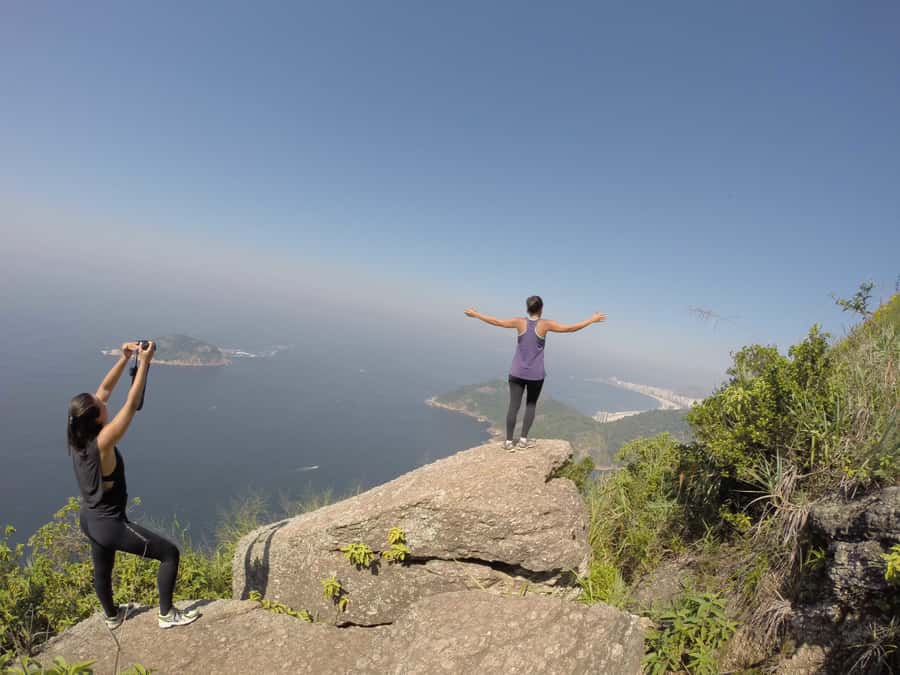
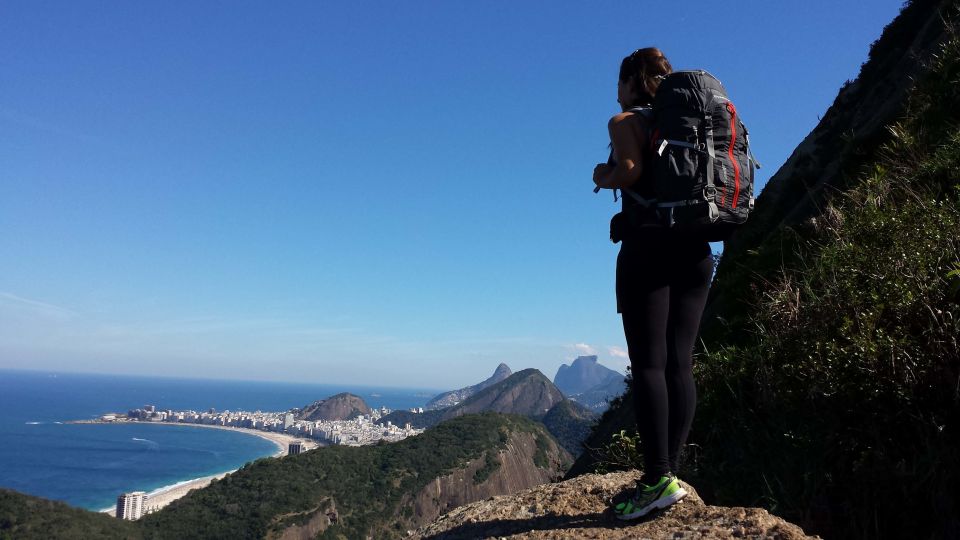
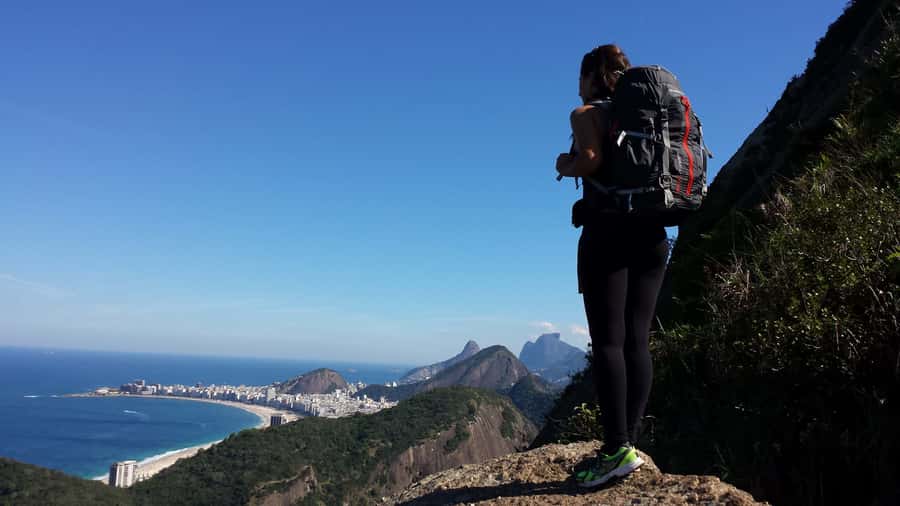
Once you clear the technical sections, the views start coming in big blocks. You’ll reach Pedra Filosofal, a key viewpoint where the panorama gets postcard-level sharp: Copacabana Beach in one direction and Pedra da Gávea and Morro Dois Irmãos in others. This is where your brain finally stops thinking about footholds and starts taking in Rio as a whole system of islands, beaches, and hills.
Then you continue to the Sugarloaf summit. Standing at the top is about more than the photo. It’s the moment you connect the whole route: the early Guanabara lookout, the belvederes, the wall, and the final push all make sense because you can now see how they relate on the map of Rio.
This part is also where monkeys sometimes make an appearance during the experience. You might see them in the wild on the hike segments, which adds a strange-cool energy shift from “vertical rock training” back to “nature is happening around us.”
Cable car descent and a calmer finish at Urca Hill
After the summit time, you descend via cable car back down toward Urca Hill. That combo is smart. You get the effort of hiking and climbing up, and then you avoid turning the whole trip into a full-on lower-body grind.
When you land back down, you’re in the area where the city’s beach atmosphere is close. Some guides also leave space in the flow for a moment to enjoy the end of the day feeling around the beach area near Urca, which makes the finish feel lighter and more like a real vacation, not just a fitness session.
Price and value: is $68 worth it?
At $68 per person for about 4 hours, you’re paying for more than a hike ticket. You’re paying for guided movement, a small-group dynamic (private or small groups are available), and climbing infrastructure that you don’t want to improvise yourself.
Here’s what the price covers:
- a bilingual guide (Spanish, English, Portuguese are offered)
- guided hiking and climbing up Sugarloaf
- certified climbing equipment
- personal accident insurance
- hotel pickup and drop-off if you book the transportation option and fall within eligible pickup zones
That last item matters for value in Rio. You’re not spending time figuring out how to get everyone to Urca. If your hotel is eligible, the pickup can save real hassle. If you’re not in the pickup-eligible areas (Barra da Tijuca, Recreio, São Conrado, Santa Tereza are not eligible), you’ll be redirected to the nearest available pickup location. It’s still workable, just plan for a slightly different starting flow.
Compared to doing Sugarloaf as a cable-car-only stop, this costs more in cash but pays less in missed experience. You’re getting hands-on climbing coaching plus the full route up on foot.
Group size and guides: why the right pace matters
This works best with a guide who knows how to manage energy, especially for the transition from hiking to the vertical wall. In the experiences shared through this operator’s tours, guides like Sergio, Didi, Thomas, Tommy, and Eduardo show up as the reason people feel safe and capable even if they’ve never climbed before.
What I’d look for in a guide here:
- they explain what to do before you panic
- they spot mistakes early, especially with footing
- they match your pace, not just their schedule
- they talk while you climb, so your brain stays in the task
Because the route includes steep scrambling and technical steps, pace isn’t a luxury. It’s safety.
Also, plan on weather changing the order of stops. Rio weather can shift fast, and your guide may adjust the flow to keep you moving safely.
Who should book this Sugarloaf hike and climb
This is a strong fit if you want:
- a real workout with coaching, not just a view from a lift
- guided rock climbing basics using certified gear
- a Sugarloaf experience that includes Pedra Filosofal and summit views, with less time spent simply waiting
It’s also a good choice for people who like nature surprises. Seeing monkeys in the wild adds a layer you don’t get from a normal cable-car route.
Who should skip it
Skip this if you have heart complaints or serious medical conditions. That limitation is clear. Also, if you have a low tolerance for heights, you’ll want to be honest with yourself about whether the wall and vertical sections will feel manageable with encouragement and safety support.
If you’re expecting a casual, flat walk, you’ll be disappointed. This is steep and scramble-heavy on the way up.
Should you book this Sugarloaf hike and climb?
Book it if you’re coming to Rio for the kind of experience where the view has a story attached to it. The combination of a scenic hike, a 20-meter vertical wall, and summit panoramas is the sort of thing that doesn’t feel like a checklist item. At $68 with certified equipment, guide support, and accident insurance included, it’s also fairly priced for what you’re actually doing.
Hold off if you want a purely relaxing Sugarloaf day, or if health issues make steep hiking a bad idea. Also, take the footwear rule seriously. A grippy shoe is the difference between feeling confident and feeling stressed.
If you can handle a steep uphill with scrambling and you’re open to basic climbing instruction, this is one of the most satisfying ways to earn those Sugarloaf views.
FAQ
Where is the meeting point?
Meet your guide at Praça Gen. Tibúrcio, 75, Urca, Rio de Janeiro (near the obelisk).
How long does the experience take?
The duration is about 4 hours.
What languages are the guides available in?
The live tour guide is available in Spanish, English, and Portuguese.
What should I bring for the hike and climb?
Bring water and a daypack. A light snack and sunscreen are recommended, and 3 liters of water is suggested.
Are sandals allowed?
No. Sandals or flip-flops are not allowed. Wear comfortable footwear with good grip.
Do you provide climbing equipment?
Yes. Certified climbing equipment is included.
Is hotel pickup included?
Pickup is optional. It’s available from most hotels in Rio’s South Zone and Downtown. Barra da Tijuca, Recreio, São Conrado, and Santa Tereza are not eligible.
Is this activity suitable for everyone?
It is not recommended for people with heart complaints or other serious medical conditions.
What is the cancellation policy?
Free cancellation is available up to 24 hours in advance for a full refund.