REVIEW · RIO DE JANEIRO
3-Hour Urban Arts Walking Tour
Book on GetYourGuide →Operated by LOCAL55 TRAVEL · Bookable on GetYourGuide
Street art in Rio has stories, not just color. On this 3-hour urban arts walk, you connect big murals to neighborhood life, then hop a modern VLT tram to Olympic Boulevard for a jaw-drop stop. It’s one of the better ways to see Rio’s street creativity without getting lost in a maze of paint and opinions.
I especially like the street-art guidance. My favorite part is how the guide puts murals into context—styles, symbols, and why these artists keep showing up in public. And if you’re into named works, you’ll hear about massive pieces like The Ethnicities, plus the world’s largest street mural.
One thing to plan around: this is still a walk. On hot afternoons, you’ll want water and sensible stops, and the pace can feel a bit brisk depending on the group and day.
In This Review
- Key points before you go
- Why this street-art walk starts at the Municipal Theatre
- The VLT tram ride to Olympic Boulevard (and why it’s worth it)
- Olympic Boulevard murals: the world’s largest street mural hit
- Murals you’ll hear about, like The Ethnicities
- Mixing neighborhoods, culture, and real city detail
- Timing, pace, and what to wear so you enjoy it
- Price check: is $45 worth 3 hours of Rio urban arts?
- Who this tour suits best (and who should skip)
- Finish point at the Museum of Tomorrow
- Should you book this Rio urban arts walking tour?
- FAQ
- Where is the meeting point and what time does the tour start?
- How long is the tour?
- What’s included in the price?
- What should I bring if I book this tour?
- What languages are available for the guide?
- Do I need to message them on WhatsApp before the tour?
Key points before you go
- Start in Cinelandia at the Municipal Theatre and get street-art context fast, before you even reach the main murals
- Ride the VLT tram (inaugurated for the 2016 Olympics), which turns the route into a moving viewpoint
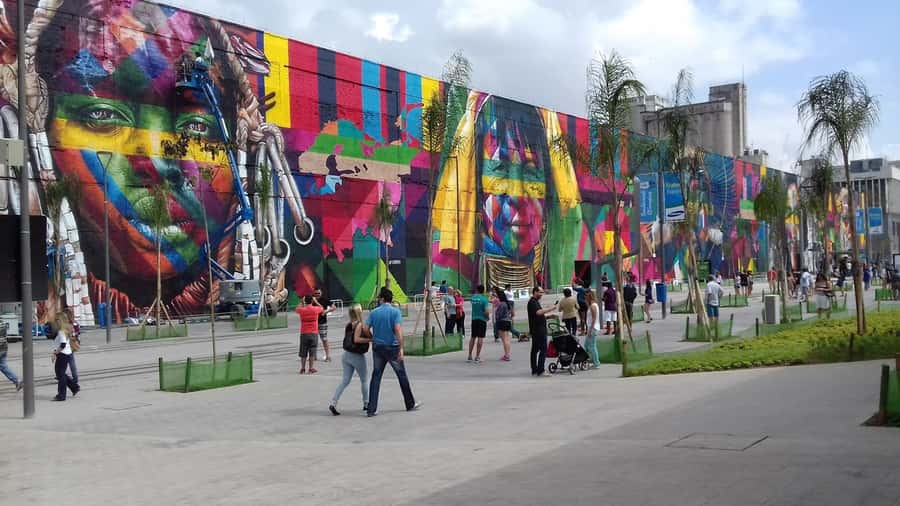
- Reach Olympic Boulevard for the world’s largest street mural and big-picture urban art scale
- Hear about multi-year projects behind the work, not just what you see on a wall
- Pick up cultural context that connects Brazilian artists and international influences
- Finish at the Museum of Tomorrow with help getting back to your accommodation
Why this street-art walk starts at the Municipal Theatre
The meeting point is right by the Municipal Theatre in Cinelandia, at 13:30. It’s a smart starting place because downtown Rio gives you a quick “big city” feel—wide streets, landmark buildings, and the sense that art belongs everywhere.
Before you even board the tram, you get a short briefing and then begin spotting murals and street works around the area. That early warm-up matters. It trains your eye to notice more than the obvious. You start seeing how artists use lettering, portrait style, color blocking, and even placement to create meaning in the street space.
The tour also runs with a live guide in English, Portuguese, or Spanish, so you’re not stuck reading labels while someone points to the wall. If your language is English or Spanish, you’ll likely get a clear story behind what you’re seeing, not just a list of locations.
You can also read our reviews of more walking tours in Rio De Janeiro



The VLT tram ride to Olympic Boulevard (and why it’s worth it)
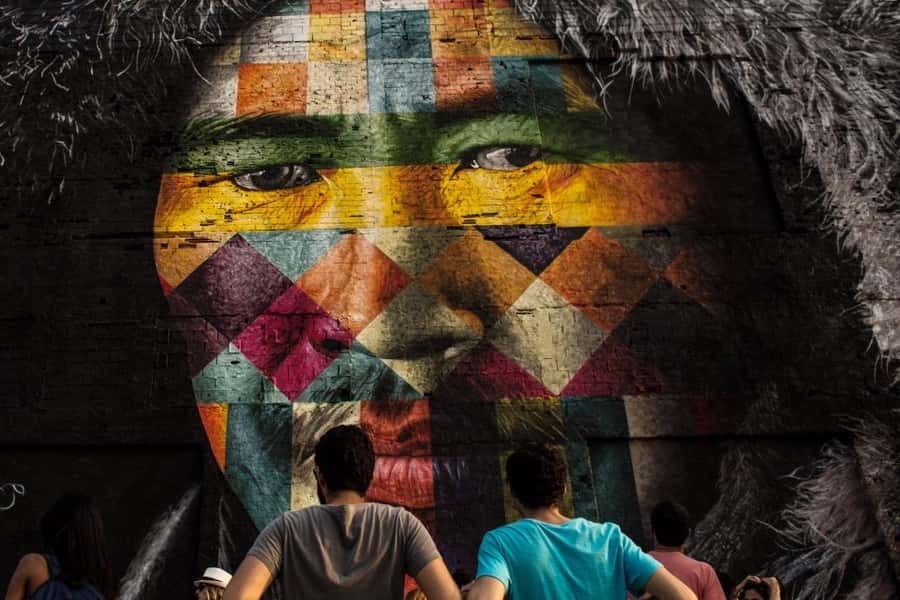
Instead of slogging across Rio by foot the whole way, you take the VLT tram to Olympic Boulevard. The tram system was inaugurated for the 2016 Olympic Games, and the route gives you a practical reason to ride: you move faster while still keeping your bearings.
More importantly, the tram ride changes how you experience the art. From the windows, you see how murals sit next to real streets, real traffic, and real daily life. Street art isn’t isolated “attractions mode.” It’s layered onto the city you’re actually traveling through.
When you get off at Olympic Boulevard, the vibe shifts quickly. This is where you see Rio in both modes: the modern public-facing look and the older street-grit feel. It’s the kind of visual contrast that makes the guide’s explanations click.
And yes, tram tickets are included, so you’re not doing last-minute ticket math or hunting for machines while everyone else is already boarding.
Olympic Boulevard murals: the world’s largest street mural hit
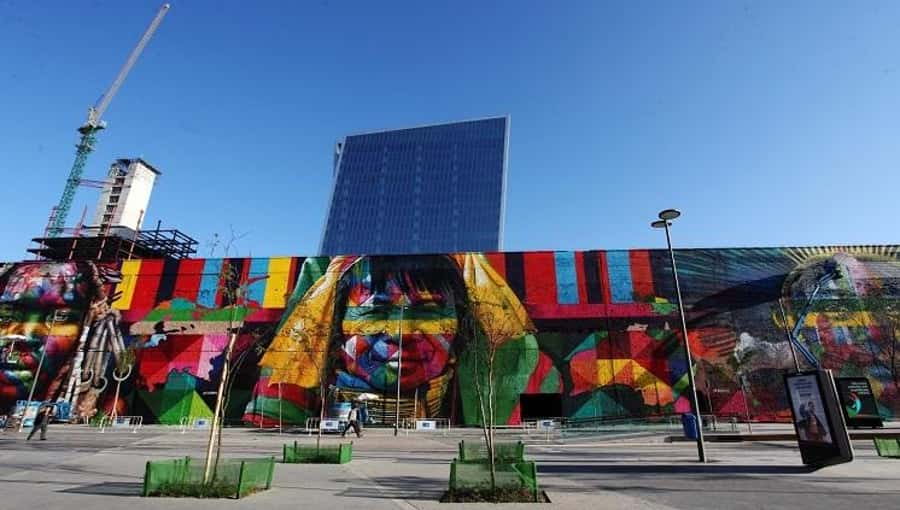
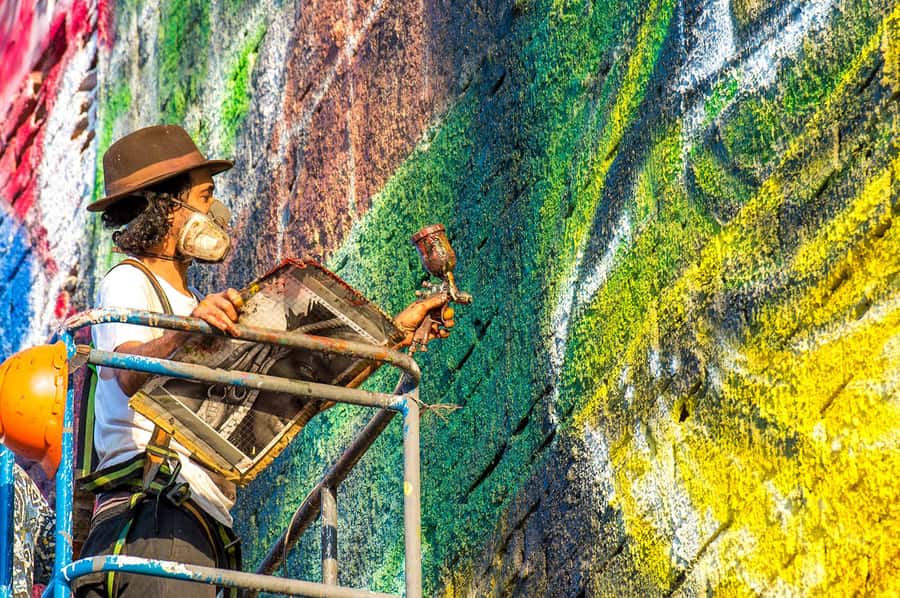
Olympic Boulevard is the tour’s big visual payoff. You’ll experience the area’s graffiti and murals at full scale, including the world’s largest street mural.
That size changes the way street art works. On a small wall, a piece is a message. On a long mural, it becomes a chapter. You start to notice sequencing—how one image leads to the next, and how artists balance portraits, typography, and social themes so the whole wall feels like one statement.
This stop is also where the guide’s role really matters. You’re not just looking at color. You’re learning what the mural is saying and how it fits into the broader urban art scene in Rio’s different neighborhoods.
If you love taking photos, this is where you’ll get the best angles. The space is open enough to step back, frame the whole wall, and catch the mural in context with the boulevard setting.
Murals you’ll hear about, like The Ethnicities
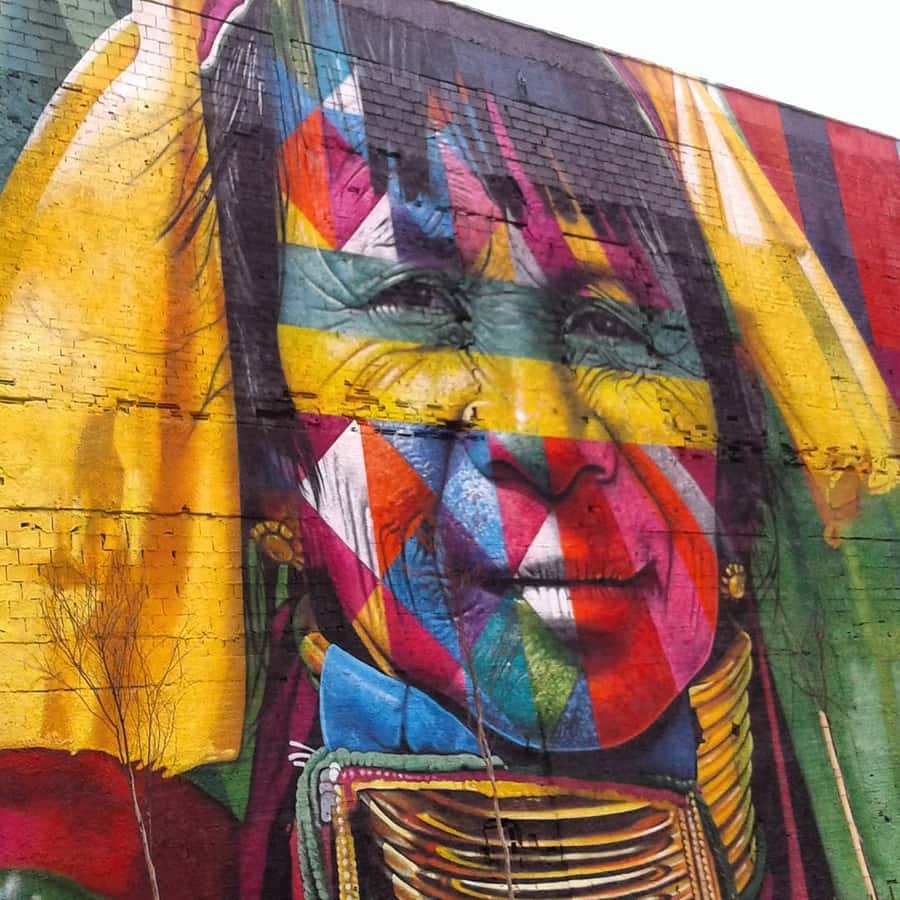
One of the tour’s strengths is that it doesn’t treat murals like random graffiti splashes. You’ll hear about major works—especially large, named mural projects such as The Ethnicities.
The guide talks about the result of a long project (a six-year effort), which helps you understand the mural as something built over time, not a quick “spray and done” job. That time element affects meaning. It suggests collaboration, persistence, and a public conversation that kept developing.
You’ll also learn how Brazilian artists and international artists show up in the same visual language. That matters because Rio’s street art scene isn’t only Brazilian voices. It includes people from around the world, and you’ll notice different influences in style and subject matter.
This is the part that turned a simple photo stop into a cultural lens for me. When you know what you’re looking for, you can “read” the wall: symbols, faces, and text aren’t decoration. They’re communication.
Mixing neighborhoods, culture, and real city detail
Even though the tour has a clear core route, you’ll still get a sense of how street art connects to different parts of Rio. You start in central Cinelandia, move by tram toward Olympic Boulevard, and then finish with a museum destination.
Along the way, the guide shares stories tied to Brazilian culture and to artists from other places. The effect is a broader understanding of what urban art is doing in Rio: recording identity, reacting to current events, and making public space feel personal.
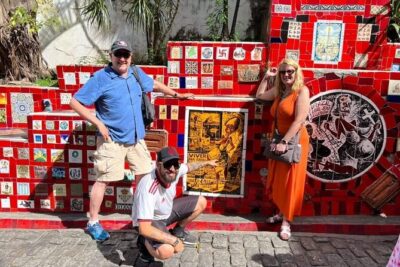
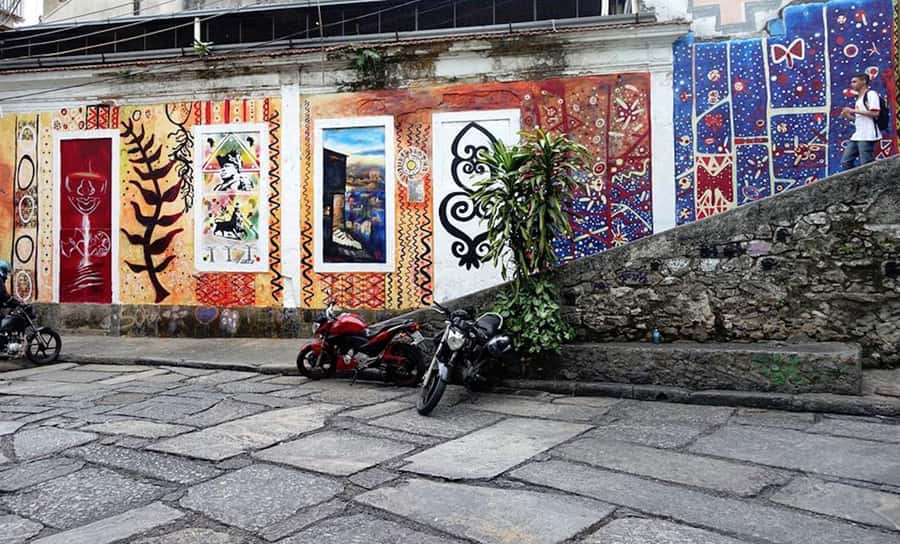
One practical note: the experience isn’t only spray-painted walls. You might notice other art forms or city details during pauses and side walks, like ornamental works you pass by on the way. That can be a plus if you enjoy stepping off the street-art-only track. If you’re expecting wall-to-wall graffiti the entire time, you should know the tour can sometimes include non-street-art stops or references.
Also, the heat can shape what you remember. If it’s around 40°C, you’ll want to plan for frequent water breaks and shaded detours when possible. Think of it as art viewing with some survival skills required.





Timing, pace, and what to wear so you enjoy it
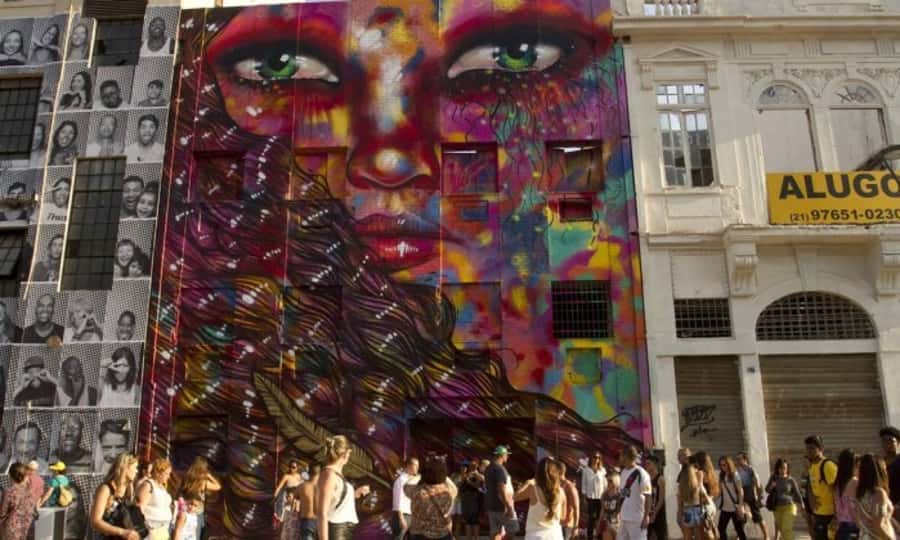
This is a 3-hour tour. That’s enough time to get story plus highlights, but not enough time to wander slowly like you’re on a lazy Sunday stroll. The best way to enjoy it is to treat it like a guided walking gallery—stop, listen, look, photograph, move.
Comfort matters. Bring water and wear comfortable clothes. Even if you’re a seasoned walker, city walking in Rio adds up—uneven sidewalks, bright sun, and lots of stopping for photos.
The pace can feel quick on some days, and there can be more urgency than you’d like if the group is trying to fit everything in. If you hate rushed museum-style tours, consider going in with flexibility. The payoff mural stop is worth moving efficiently for.
Price check: is $45 worth 3 hours of Rio urban arts?
At $45 per person, you’re paying for two things: an urban arts specialist guide and tram tickets. That’s a useful combo because your time becomes structured. You’re not just walking randomly and hoping you’ll find the best murals. You’re getting context fast, which is usually what turns “cool pictures” into “I get it.”
You’re also getting something that costs extra when you do it yourself: guided interpretation. Street art is visual, but meaning needs translation—style history, cultural references, and the behind-the-scenes of public art projects. A good guide makes the difference between looking and understanding.
If you’re the kind of traveler who enjoys street art as culture (not just as a backdrop), the value here is high. If you only want a quick look at a few famous murals, you may find the length and storytelling heavier than you expected.
Either way, the tour gives you a clear, efficient route to the major highlight at Olympic Boulevard—plus a clean end point at a major destination.
Who this tour suits best (and who should skip)
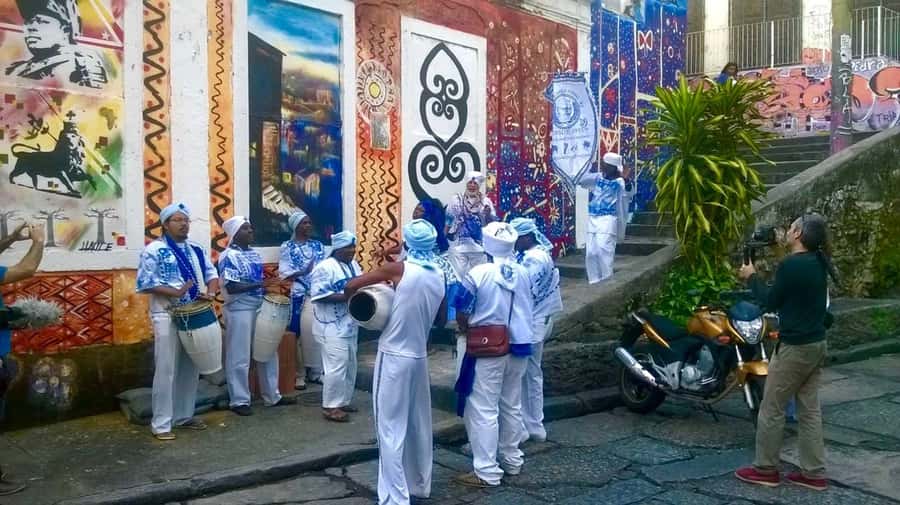
This tour fits best if you’re into urban art, murals, and the stories behind them. It’s also a solid choice if you like guided city walks that connect art to culture and current life.
It’s not a great match for everyone. It’s listed as not suitable for:
- People with heart problems
- People with respiratory issues
- Wheelchair users
- Children (it specifically lists not suitable for ages under 10, with multiple lower-age cutoffs)
- Older travelers at higher age ranges (it lists over 95 and over 70)
If you’re traveling with mobility limits or health concerns, it’s worth checking with the operator before booking. And if you’re traveling with kids, you should compare their stamina to a real urban 3-hour walk in sun.
If you want a mix of art and city views without complicated logistics, this is a strong option—especially because the tram helps you cover ground efficiently.
Finish point at the Museum of Tomorrow
The tour ends at the Museum of Tomorrow. That’s a convenient “finish line” because it’s a recognized landmark, and you’ll be directed on how to get back to your accommodation.
Ending at a museum area also helps you avoid the common street-art-tour problem: the tour ends with you somewhere random, and suddenly you’re doing detective work for transit. Here, you get a handoff.
It’s also a nice contrast. You’ve spent 3 hours with murals and street writing, then you walk out near a big, contemporary cultural venue. It makes it easier to keep your attention on “art in public space” rather than thinking only in terms of gallery walls.
Should you book this Rio urban arts walking tour?
If you want street art with context, I’d book it. The structure is clear: start downtown, move by tram, hit Olympic Boulevard, and finish with a clean landing at the Museum of Tomorrow. At $45 with tram tickets included, it’s reasonably priced for a guided specialist experience.
I’d especially recommend it if:
- You care about the stories behind murals, not just the photos
- You want to see Rio’s street art at large scale (Olympic Boulevard)
- You’d rather ride the tram than try to map the route under time pressure
You might skip or adjust expectations if:
- You dislike a brisk pace and lots of stopping for photos
- You’re extremely heat-sensitive (bring water and plan for sun)
- You’re expecting purely graffiti every minute, with no side references
If your goal is to leave Rio with more than Instagram shots—if you want to understand why these works exist—this one is a strong pick.
FAQ
Where is the meeting point and what time does the tour start?
You meet at 13:30 in front of the Municipal Theatre of Rio de Janeiro, Praça Floriano, S/N – Centro, Rio de Janeiro – RJ, 20031-050, Brazil.
How long is the tour?
The tour lasts 3 hours.
What’s included in the price?
The price includes an urban arts specialist tour guide and tram tickets.
What should I bring if I book this tour?
Bring water and wear comfortable clothes.
What languages are available for the guide?
The tour is offered with a live guide in English, Portuguese, and Spanish.
Do I need to message them on WhatsApp before the tour?
Yes. You’re asked to WhatsApp the day before to confirm your presence and meeting point details. The WhatsApp number provided is +5521999982907.