REVIEW · RIO DE JANEIRO
Samba Class in Copacabana
Book on Viator →Operated by Rio Samba Dancer · Bookable on Viator
Samba lessons in Copacabana are oddly addictive. In an hour, you’ll learn real samba basics and Brazilian culture beats in a proper studio setting close to where you’re already moving around Rio. It’s also the kind of activity that can work as a quick solo win or a fun couple date, with daytime options to try carnival-style costumes.
I love how no prior experience is required and how the instruction is built for different comfort levels. I also love the social energy of the class, where you’re encouraged to interact and learn in a group, with bottled water provided so you’re not scrambling for anything mid-lesson.
The one possible snag: the room can feel crowded at peak times, so you may not always get the best view of the instructor’s feet.
In This Review
- Key Highlights You’ll Actually Care About
- Where the Samba Class Meets You in Copacabana
- Price and What Makes $35 Feel Fair
- The 1-Hour Lesson Flow: What Happens Once You Start
- No Partner Needed, and That Changes How You Enjoy It
- The Group Energy: Solo, Couples, and Mixed Levels
- Studio Details That Can Affect Your Experience
- Cultural Context Beyond the Footwork
- What to Bring (and What to Skip)
- Who This Samba Class in Copacabana Is Best For
- Should You Book Samba Class in Copacabana?
- FAQ
- How long is the Samba Class in Copacabana?
- Do I need a dance partner or previous dance experience?
- What’s included in the $35 price?
- What’s the meeting point for the class?
- Is transportation to and from the class included?
- How big are the groups?
- What’s the cancellation timeframe?
Key Highlights You’ll Actually Care About

- One hour, full focus on learning samba basics without dragging your day out
- No partner needed. You’ll learn steps at your own level and keep moving
- Studio location is clear: Av. Nossa Sra. de Copacabana, 807, room 603 (6th floor, inside an office building)
- Peak-season crowding can happen. They’ve adjusted times/space around end-of-year and Carnival periods
- Real instructors with different styles (you may meet people like Marcos, Bem Vind, Carla, or Carmen)
- Daytime carnival costume option if you want to go extra on the fun side
Where the Samba Class Meets You in Copacabana
The class meets at Av. Nossa Sra. de Copacabana, 807, room 603, in Copacabana. The address is on a main road, and you’re walking into a mixed office building, then heading up to the studio on the 6th floor. It’s not a big street theater with a line out front. Plan to follow the arrival directions carefully so you don’t waste time hunting for the right doorway.
Getting there is usually straightforward. This activity is near public transportation, and taxi access is easy enough. Since transportation to and from the meeting point isn’t included, I treat this like a “go to this exact spot, then dance” activity. If you’re already planning a day around Copacabana, that’s a big plus.
The session ends back at the meeting point, so you can fold it into your plans without needing extra coordination. It’s one hour long (approx.), so you’re not committing your whole day to a single block.
You can also read our reviews of more tours and experiences in Rio de Janeiro


Price and What Makes $35 Feel Fair
At $35 per person for about one hour, the value comes from what you’re actually getting: live instruction, a host/escort, and bottled water. It’s not just a casual dance party. The format is structured enough that people who said they were hesitant still felt they learned steps they could repeat later.
You also get both a local guide and a professional guide listed for the experience. On top of that, there’s a tour escort/host. That matters more than you’d think. In a samba class, the “who is counting and correcting you” part is everything, and having a team makes it easier to keep everyone on track.
What you should mentally budget for is transportation. The class price doesn’t include getting there and back. Still, because the studio is in Copacabana and near transit, you can keep costs reasonable compared with experiences that require a long pickup ride.
One more practical note: the group size has a maximum of 50 people. Most sessions will feel smaller in practice, but it gives you a ceiling. If you’re sensitive to busy rooms, you’ll want to pick a time that fits your comfort.
The 1-Hour Lesson Flow: What Happens Once You Start
This samba class is built as a concentrated crash course. You meet your instructor at the studio, then you jump into dancing quickly rather than spending the whole hour on theory. The goal is for you to leave with basic samba steps you can actually do, not just watch someone else demonstrate.
From the teaching style described in the experiences, you may cover things like:
- Across-the-floor movement (not just in place)
- Turns
- Forward and backward steps
- Step counts and repetition until they make sense
One instructor (Bem Vind) is described as very clear with counts and accents of the steps, and then adjusting when a student didn’t get it, repeating until it clicked. Another instructor (Marcos) is praised for high energy and for making the lesson feel like fun, not drills. That range is common in dance teaching, and it’s part of why samba classes can work even when you don’t feel confident at first.
During the class, you’ll be moving the whole time, which is half the point. Samba isn’t delicate. Expect a workout disguised as entertainment. The pacing is short enough that you won’t get bored, but long enough for real practice.
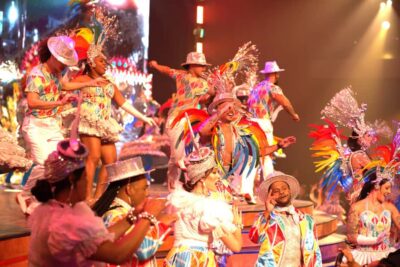
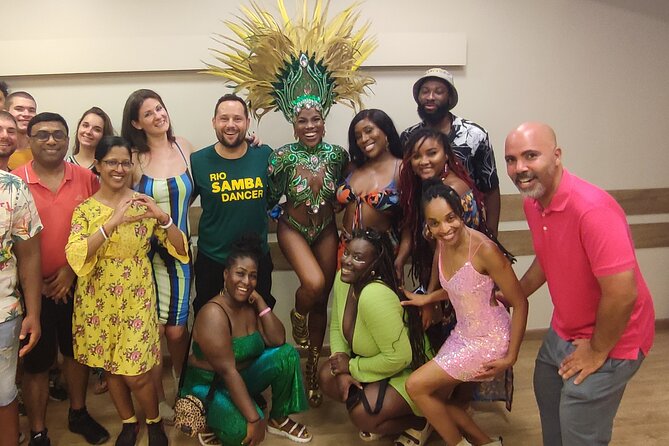
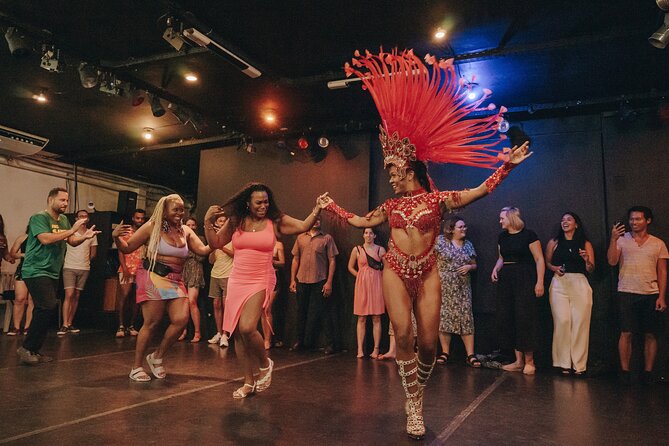
If you go during daytime, you might get the chance to try a carnival costume, which changes the vibe instantly. It’s an added layer of fun without turning the class into a costume event only.
No Partner Needed, and That Changes How You Enjoy It
This is the kind of activity that drops one big barrier. You don’t need a dance partner. You also don’t need dance experience. You show up, follow the instructor’s counts and movements, and learn by doing.
In practice, that means you can go solo and still feel included. One of the strongest themes is that solo people come away feeling welcome. The class pushes group interaction, so you’re not stuck just standing to the side until someone invites you in.
If you’re traveling as a couple, this still works because you’re learning together without worrying about matching someone else’s lead or timing. Instead, you’re aligning with the instructor’s rhythm and the group’s momentum. It’s a fun “we learned something new together” moment, not a partner-dependent dance test.
Even if your body feels awkward at first, the structure is designed to help you catch up. One highlight described how steps were easy to follow and tailored to all levels. Another noted that an instructor made the basics simple even for someone hesitant to try samba at all.
The Group Energy: Solo, Couples, and Mixed Levels
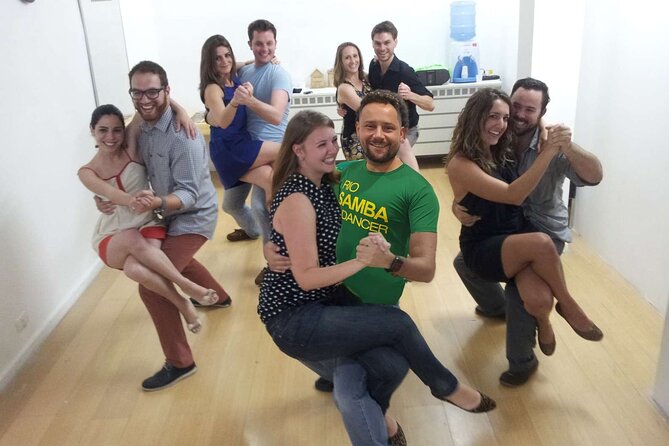
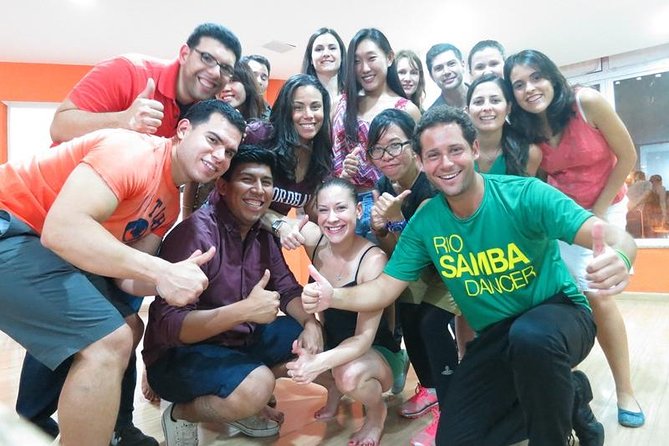
The class format naturally mixes people in age and dance comfort. That’s good. Samba works best when you stop judging your feet and start feeling the rhythm. The instruction seems to lean into that mindset, with instructors using high energy and interaction to keep everyone engaged.
There are multiple specific “good vibes” signals in the feedback style:
- A host who was welcoming and high energy
- Steps taught in a way that helps you interact with other students
- An instructor who made people feel comfortable even when they were the only student in the room
That last point is worth calling out. If you arrive and the group is very small, the class can still function as a real lesson. One experience described it as just two couples and the event turning out to be more formal than expected, with the person leaving early. That’s a reminder that this isn’t a freeform jam session. It’s a bona fide class. Still, small groups can also mean you get more direct attention.
If you’re traveling with friends, it’s also a solid shared activity. Everyone is doing the same steps at the same time, so it’s easier to laugh together when it gets tricky.






Studio Details That Can Affect Your Experience
This studio is inside a working office building. That’s convenient once you’re inside, but it can confuse first-time arrivals. The studio is on the 6th floor, and you enter through a doorway in the building. If you hate “where exactly am I supposed to go” moments, I’d take a screenshot of the address and follow the check-in directions carefully.
Shoes are a topic. One experience described the class as being done barefoot when the room was crowded. Another comment basically said not to worry about shoes. So here’s the practical takeaway: wear something you can move in without stress. If you show up with rigid footwear and you’re asked to go barefoot, that’s going to be annoying. I’d pack dance-friendly socks or flexible footwear and be ready to follow instructor instructions.
Crowding is the other real factor. At the end of the year, it can get tricky. The experience provider has adjusted times and spaces around that stretch, and they’ve mentioned moving to a bigger studio during end-of-year and Carnival periods. Even with fixes, if you show up during peak weeks, visibility of the instructor’s feet may not be perfect.
Given it’s up to 50 people, you can’t control how busy it is. You can control your expectations: samba class is learning by watching, but it’s also learning by repetition and feel.
Cultural Context Beyond the Footwork
Samba isn’t only about steps. The class also aims to explain samba culture along with the basic moves. That combination is what turns it from a simple workout into an experience that feels more tied to Rio.
Some instructors are described as sharing history alongside teaching. Others focus on the energy and vibe, with comments about learning “real Samba,” not something watered down from abroad dance schools. Whether you come in knowing nothing or you’ve taken dance classes elsewhere, the cultural layer helps you understand why samba feels the way it does.
You might also notice how instructors bring Brazilian flavor through music and small teaching choices. One experience notes that an instructor shared a playlist afterwards. Another mentions photos and video taken during dancing, including flags and even a samba costume moment, then shared right after the lesson. If you care about documenting the moment, that kind of built-in content can be a nice bonus.
What to Bring (and What to Skip)
Because the class includes bottled water, you don’t need to carry a full bottle just for hydration. You should, however, be ready for movement and possibly barefoot practice depending on the group setup and space.
I’d bring:
- Comfortable clothing that lets you move
- Something easy to adjust or remove if footwear isn’t the focus
- A positive mindset for learning through repetition
I’d skip overthinking it. You’re not auditioning for a samba stage. You’re learning basics in a supportive environment.
Also, since transportation isn’t included, plan your route in advance. Copacabana is busy, but the studio is specific. If you’re bouncing between sights, give yourself a little buffer so you don’t sprint up to a 6th-floor studio right on time.
Who This Samba Class in Copacabana Is Best For
This class fits best if you want a short, fun activity that still feels like you learned something real.
It’s a great pick for:
- Solo travelers who want an easy way to meet people without forced small talk
- Couples who want a shared activity that doesn’t require dance skill
- Anyone who’s nervous about learning dance but is willing to try basics
- People who like instruction with structure, counts, and repetition
It may be less ideal if:
- You strongly prefer lots of personal space and quiet instruction
- You need nonstop views of the instructor’s exact foot placement
- You expect a party-only vibe instead of a structured dance lesson
If you’re the type who enjoys quick wins, one hour is a sweet spot. You can do it early, freshen up, and still have energy for more Rio.
Should You Book Samba Class in Copacabana?
If you’re in Rio and you want something short, lively, and genuinely hands-on, I think yes, book it. For $35, you’re paying for real instruction, a professional setup, bottled water, and a group experience that’s welcoming even when you feel out of rhythm. The fact that the class works for solo people and couples makes it flexible, too.
Just book it with the right expectations. This is a dance class, not a passive show. If you go during end-of-year or Carnival season, know that crowding can affect visibility and the studio setup. But the provider has mentioned adjusting space and times around those periods.
If you want one practical strategy: choose a time that fits your schedule but also try to avoid the absolute busiest stretch if you hate cramped rooms. Otherwise, show up ready to move, follow the counts, and enjoy the fact that samba in Rio is supposed to be fun first, correct second.
FAQ
How long is the Samba Class in Copacabana?
It’s about 1 hour.
Do I need a dance partner or previous dance experience?
No. You don’t need a partner, and prior dance experience isn’t required.
What’s included in the $35 price?
The price includes bottled water, a local guide, a professional guide, and a tour escort/host.
What’s the meeting point for the class?
The class meets at Av. Nossa Sra. de Copacabana, 807, room 603, Copacabana, Rio de Janeiro, RJ 22050-002, Brazil.
Is transportation to and from the class included?
No. Transportation isn’t included.
How big are the groups?
There is a maximum of 50 travelers.
What’s the cancellation timeframe?
You can cancel for a full refund up to 24 hours before the experience starts. If you cancel less than 24 hours before, the amount you paid won’t be refunded.