
REVIEW · RIO DE JANEIRO
Rio Downtown Tour with Selaron Metropolitan Cathedral and more
Book on Viator →Operated by Carioca Tropical Tour Operator · Bookable on Viator
Downtown Rio moves fast, and this tour keeps up. You get a half-day-style sprint through the city center, then finish along the bayfront park at Aterro do Flamengo, with major sights packed into about three hours.
I like the small-group feel (max 19) and the practical setup: hotel pickup and drop-off from Zona Sul hotels in Copacabana, Ipanema, and Leblon. I also like the mix of stops: the still-active Mosteiro de São Bento, the dramatic Metropolitan Cathedral, and the world-famous tilework of the Escadaria Selarón.
One watch-out: time is tight. A few famous places are best as a quick photo break (like Maracanã from the outside), and downtown traffic can make short stops feel even shorter.
In This Review
- Key Things to Know Before You Go
- Price and Time: What You’re Really Buying
- Pickup From Copacabana, Ipanema, and Leblon (and Why It Matters)
- Mosteiro de São Bento: A Working Abbey With Old-School Details
- Metropolitan Cathedral of Saint Sebastian: Mayan-Inspired Shape and Tall Stained Glass
- Maracanã: Quick Exterior Stop for Photos
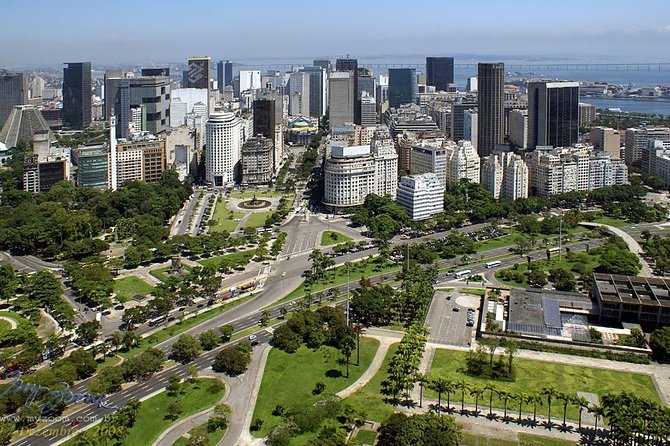
- The Downtown Drive: Presidential Avenue, Palaces, Squares, and the Sambadromo
- Fort Copacabana and the Carioca Aqueduct (Lapa Arches)
- Escadaria Selarón: The Tile Steps That Turn Into a Rio Story
- Rua do Lavradio: Antiques, Bars, and a Proper Evening Vibe
- Aterro do Flamengo: Bayfront Park Views Plus WWII Memory and Modern Art
- Guides and What Makes This Tour Feel Personal
- Possible Downsides (So You Can Decide Like a Pro)
- Who This Tour Fits Best
- Should You Book Rio Downtown With Selarón Steps and the Cathedral?
- FAQ
- FAQ
- How long is the Rio downtown tour?
- What areas do you get picked up from?
- What time does the tour start?
- What’s included with the tour price?
- Do you enter Maracanã Stadium?
- Are there any paid admissions on the route?
- What if I need to cancel?
Key Things to Know Before You Go
- Hotel pickup in Zona Sul saves you from coordinating rides through downtown traffic.
- Mosteiro de São Bento is a working Benedictine abbey, not just a sightseeing façade.
- Metropolitan Cathedral is architecture-first, with steep cone shape and tall stained glass windows.
- Escadaria Selarón gives you the Rio story in tile form, with Jorge Selarón’s colors and obsession built in.
- Maracanã is exterior-only for this route, so don’t plan on stadium tours.
- Aterro do Flamengo ties everything together with bayfront views and classic Rio landmarks.
Price and Time: What You’re Really Buying
At $74.50 per person for about 3 hours, you’re paying for three things: a guide, an air-conditioned vehicle, and an efficient route that strings together major downtown sights without you wrestling maps and transit. This is the kind of tour that makes sense when your Rio days are already spoken for—maybe after Christ the Redeemer or before a beach-and-museum day.
Is it expensive? It depends on how you travel. If you’d otherwise spend time stitching together multiple taxis or figuring out which bus gets you where, this price can feel fair. If you like slow travel and want long sits at every stop, three hours may feel like “too much, too fast.” Think of it as orientation plus highlights, not a deep study.
Timing matters too. The tour starts at 1:30 pm, so you’ll be moving through parts of the city in afternoon light—great for photos, but not always great for crowds or slow traffic.
You can also read our reviews of more tours and experiences in Rio de Janeiro.



Pickup From Copacabana, Ipanema, and Leblon (and Why It Matters)
You’re picked up from Zona Sul hotels—Copacabana, Ipanema, or Leblon—then you head into downtown in a comfortable, air-conditioned minivan. That part is underrated. Rio downtown can be chaotic on the road, and arriving on your own usually means extra time just to get to the sights.
The tour also uses drop-off back at your hotel/nearby meeting point, so you’re not ending your day halfway across town with a guess at transport. If you’re staying along the beach strip, this is the cleanest way to get downtown without burning half your afternoon just to travel.
The group size is capped at 19 travelers, which helps your guide manage timing and keep the experience organized. In a city where lines and crowds can be unpredictable, smaller groups reduce the “everyone disperses” problem.
Mosteiro de São Bento: A Working Abbey With Old-School Details
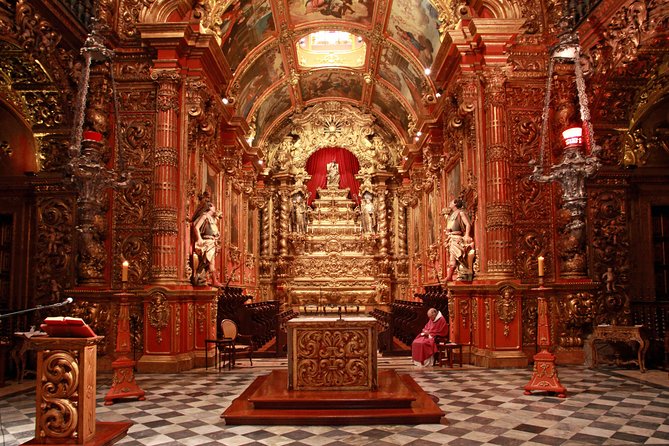
The first stop is Mosteiro de São Bento, also called the Monastery of St. Benedict. This matters because it’s not a dead museum stop. It’s still operational, along with the nearby St. Benedict College.
From the outside you get a sense that the building is built on a long timeline: founded by Benedictine monks who arrived from Bahia in 1590. The façade is described as part of a Mannerist project, with a centralized front featuring three archways and a triangular gable, plus two towers topped with pyramidal spires.
Then you pass through the entrance archway into a tiled porch with 19th-century iron gates. You’ll have about 30 minutes, and the ticket is included here.
Practical note: you’re likely in and around religious spaces, so dress respectfully (shoulders covered if you can, no overly casual beachwear). Also, bring a little patience—your visit is short by design, but it’s still a genuine stop in an active place.
Metropolitan Cathedral of Saint Sebastian: Mayan-Inspired Shape and Tall Stained Glass
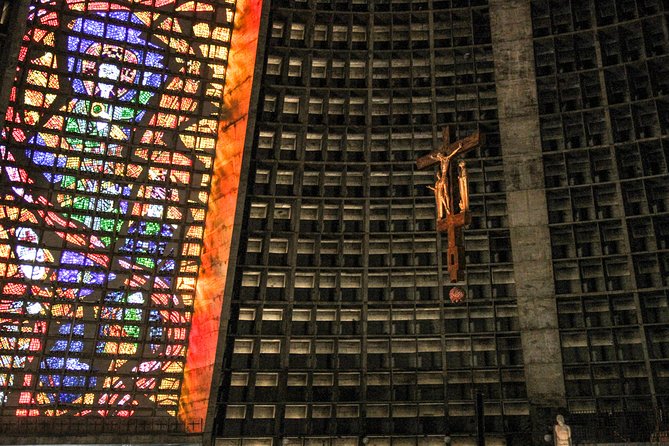
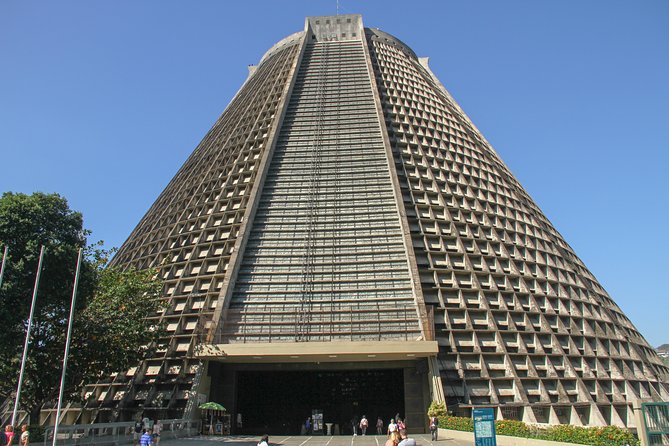
Next up is the Metropolitan Cathedral of Saint Sebastian. This is one of those buildings where you don’t need to “get it”—you just feel how different it looks. Its architecture is inspired by Mayan pyramids of Mexico, and the conical shape is believed to bring you closer to God.
The cathedral has four stained glass windows that run from floor to ceiling, forming a cross near the top. The tour highlights the acoustics as something you’ll notice inside—so if you’re the kind of person who appreciates how a space sounds, this stop can be memorable.
You’ll have about 30 minutes and entry is free.
If you’re trying to decide what to prioritize in downtown Rio, this is a good one to catch because it hits design and atmosphere quickly. It’s also a nice reset after the older stone-and-tradition feeling of Mosteiro de São Bento.
Maracanã: Quick Exterior Stop for Photos
Then you head for Maracanã Stadium. For this route, you won’t go inside. Instead, you’ll get a quick 15-minute stop outside, with photo time near Bellini’s statue.
Maracanã’s significance is real: it opened in 1950 for the World Cup, and it’s the largest stadium in Brazil, with a capacity over 78,000. It’s also known for other big events like major musical spectacles. But in this tour, you get the stadium as a photo moment and a context stop—not a tour.
If you want inside-the-stadium time, you’ll need a different experience. If you’re okay with a quick look and prefer to spend time at more walkable spots, this approach keeps the afternoon moving.



The Downtown Drive: Presidential Avenue, Palaces, Squares, and the Sambadromo
Between major stops, the tour rides down Avenida Presidente Vargas and shows you the downtown layout as you go. This is where your guide ties the city together for you.
You’ll see sights including:
- the Central Railway Station
- Duque de Caxias Palace
- Itamaraty Palace
- Campo de Santana
- Tiradentes Square
- Avenida Chile
- the Sambadromo
This “drive-by with narration” format works well when the goal is orientation. You learn what’s nearby, why this avenue is the spine of the city, and how the neighborhoods connect. It’s also a good time to ask your guide why certain buildings ended up here and what each one “signals” about Rio’s history and power centers.
Fort Copacabana and the Carioca Aqueduct (Lapa Arches)
You’ll also pass through areas that give Rio a layered feel—military history along the coast and older infrastructure in the city center.
One stop on your route is Fort Copacabana, a military base at the south end of Copacabana Beach. It’s open to the public and includes the Army Historical Museum and a coastal defense fort. You’re not getting a long museum day here, but it’s a cool contrast to the beach theme most people start with.
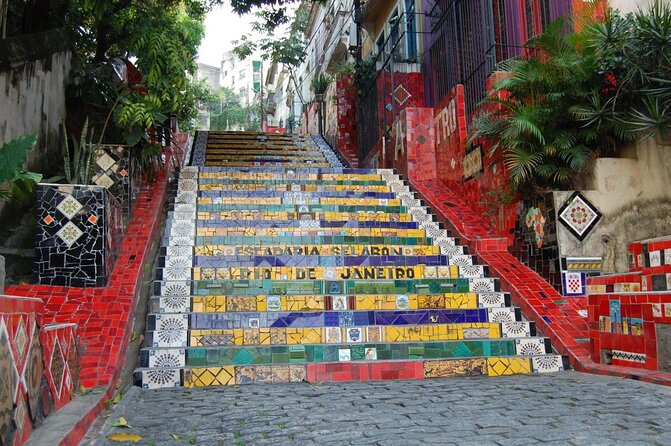
Then you’ll spend time in the Lapa area to see the Carioca Aqueduct, commonly known as the Arcos da Lapa. This aqueduct has an interesting modern function: since the late 19th century, it has served as a bridge for a tram connecting the city center with Santa Teresa uphill. (So you’re not just looking at old stone—you’re seeing how it still shapes movement.)
I like pairing these stops because they show Rio’s “old meets working life” side.
Escadaria Selarón: The Tile Steps That Turn Into a Rio Story
Now for the stop people remember. Escadaria Selarón—the Selarón Steps—are famous worldwide for a reason: they’re art made from obsession.
The steps are the work of Chilean-born artist Jorge Selarón, who described the project as his tribute to the Brazilian people. In 1990, he started renovating dilapidated steps in front of his house, and he began covering them with fragments of colored tile—blue, green, and yellow, echoing Brazil’s flag.
Neighbors mocked his choice at first, but the project became an obsession. He kept working even when money ran low, selling paintings to fund the work. The tour gives you about 30 minutes, and entry here is free.
Here’s what I’d tell you to do during that time: don’t just take one quick picture and move on. Look at the different tile textures, the mix of colors, and how the steps feel like a patchwork of personal history and street art culture. If you revisit later, you’ll notice new details each time.
Also, wear shoes you can handle on stairs.
Rua do Lavradio: Antiques, Bars, and a Proper Evening Vibe
After the steps, you’ll head into Lapa again for Rua do Lavradio, which is known for antique shops and a concentration of bars and restaurants. Even when you’re not planning to eat or drink, it’s a fun place to walk because the street itself feels like a social hub.
The tour notes that on the first weekend of each month there’s a street fair that draws national and foreign tourists plus locals. Your time here is around 20 minutes, and it’s free.
This stop works as a light palate cleanser after the cathedral and steps—more neighborhood energy, less architectural spectacle.
Aterro do Flamengo: Bayfront Park Views Plus WWII Memory and Modern Art
To finish, you cruise down Aterro do Flamengo, a huge bayfront park built on reclaimed land completed in 1965. It covers nearly 300 acres (about 1.2 km²) and includes gardens designed by Brazilian landscape designer Roberto Burle Marx.
This is where the scenery helps you breathe between stops. From the route, you’ll see:
- Church of Outeiro da Glória
- the Monument to the Fallen in World War II
- the Museum of Modern Art
In a tour that’s otherwise all buildings and monuments, this bayfront stretch adds a “wide view” feeling. It also gives you a sense of how Rio spaces itself: hills behind, water in front, parks connecting the city’s edges.
Guides and What Makes This Tour Feel Personal
A big strength here is the guide quality shown in feedback. Different guides get mentioned by name—people like Monica, Victoria, Arthur and Andre, and Sabina show up with the same theme: clear storytelling and good organization.
One guide name that pops up is Vincent Thomas; another is Ricardo as the driver tied to smooth navigation through traffic. The consistent point is that when the tour goes well, it feels like someone is translating Rio’s architecture and street life into something you can actually understand during a short visit.
I also appreciate the vehicle and route design for timing. Even with interruptions, the experience is structured so you’re not “waiting around for nothing.”
Possible Downsides (So You Can Decide Like a Pro)
Here’s the main downside: short stop times. The stated format is quick breaks—often 15 to 30 minutes—and that can feel rushed if you want to linger. One review issue was a late pickup and very brief stops with minimal commentary, which shows that timing and guide pacing can vary.
Another practical consideration: Maracanã and some key areas are not deep dives. You get exterior views and quick photo opportunities, not stadium tours or long museum visits. If you’re dreaming of spending your time inside iconic venues, you’ll need something else on top of this.
Finally: traffic can be real in Rio, even when everyone does their best. If your day is tightly scheduled, build in a little slack afterward.
Who This Tour Fits Best
This is a strong match if:
- you want a fast downtown Rio overview in one afternoon
- you’re staying in Copacabana, Ipanema, or Leblon
- you enjoy architecture, churches, and street-art style stops like the Selarón Steps
- you want an easy on-and-off experience with hotel pickup/drop-off
It’s less ideal if:
- you dislike stairs and quick walks (Selarón steps are stair-heavy)
- you’re chasing long time inside big venues (Maracanã is outside-only on this route)
- you need slow, calm pacing with lots of free time
Should You Book Rio Downtown With Selarón Steps and the Cathedral?
If you want the smart use of a half day, I’d say yes. This tour compresses a lot of Rio’s identity—religious architecture, a famous tile staircase, a big football stadium context, the Lapa arches area, and the bayfront park—into one organized loop with pickup from your beach-side hotel.
Book it when your schedule is tight and you’d rather spend your energy walking the great spots (Mosteiro, Cathedral, Selarón Steps) than commuting between them. Skip it or add another activity if your priority is deep museum time or getting inside Maracanã.
FAQ
FAQ
How long is the Rio downtown tour?
It’s about 3 hours.
What areas do you get picked up from?
Pickup is from Zona Sul hotels, including Copacabana, Ipanema, and Leblon.
What time does the tour start?
The tour start time is 1:30 pm.
What’s included with the tour price?
The tour includes a professional guide, air-conditioned minivan transport, and hotel pickup and drop-off for selected hotels. Admission is included for Mosteiro de São Bento, while the Metropolitan Cathedral and Escadaria Selarón are free.
Do you enter Maracanã Stadium?
No. You make a quick stop outside for photos.
Are there any paid admissions on the route?
Mosteiro de São Bento includes a ticket in the tour, while the Metropolitan Cathedral and Escadaria Selarón are free.
What if I need to cancel?
You can cancel for a full refund if you cancel at least 24 hours before the experience’s start time.