REVIEW · RIO DE JANEIRO
Rio de Janeiro Tour – Discover Christ the Redeemer and the Marvelous City
Book on Viator →Operated by Brasil Show Turismo - Agência de Turismo Rio de Janeiro · Bookable on Viator
Christ, stairs, stadiums, and beaches, all in one run. This is a compact Rio de Janeiro highlights route built around Corcovado and the city’s most famous views, plus a few places that help you understand how Rio’s culture actually works.
I especially like that it mixes big-ticket icons with local character. Escadaria Selarón is pure street-art passion, and the Marquês de Sapucaí Sambadrome stop gives you context for samba culture even when it is not Carnival season.
The main trade-off is time pressure. At Christ the Redeemer, crowds and tight viewing windows can make every minute matter, and the group can move slower if people miss scheduled timing.
In This Review
- Key things to know before you go
- A small-group Rio hits list that actually fits a workday
- Corcovado and Christ the Redeemer: the view window you should respect
- Escadaria Selarón: street art as a personal tribute
- Beaches by vehicle: a fast way to see Rio’s coastline mood
- Sambadrome da Marquês de Sapucaí: samba’s giant stage, off-Carnival
- Metropolitan Cathedral of Rio: conical design and stained-glass drama
- Floresta da Tijuca: a short look at Rio’s big urban forest
- Maracanã: football culture in Rio’s North Zone
- Price and timing: is $90 good value for a 5-hour highlights run?
- What kind of traveler should choose this tour?
- Should you book this Christ the Redeemer and Rio highlights tour?
- FAQ
- What time does the tour start, and how long is it?
- How many people are in the group?
- Are admission tickets included for the stops?
- What places does the tour visit?
- Does the tour run in bad weather?
- What is the cancellation window for a full refund?
Key things to know before you go

- Corcovado is the anchor stop: plan for crowd energy and a focused viewing window at the top.
- Selarón Stairs are more than a photo stop: you get a quick, colorful hit of Rio’s neighborhood creativity.
- Sambadrome without Carnival: you see the famous parade venue in a calmer, off-season moment.
- Downtown architecture break: the Metropolitan Cathedral’s stained-glass look is striking for a city-center pause.
- Tijuca Forest reset: a short walk-time breather inside one of the world’s largest urban forests.
- Maracanã for football fans: a quick stadium stop in Rio’s North Zone rounds out the day.
A small-group Rio hits list that actually fits a workday
This tour is built for people who want the headline Rio experiences without spending your whole day bouncing around. It runs about 5 hours and typically keeps the group small, with a maximum of 19 people. That matters, because Rio’s top sites are busy, and smaller groups generally mean easier coordination at meeting points.
I like that the stops feel intentionally chosen: you start with the city from above, then you work your way through art, architecture, and cultural venues, before ending on football power. You also get a “beaches of Rio” segment from a comfortable vehicle, so you are not stuck staring out your window for long stretches.
One practical consideration: you do not have a lot of slack time. If you are the type who likes to linger, you may feel the schedule’s squeeze, especially around Corcovado.
You can also read our reviews of more city tours in Rio de Janeiro



Corcovado and Christ the Redeemer: the view window you should respect

Corcovado (also called one of Rio’s hills) is where Rio goes postcard-mode. The statue of Christ the Redeemer stands 38 meters high, and the spot is famous because it gives you a privileged, wide panorama over the entire city.
Here is the reality check: this part of Rio is crowded. You’ll want to be mentally ready for that. One of the most useful bits of advice from real-world experiences is simple: arrive on time to the meeting point because the time at the top can be tight. If you slip behind schedule, you can lose part of your viewing window, and crowding does not forgive delays.
If you care about photos, I’d treat the Christ stop like a timed appointment, not a leisurely hangout. Do your quick “must-see” shots early, then let the rest of your time be flexible for whatever the sky is doing.
On the guide side, many departures are led by Márcio (including Márcio Lima). People repeatedly highlight his ability to explain Rio in both Portuguese and Spanish, and you’ll often get more than just facts—you’ll get why Rio puts this statue at the center of its identity.
Escadaria Selarón: street art as a personal tribute

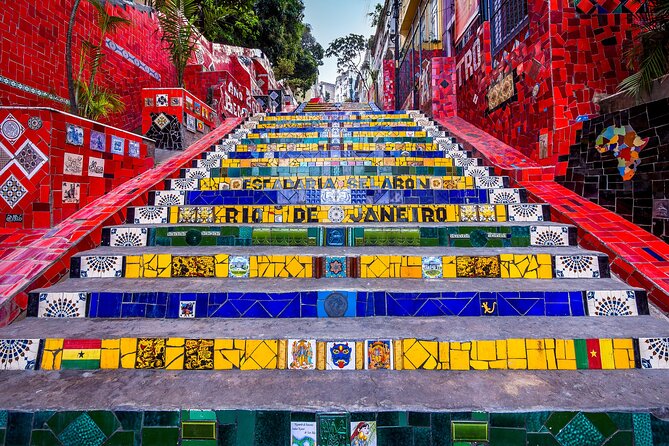
The Escadaria Selarón (Selarón Staircase) sits between Santa Teresa and Lapa. This is one of those Rio scenes that feels alive, because it is not a museum piece behind glass. It is a staircase decorated over years by Chilean artist Jorge Selarón, and it is described as a tribute to Brazilian people.
You get about 20 minutes here, and that’s enough time to:
- take in the mosaic textures and the face-level detail
- walk a short section and notice how the colors change across the steps
- get a feel for the street-life mood of the area
The drawback: if you want to do a deep neighborhood wander, this stop is brief. Think “taste” instead of “tour of Santa Teresa.” Still, it is a strong contrast after Corcovado, because it brings Rio back down to human scale.
Beaches by vehicle: a fast way to see Rio’s coastline mood
After the culture-and-views hits, you get a segment to discover Rio’s beaches in a comfortable vehicle. The itinerary does not list specific beach names for this portion, so I recommend you use it as your orientation time.
Why this matters: Rio’s beaches are not just scenery. They signal where Rio’s energy is. Even if you do not do a full beach day today, this “drive-by” moment can help you decide what you want to return to later, when you have time to slow down.
The best move here is simple: keep your eyes up for views, but do not expect a long stop. The point of this segment is flow.
Sambadrome da Marquês de Sapucaí: samba’s giant stage, off-Carnival
The Marquês de Sapucaí Sambadrome—officially Passarela Professor Darcy Ribeiro—is one of Rio’s most iconic performance venues. It was inaugurated in 1984 and is the stage for the annual samba school parades during Carnival.
On this tour, you spend about 20 minutes. Off-season, it can feel surprisingly open and quiet compared to the high-voltage images you’ve seen from February. That’s not a bad thing. It helps you understand the scale of the parade route and why the Sambadrome is such a big deal in Rio identity.
The value here is context. Even if Carnival is not on your calendar, you get a real sense of where the music and spectacle would unfold. It’s a cultural stop that is different from “stand here, take photo, move on.”






Metropolitan Cathedral of Rio: conical design and stained-glass drama
Next is the Metropolitan Cathedral of Rio de Janeiro (often associated with Catedral de São Sebastião do Rio de Janeiro). It was inaugurated in 1979 and replaced the city’s earlier cathedral, the Church of Nossa Senhora do Carmo.
What you’ll notice is the modern design:
- conical shape
- about 106 meters in diameter
- about 75 meters external height
- about 64 meters internal height
- capacity for around 20,000 people standing
The “wow” factor is the colored stained glass. It runs up the walls toward the dome and makes the inside (and sometimes the exterior mood) look different depending on daylight.
This stop is around 30 minutes, which is just long enough to step in or orbit the building for the design lines and color effect. It’s also a good pacing reset—architecture gives your brain something new to focus on after the outdoor view-and-photos stage.
Floresta da Tijuca: a short look at Rio’s big urban forest
Then you jump into green with Floresta da Tijuca (also called Tijuca Forest). It is described as one of the largest urban forests in the world.
The origin story matters because it explains why the area feels like a “survival” forest, not just a scenic park. It was created in 1861 by Emperor Pedro II, meant to reforest land affected by deforestation tied to cultivation of sugarcane and coffee.
Your time here is about 10 minutes, so you’re not doing a hiking plan. This is a brief contact stop—a way to experience that Rio’s nature is not only far away in the mountains.
If you want the best photos, look for light filtering between trees and avoid spending your whole 10 minutes staring at your phone screen. Take a couple of shots, then actually look around.
Maracanã: football culture in Rio’s North Zone
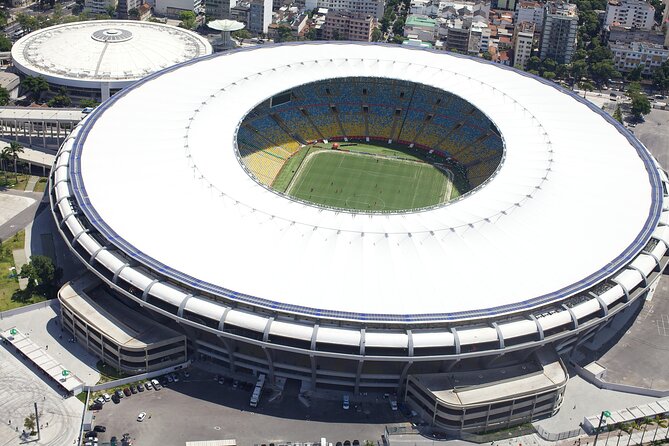
The last big landmark on the day is Maracanã (Estádio Jornalista Mário Filho), also known as Maraca. It is located in Rio’s North Zone and is one of Brazil’s best-known football stadiums.
You spend around 20 minutes here, which is enough time to:
- get your bearings on the scale of the venue
- appreciate why Maracanã is so central to football culture
- connect today’s Rio skyline/streets to the reality that sports are identity here
This is not a full stadium tour on this schedule. But it’s still valuable if you are a fan—or if you want to understand what Rio is like when the city turns into a football city.
Price and timing: is $90 good value for a 5-hour highlights run?
The price is $90 per person for about 5 hours. For Rio, that can be good value if you compare it to the hassle-cost of doing several separate self-planned visits, especially with transport between Corcovado, downtown stops, and Maracanã.
Here’s what you are effectively paying for:
- Guided handling so you do not have to stitch the day together yourself
- A comfortable vehicle ride that includes the “beaches” viewpoint segment
- A packed route with time allotted at multiple major landmarks
- Included admission fees for the listed stops (the experience lists ticket admission as free for the sites in the program)
Where the value can wobble: if you lose time to waiting, you feel it immediately because the schedule is tight. Some experiences include long waits at stops when people are late or the group pace slows down. If you are very time-focused, you may feel less satisfied.
My advice: show up early at the start and be strict with punctuality. If you do that, this tour has enough structure to deliver a lot of iconic Rio in a single morning-to-early-afternoon block.
What kind of traveler should choose this tour?
This is a strong fit for:
- first-timers who want Rio highlights without building an itinerary from scratch
- people who like guided context (especially around Christ and samba culture)
- visitors who want a mix of views, neighborhoods, architecture, nature, and sports
It may not be ideal if:
- you hate crowds and hate timed stops
- you need lots of free time for exploring one location in depth
- you are traveling with strict time windows later that same day
Language note based on real-world experiences: many guides are reported to work in Portuguese and Spanish. One account also describes how the guide explained that if you wanted English explanations, you should speak up early. If English is your priority, I’d plan to request it at the beginning so you are not disappointed later.
Also, this experience is said to require good weather, and that matters because it can affect what you can see from Corcovado. If clouds roll in, you might still get a great day of stops, but the main “from above” payoff may be less dramatic.
Should you book this Christ the Redeemer and Rio highlights tour?
If you want an efficient Rio sampler—Christ the Redeemer, Selarón Stairs, the Sambadrome, Metropolitan Cathedral, Tijuca Forest, and Maracanã—this is the kind of tour that can give you serious mileage for one calendar window.
I’d book it if you can do two things: be punctual and keep your expectations realistic about timed stops. If you arrive early and move with the group, the route makes sense and the day can feel like Rio’s greatest hits, not a checklist blur.
Skip it (or look for a slower alternative) if you know you get stressed by crowds and schedule pressure. Corcovado in particular rewards patience and punctuality.
FAQ
What time does the tour start, and how long is it?
It starts at 8:00 am and runs for about 5 hours.
How many people are in the group?
The tour has a maximum of 19 travelers.
Are admission tickets included for the stops?
The experience lists admission ticket pricing as free for the included stops.
What places does the tour visit?
You’ll go to Christ the Redeemer (Corcovado), Escadaria Selarón, beaches in a comfortable vehicle, Sambadromo da Marquês de Sapucaí, the Metropolitan Cathedral of Rio de Janeiro, Floresta da Tijuca, and Maracanã.
Does the tour run in bad weather?
The experience requires good weather. If it’s canceled due to poor weather, you’ll be offered a different date or a full refund.
What is the cancellation window for a full refund?
You can cancel up to 24 hours in advance for a full refund. If you cancel less than 24 hours before, the amount paid is not refunded.