
REVIEW · RIO DE JANEIRO
Rio Street Art Tour
Book on Viator →Operated by Rio Street Art Tour · Bookable on Viator
Street art in Rio has a story. This tour gives you that story straight from a local guide as you walk between art-filled neighborhoods and stop on specific works. I really like the small group setup, which makes it easier to ask questions and keep up. I also love how the tour connects street art and folk art to what Rio feels like day to day.
What made the experience stand out to me is the way you don’t just look at walls. You learn how murals and installations reflect community identity, famous artists, and the city’s changing mood. In the accounts I’ve read, guides like Nina are the kind of people who can explain what you’re seeing in plain language and point out artists you start recognizing as you go.
The main consideration is pacing. Four hours can feel fast if you’re the type who wants to linger on every detail, and the tour requires good weather to run. Also, at $75 per person, it’s best if you’re in it for the art stories, not just a quick photo loop.
In This Review
- Key reasons this tour is worth your time
- Four hours that actually earns your ticket price
- Starting in Copacabana: finding the street-art language fast
- São João Batista Cemetery and Selaron: art as private devotion
- Botafogo at the finish: stories you can walk away with
- The guide makes the art readable (and memorable)
- Price and logistics: what $75 buys you in Rio
- Who should book this street art tour?
- What to do before you go (so you enjoy it more)
- Should you book the Rio Street Art Tour?
- FAQ
- How long is the Rio Street Art Tour?
- How much does the Rio Street Art Tour cost?
- Where does the tour start and end?
- Is the group size limited?
- What’s included in the price?
- Are there admission fees at the stops?
- Is hotel pickup included?
- Is the tour suitable for families and service animals?
- What if the weather is bad?
Key reasons this tour is worth your time

- A max group size of 15 means you’re not lost in the crowd
- Copacabana, a cemetery, and Botafogo give you three very different flavors of Rio art
- Selaron at São João Batista Cemetery adds a rare, emotional art stop
- Free admission at each stop keeps costs predictable
- A guide who checks in helps you manage the walking and time in the heat or sun
Four hours that actually earns your ticket price
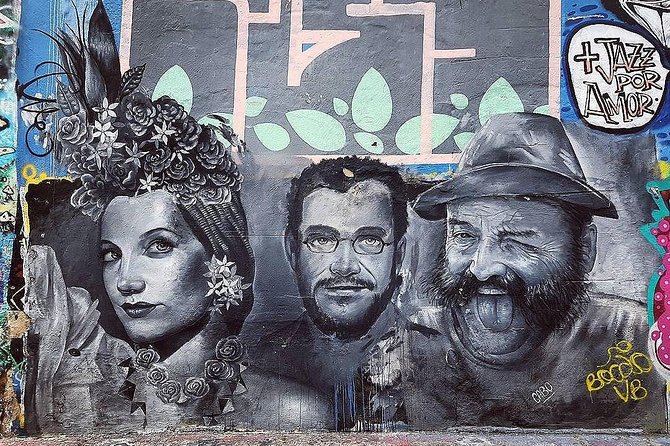
Rio street art is everywhere, but it’s easy to see it like background noise. This tour is built to turn street art into a readable map. You get an organized route through meaningful places, and your guide helps you connect the art to the neighborhoods around it.
Here’s the value angle: you’re paying for interpretation. The stops are free to enter, but the real cost is a guide who can translate style, references, and artist stories into something you can follow. In a city as visually layered as Rio, that context is what makes the murals stick in your mind after you’ve left.
Time matters too. At about four hours, you get a solid run of street art without spending the entire day coordinating plans. If your Rio schedule is tight, this is a practical way to add substance to the trip.
You can also read our reviews of more tours and experiences in Rio de Janeiro

Starting in Copacabana: finding the street-art language fast
You kick off at Rua Siqueira Campos, 96 in Copacabana. This is one of the most recognized areas in Rio, but the trick of this tour is that it treats Copacabana as more than a postcard. You’ll look around the neighborhood and hear the story behind what’s on the walls and why it appears there.
Why Copacabana works as Stop 1: it helps you get your bearings early. Once you understand how your guide is reading the art—what to notice, how artists show identity, and how the city hosts creative expression—you’re ready for the more unusual stop that comes next.
What to expect here:
- A guided neighborhood walk focused on street art in the area
- Short, clear context on the local scene and the city
- Plenty of chances to ask what you’re looking at before you move on
A possible downside is that Copacabana is also busy and visually intense. If you’re sensitive to crowds or noise, give yourself permission to slow down when the group pauses and focus on the art itself rather than the surroundings.
São João Batista Cemetery and Selaron: art as private devotion
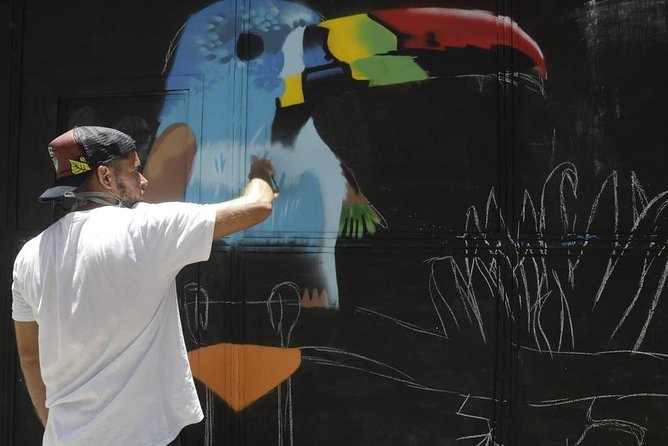
Stop 2 is São João Batista Cemetery. This is where the tour shifts tone—less “scene-setting” and more personal. You can choose to see an intimate homage connected to the Chilean artist Selaron at his eternal resting place.
This stop is special because it reframes street art. You’re not just looking at murals meant for public eyes. You’re looking at art that carries memory, dedication, and a kind of long-term human conversation. Even if you’re new to street art, a place like this nudges you into a different way of seeing.
How this might feel during the tour:
- A quieter, more reflective moment
- Time spent on a specific homage linked to Selaron
- An emotional contrast to the neighborhood murals before and after
The drawback to keep in mind is simple: cemetery visits can be emotionally heavy and slower than you expect. If you’re touring with limited energy, tell your guide early so you can manage your pace.
Botafogo at the finish: stories you can walk away with
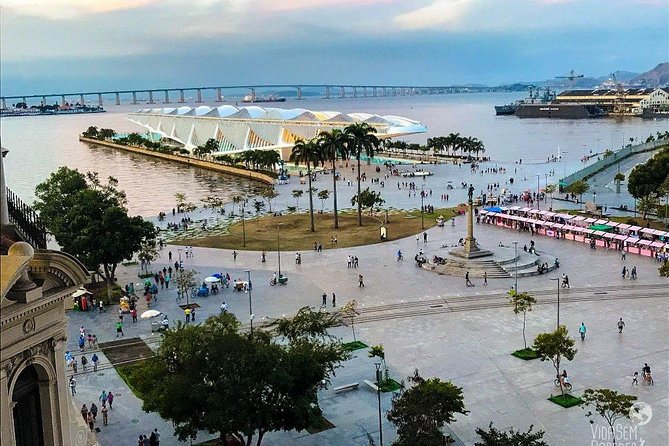
At Stop 3, you head to Botafogo, and the tour ends in the area of Parcão da Nelson Mandela (R. Nelson Mandela, 53-31), near another metro station. This is a strong way to wrap up because Botafogo feels like a “young neighborhood” with active street art and ongoing stories.
Botafogo matters on an art tour because it helps you connect what you saw earlier to a living street-art culture, not just isolated highlights. By the time you arrive, you’ve already learned how to interpret the visuals. Now you’re seeing how that interpretation plays out in a different neighborhood identity.
What to expect at the end:
- More art and local storytelling in a neighborhood setting
- A finish point that’s convenient for continuing your day using public transit
- A natural “walk, learn, and then go” rhythm
The only real practical catch: since you end near transit but not at your lodging, you’ll want a plan for how you’ll get back. Having an easy metro option nearby is a plus, but it still helps to check your route before you start.
The guide makes the art readable (and memorable)
The biggest pattern across the best-rated experiences is guide quality. People consistently describe the guide as passionate about street art and able to bring installations to life with story, context, and artist background. In the accounts I’ve read, guides such as Nina are praised for being on time, patient, and fluent enough in English to make the details land.
What that means for you on the ground:
- You’ll spend less time guessing what you’re looking at
- You’ll leave with names and references you can recognize later
- You’ll get small detours when the guide thinks they’ll help you understand what’s happening
One practical detail I appreciated from the way guides are described: checking in. Some guides actively watch the group’s comfort—whether people need a break or water—and that matters in a four-hour window where you’ll likely do a fair amount of walking.
Also, this is a tour for people who want conversation. If you enjoy stopping to ask about symbols, artist motivations, or how neighborhoods change, you’ll likely get more out of this than if you treat it as a quick sightseeing checklist.






Price and logistics: what $75 buys you in Rio
Let’s talk value. At $75 per person for about four hours, this isn’t a bargain-basement “grab a photo and go” option. It’s priced like a guided experience. That can be fair—especially because the stops have free admission, so your money is mainly going toward the guide and the time spent explaining what you’re seeing.
You should feel confident paying this price if:
- You care about the stories behind murals and street art
- You want an efficient route across multiple areas
- You appreciate small-group attention
You might think twice if:
- Your goal is only a few iconic photos and you don’t care about context
- You’re comparing it to longer, transport-heavy tours where the guide spends more total time with you
Logistics are refreshingly straightforward. You start at Rua Siqueira Campos in Copacabana and end in Botafogo near metro. There’s no hotel pickup included, so you’ll want to get to the meeting point on your own using public transportation.
And yes, there’s a weather note: this experience needs good weather. If your trip is in a season where skies can be unpredictable, build flexibility into your schedule so you’re not stuck with a ruined plan.
Who should book this street art tour?
This fits best if you:
- Enjoy walking and want a guided route that saves you from aimless hunting
- Love art that has meaning, not just style
- Want to see multiple faces of Rio instead of one neighborhood bubble
- Like small groups and direct interaction with the guide
It’s also a decent choice for solo travelers because the group size is capped at 15, and the format encourages questions. Couples can enjoy it too, especially if you like learning and sharing interpretations together as you go.
Families can join, as long as children are accompanied by an adult. Service animals are allowed, and the tour is described as suitable for most travelers.
What to do before you go (so you enjoy it more)
A few practical moves will help you get more out of the day:
- Wear comfortable shoes. Street art tours are about stopping and looking, which usually means uneven pace and real walking.
- Bring something for hydration. Even if the guide checks in, you’re still responsible for your own comfort.
- Have your question list ready. If you’ve seen a mural online and wonder what it means, write the artist name or a detail down before you arrive.
- Keep an eye on the weather. The tour needs good conditions, and choosing an afternoon that looks steady helps.
Finally: treat it like a guided conversation with a city’s walls. That mindset makes the murals feel less random and much more intentional.
Should you book the Rio Street Art Tour?
Book it if you want street art with context—stories, artists, and neighborhood meaning—and you like a manageable four-hour format with a small group. The combination of Copacabana, the Selaron homage at São João Batista Cemetery, and the finish in Botafogo is a smart mix that keeps the tour from feeling repetitive.
Skip it or reconsider if your idea of a street art tour is mostly photo stops without much interest in background. At this price, you’re paying for interpretation, and you’ll be happiest when you’re ready to listen.
If you’re curious, you can’t really go wrong. This is the kind of tour that makes Rio’s walls feel like a language you can start reading.
FAQ
How long is the Rio Street Art Tour?
It runs for about 4 hours.
How much does the Rio Street Art Tour cost?
The price is $75.00 per person.
Where does the tour start and end?
It starts at Rua Siqueira Campos, 96 in Copacabana, Rio de Janeiro. It ends in Botafogo near Parcão da Nelson Mandela on R. Nelson Mandela, 53-31.
Is the group size limited?
Yes. The tour has a maximum of 15 travelers.
What’s included in the price?
A local guide and all activities are included.
Are there admission fees at the stops?
Admission tickets are free for the stops listed.
Is hotel pickup included?
No, hotel pickup and drop-off are not included.
Is the tour suitable for families and service animals?
Children must be accompanied by an adult, and service animals are allowed.
What if the weather is bad?
The tour requires good weather. If it’s canceled due to poor weather, you’ll be offered a different date or a full refund.