REVIEW · RIO DE JANEIRO
Rio Surf Experience!
Book on Viator →Operated by One Carioca day · Bookable on Viator
One morning, waves and a lookout. This Rio surf experience is built around finding the right conditions for your level, not forcing everyone into the same spot. You start at Barra da Tijuca, get a safety briefing, practice balance and the pop-up on land, then head out to catch waves. Afterward, you get a scenic stop with serious Rio “wow” factor.
I like the focus on technique and risk reduction. In particular, Gabriel’s warm-up approach is designed to keep you present and help you move with confidence, which is a big deal when you’re learning fast. I also like the small group size (max 6), so you’re not stuck waiting for an instructor to notice you.
One drawback to plan for: you’re meeting at a specific spot in Barra da Tijuca, and you’ll need to get there yourself. If you miss the meeting point, the session won’t pause. Also, the day depends on sea and weather conditions, so be flexible if the surf is off.
In This Review
- The Rio Surf Rhythm: Barra da Tijuca, Coaching, and a View
- 5 Key Reasons This Surf Lesson Feels Worth It
- Where You Meet in Barra da Tijuca (and Why It Matters)
- The Wave Plan: How They Pick the Best Conditions for Your Level
- Safety First: What the Briefing Should Help You Do
- Sand to Surf: Warm-Ups and Pop-Up Practice That Actually Clicks
- In the Water: Getting Help Without Getting Overwhelmed
- The Post-Surf Viewpoint Stop: Why It’s Not Just a Detour
- Price Check: Is $90 Good Value for Rio Surf?
- Who Should Book This (and Who Might Skip)
- Tips to Make Your Morning Smoother in Rio
- Should You Book Rio Surf Experience in Barra da Tijuca?
- FAQ
- How long is the Rio Surf Experience?
- How much does it cost?
- Where is the meeting point?
- What is the group size?
- Do I need to be an experienced surfer?
- What happens before you go into the water?
- Is gear provided?
- What if the weather or surf conditions are not good?
- How does confirmation work after booking?
- Is free cancellation available?
The Rio Surf Rhythm: Barra da Tijuca, Coaching, and a View

This is a half-day surf lesson in Rio de Janeiro, aimed at getting you into the water with real guidance and then closing the day with a viewpoint stop. The price is $90 per person for about 4 hours, and it’s typically booked around 25 days ahead, which hints at steady demand for a guided, small-group morning.
The core idea is simple: the guide searches for the beach with the best conditions that day for your surf level. That matters because Rio surf can swing from friendly and learnable to gnarly and crowded depending on wind and swell. Here, you’re not just showing up and hoping.
On land, you don’t start by guessing. You’ll do warm-up exercises, learn safety measures for being in the water, and practice the movement of standing on the board first in the sand. Then you go out and try it on real waves. That order helps your body learn the sequence before the ocean adds chaos.
5 Key Reasons This Surf Lesson Feels Worth It
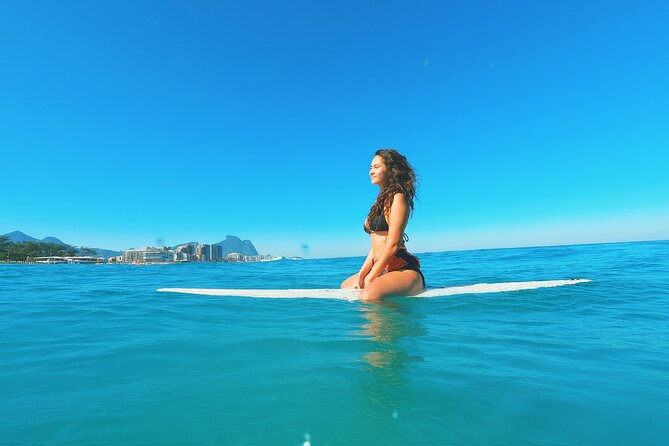
Small group (max 6) means more hands-on attention.
Practice the pop-up in sand before you hit the surf.
Waves are chosen based on your level, not one-size-fits-all.
Gabriel’s coaching style blends technique with calm, focused warm-ups.
You end with a viewpoint stop for a proper Rio payoff.
You can also read our reviews of more tours and experiences in Rio de Janeiro.



Where You Meet in Barra da Tijuca (and Why It Matters)
You meet at Av. Rodolfo Amoedo, 455 in Barra da Tijuca, at Banco24Horas. That’s your anchor point, and the activity ends back there.
Here’s the practical part: don’t treat this like a hotel pickup where someone will find you. Plan to get yourself to the meeting point using local transport. The tour is described as near public transportation, so that’s manageable, but it still means you need to be punctual.
I’d give yourself extra buffer time. One communication issue popped up in the feedback, and it’s a reminder that tours run on a tight schedule. Arrive early so you can check in and get geared up without stressing.
The Wave Plan: How They Pick the Best Conditions for Your Level
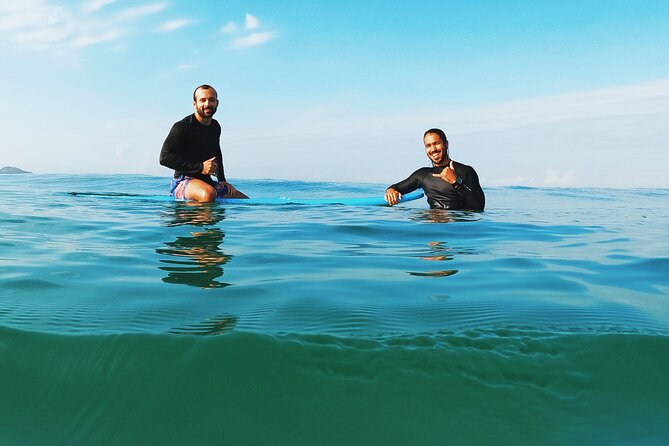
The big promise here is “we search for the spot with the best conditions of the day.” That’s not just marketing wording—it’s the difference between a lesson that helps you stand and catch waves versus one where you’re constantly getting swallowed by surf that’s too strong or too chaotic for where you are right now.
In the water, your guide works to get you positioned where you can actually make progress. People who are new often want two things: (1) enough wave energy to feel real momentum and (2) coaching timing that makes the difference between standing for a second and standing with control.
This tour also aims to reduce crowd frustration. One surf day description mentions decent waves without the heavy crowd vibe, which usually means fewer distractions and more chances to try again. In a 4-hour window, that matters.
Safety First: What the Briefing Should Help You Do
Before you hit the ocean, you’ll get safety measures at sea and warm-up exercises. This is the unglamorous part of learning to surf—but it’s the part that makes everything else easier.
A good surf lesson doesn’t just teach you to pop up. It also helps you understand what to expect from the water: how to move, how to avoid wasting energy, and how to handle the physical demands without turning the session into a wipeout marathon.
One of the standout coaching notes from the experience is how the warm-up is described as mindful—built to minimize risk of injury and help you stay focused. When you’re nervous, your body goes tight. When you’re tight, you lose coordination. A structured warm-up helps you get loose, then ready.
Sand to Surf: Warm-Ups and Pop-Up Practice That Actually Clicks

Most first-time surfers lose the race between thinking and moving. Your brain wants to figure it out while your body is being thrown around by a moving board and moving water. That’s why the sand stage is such a smart move.
Here’s what you can expect:
- Warm-up exercises to get your body ready
- Practice standing on the board movement in the sand
- Then you repeat it in the water when conditions allow
Technique talk should feel simple and actionable. In feedback, Gabriel is singled out for breaking down the pop-up in a way that beginners could follow. That’s huge. The pop-up is the moment everything depends on—if you get that step right, catching waves becomes way more possible.
Also, notice how the session design is time-efficient. This isn’t a one-hour “look at the ocean” experience. The day is structured so you warm up, learn the sequence, then get real attempts at riding.



In the Water: Getting Help Without Getting Overwhelmed
Once you’re out, the coaching style is the practical kind: your instructor helps you with positioning and timing so you catch more waves and spend less time paddling in the wrong place.
Small-group format helps here. With fewer people, you’re more likely to get clear, quick feedback during each attempt—rather than waiting your turn while the instructor triages everyone at once. One example in the feedback describes a situation with only one other surfer, leading to an especially personalized experience. Even if your group isn’t that small, max 6 still gives you a better shot at frequent guidance.
You’ll also likely feel the difference in pacing. A well-run lesson doesn’t rush you into higher difficulty too soon. Instead, it adapts to your level and keeps you working where you can improve. Feedback specifically praises how the guide selects conditions that fit beginners, and how coaching is patient with first-timers.
If you’ve surfed before, you’ll still benefit. Even experienced surfers often need a new local approach: where to stand, how to read the day, and how to adjust to the specific break.
The Post-Surf Viewpoint Stop: Why It’s Not Just a Detour
After surfing, you go to a place with a breathtaking view. That’s built into the experience plan, and it’s one of the reasons people describe it as a full Rio morning—not just a sports lesson.
You get a moment to reset after getting salt and sand out of everything. Then you shift from water adrenaline to Rio scenery. It’s the kind of stop that makes the whole day feel like a memory, not a workout.
One review even mentions photos capturing the experience. Another highlights the viewpoint as spectacular. Since photos aren’t guaranteed in the information provided, treat that as a nice bonus rather than a promise—but it fits the vibe of this being a “complete” outing.
Price Check: Is $90 Good Value for Rio Surf?
Let’s talk value. $90 per person for about 4 hours can feel like a splurge—until you compare what you get.
You’re paying for:
- An instructor-led lesson (not self-guided surf)
- Safety briefing and warm-ups
- Sand practice plus in-water attempts
- Selection of the beach based on conditions and your level
- A scenic viewpoint stop after the session
- Gear provided, according to feedback
Gear is often where beginner surf lessons save you money. If you were renting or buying a board plus basic equipment yourself, the math usually shifts fast. The small group size also improves the “cost per minute of real coaching,” which is what you’re actually buying.
So, is it worth it? If your goal is to actually stand, catch waves, and leave with a Rio story, the structure makes sense. If your goal is a long, wandering beach day where you mostly watch others, you may find the half-day format a bit short.
Who Should Book This (and Who Might Skip)
This works best for:
- Beginners who want structured instruction and the right conditions
- People who prefer small groups and hands-on help
- Families and teens learning together, since the coaching is described as patient and beginner-friendly
- Anyone who wants a Rio experience that mixes action with a scenic stop
You might consider a different option if:
- You hate fixed meeting points and prefer hotel pickup everywhere (this one meets at Banco24Horas on Rodolfo Amoedo)
- Your schedule is rigid and you don’t handle weather changes well (the day requires good sea conditions)
- You expect a full surf day or multiple sessions across different beaches (this is about 4 hours)
Tips to Make Your Morning Smoother in Rio
You’ll have a better time with a little prep:
- Bring water and a small snack if you tend to get hungry quickly after activity (the session is only about 4 hours, but surf burns energy).
- Wear something you can rinse easily. Salt dries rough.
- Don’t overthink the pop-up sequence. Follow the guide’s cues and focus on the practice steps in order.
- Arrive early at Banco24Horas on Av. Rodolfo Amoedo. Punctuality matters when you’re heading to the beach at the right time.
- If you’re sore afterward, that’s normal. Surf recruits muscles you didn’t know you had.
Also, if English communication is important to you, feedback highlights that Gabriel communicates well. That said, always expect that the coaching is focused on action and safety, not classroom lectures.
Should You Book Rio Surf Experience in Barra da Tijuca?
I’d book it if you’re trying to learn surfing with real coaching, small-group attention, and a plan that matches your level. The sand-to-sea practice, the attention to safety, and Gabriel’s patient technique explanations are the big strengths. Add the viewpoint stop, and the day feels like more than a workout.
Skip it only if you need hotel pickup, can’t meet at the stated spot, or aren’t comfortable with the reality that the ocean decides what happens that day. When conditions are right, this style of lesson is one of the better ways to get your first real rides in Rio.
FAQ
How long is the Rio Surf Experience?
The surf lesson is about 4 hours.
How much does it cost?
It costs $90.00 per person.
Where is the meeting point?
You meet at Banco24Horas, Av. Rodolfo Amoedo, 455, Barra da Tijuca, Rio de Janeiro – RJ, 22620-350, Brazil. The activity ends back at the meeting point.
What is the group size?
The tour/activity has a maximum of 6 travelers.
Do I need to be an experienced surfer?
No. Most people can participate, and the guide looks for surf conditions that fit your level.
What happens before you go into the water?
You’ll receive safety measures at sea, do warm-up exercises, and practice standing on the board movement in the sand before going into the ocean.
Is gear provided?
Yes. All gear provided is mentioned in the experience feedback.
What if the weather or surf conditions are not good?
This experience requires good weather. If it’s canceled due to poor weather, you’ll be offered a different date or a full refund.
How does confirmation work after booking?
You receive confirmation at the time of booking, unless you book within 8 hours of travel—in that case, confirmation is received as soon as possible based on availability.
Is free cancellation available?
Yes. You can cancel up to 24 hours in advance for a full refund.