REVIEW · RIO DE JANEIRO
Rio in Style: A Journey Thru Corcovado, Sugarloaf, Selaron
Book on Viator →Operated by Guided Tour In Rio · Bookable on Viator
Rio has a way of looking like a postcard all day long. This tour strings together the big hitters with smart timing and zero guesswork. I like that you get hotel pickup and a plan that keeps you moving between neighborhoods instead of figuring out transport. I also like how the day is built around two cloud-proof options—if Christ the Redeemer is hidden, you switch to a different viewpoint. The only drawback is that the ticketed attractions are extra, so you should budget for entrances and the cable car portion at Sugar Loaf.
You start early from Copacabana, hit sweeping viewpoints in the morning, then slow down with classic Rio street scenes, churches, and tile art. The group stays small (max 14), and your guide keeps everyone together—helpful when Rio streets are busy and parking is hit-or-miss. Still, this is a full day with a lot of standing and walking, so wear good shoes and don’t schedule a late-night plan afterward.
In This Review
- Key Points to Know Before You Go
- A 7:00 am Rio wake-up you’ll actually be glad you did
- Copacabana to Ipanema: beach time plus neighborhood context
- Morro da Urca and Sugar Loaf: the view payoff is the point
- Lapa and downtown stops: where Rio’s layers show up
- Escadaria Selarón: 215 steps of tile art you can’t ignore
- The Metropolitan Cathedral of Saint Sebastian: modern geometry with strong acoustics
- Tijuca Forest and Paineiras: the scenic road to Cristo Redentor
- Christ the Redeemer: what you’re really paying for
- Cloud day strategy: Mirante Dona Marta as your backup
- Mosteiro de São Bento: golden church energy with a simpler visit
- Lunch in Ipanema: plan for an eating break, not a guaranteed feast
- What you should actually do
- Maracanã and the Sambadrome area: you’ll see it, not tour it
- Price and what’s included: the real cost math
- Who this tour fits best (and who should choose differently)
- Should you book Rio in Style: A Journey Thru Corcovado, Sugarloaf, Selaron?
- FAQ
- What time does the tour start?
- Where does the tour pick up from?
- How long is the tour?
- Are hotel pickup and drop-off included?
- Are tickets for Christ the Redeemer and Sugar Loaf included?
- Is lunch included?
- Is there an alternative if the Corcovado summit is cloudy?
- Is the Selarón staircase admission free?
- Can I cancel for a refund?
Key Points to Know Before You Go
- Early start (7:00 am) helps you reach Christ the Redeemer and Sugar Loaf before the biggest waves of people
- Small group size (up to 14) keeps the day feeling organized, not chaotic
- Backup for clouds: Corcovado may switch to Mirante Dona Marta
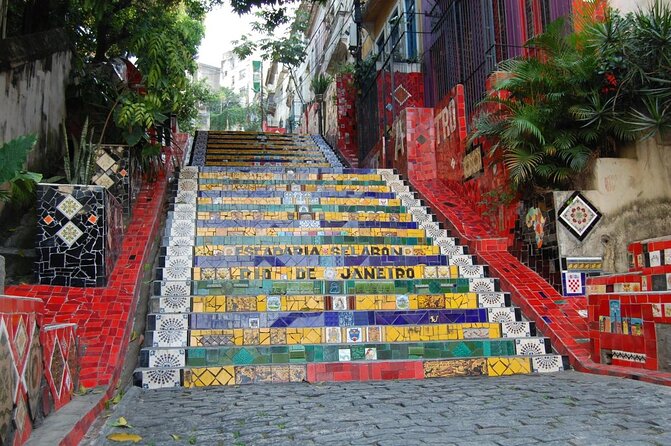
- Selaron Steps are free, but they are 215 tiled steps with limited hand support
- Downtown icons are included (Lapa Arches, Metropolitan Cathedral stop, Mosteiro de São Bento stop)
- Tickets are not included for Christ the Redeemer and Sugar Loaf, so total cost is higher than $97
A 7:00 am Rio wake-up you’ll actually be glad you did

This is a full highlights day that starts at 7:00 am at the Hilton Rio de Janeiro Copacabana. That early timing matters in Rio. The big sights—especially Christ the Redeemer and Sugar Loaf—can get crowded fast, and the earlier you go, the more breathing room you tend to have for photos and viewpoints.
You’ll ride in an air-conditioned minivan, and the tour is designed as a “see the city, don’t fight it” day. That means you’re not bouncing between taxis or building routes on your phone. For many first-time visitors, that alone is worth something: you get your bearings in a few hours and then you can roam more confidently later.
You can also read our reviews of more tours and experiences in Rio de Janeiro.



Copacabana to Ipanema: beach time plus neighborhood context

The tour kicks off from Copacabana, then works its way across the shoreline story of Rio. You’ll pass through Ipanema, a neighborhood bordered by Arpoador on one side and Leblon on the other. It’s one of the city’s main activity zones, and it’s also known for pricey real estate.
What I like about doing this early is that the beaches are not just scenery—they help you understand where Rio’s energy concentrates. You’re basically getting an orientation lesson: Copacabana and Ipanema are the kind of places where local life, beach views, and city money sit side by side. Once you see them from the road and at the planned stops, you’ll better understand why later neighborhoods feel like they’re climbing away from the water.
Morro da Urca and Sugar Loaf: the view payoff is the point
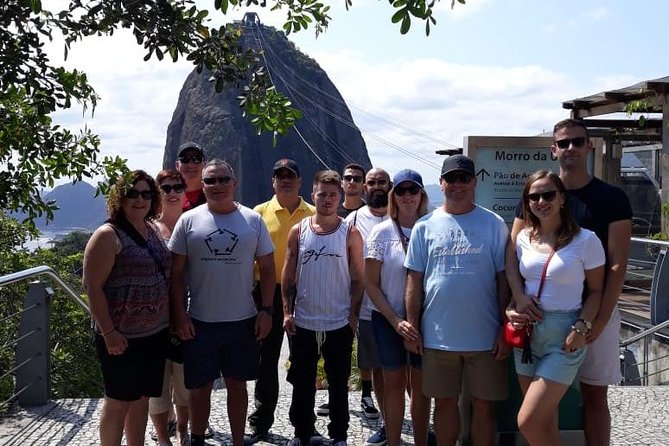
One of the headline stops is Morro da Urca. It’s a small hill (about 220 meters / 722 feet) that marks the first step in the cable car route toward Sugar Loaf. From the top area, you get expansive views that can include Botafogo and Flamengo beaches, Corcovado with Cristo Redentor, Guanabara Bay, the downtown center, Santos Dumont Airport, Governador Island, and even distant mountain shapes like Serra do Mar and Dedo de Deus.
Then comes Sugar Loaf Mountain itself, about 396 meters / 1300 feet above sea level. This is where the “Rio is wonderful” line makes sense, because the coastline and harbor look engineered for postcards. The air is often calmer up there, and the viewpoints are a rare chance to see how the city fits together: water, hills, and dense neighborhoods in the same frame.
A practical heads-up: the tour’s base price doesn’t include the attraction ticket costs here. Also, the experience is only about 25 minutes at each of these stops, so treat it like a viewpoint sprint. If you’re the type who wants long, slow wandering, you may feel a bit rushed. On the bright side, the time is enough for the main photos and a quick scan of the horizon.
Lapa and downtown stops: where Rio’s layers show up
After the viewpoints, the day shifts into a “walk Rio’s older routes” mode. You’ll see the Carioca Aqueduct, known locally as Arcos da Lapa. This late-19th-century structure carries a tram connection that links the city center to Santa Teresa on the uphill streetcar route. Even if you don’t ride that tram, seeing the arches gives you a real sense of how Rio moves people between neighborhoods shaped by steep terrain.
You’ll also pass a neoclassical palace built around 1853 for a merchant named Machado Coelho, later acquired by the imperial government in 1865 for Princess Isabella and the Count of Eu. One detail that makes this stop interesting is the landscaping: palms were planted along the access road to add formality. That mix of architecture, politics, and public space is very Rio—big power stories hiding in plain sight next to daily life.
Escadaria Selarón: 215 steps of tile art you can’t ignore

Then you reach one of the most memorable stops on the day: Escadaria Selarón. These are 215 steps connecting Lapa and Santa Teresa, covered in tiles gathered from across Rio and donated by visitors worldwide. The artist is Jorge Selarón, a self-taught Chilean who moved to Rio in 1983 and lived in a small home directly in front of the staircase.
The colors matter. Selarón used green, yellow, and blue, echoing the Brazilian flag, and the steps have grown into a public tribute rather than a private art project. The staircase has also appeared in music videos, which helps explain why it draws crowds even when the rest of the day feels quieter.
Practical note: the tiles are beautiful, but it’s still a stairway. One of the common small frustrations in this part of the day is that it can be tricky for people with balance issues—there isn’t much in the way of hand support. If you have mobility limitations, take your time, hold onto a friend or use the wall where possible, and keep your pace slow.



The Metropolitan Cathedral of Saint Sebastian: modern geometry with strong acoustics
Next up is a landmark stop in the downtown area: the Metropolitan Cathedral of Saint Sebastian. It’s cone-shaped and a standout example of modern design in Rio. The architecture is inspired by Mayan pyramids, and the cone form is said to create a sense of closeness to God.
Inside, you’ll notice stained glass windows that run from floor to ceiling and form a cross at the top. And yes—the acoustics are a selling point here. Even if you’re not there for a service, it’s one of those spaces where you get a feel for the building’s intent.
One thing to keep in mind: sometimes a cathedral or church stop may not match your expectations if it’s closed or not accessible on that particular day. If the building isn’t open during your time slot, you’ll still get the surrounding downtown context, but don’t count on a long interior visit every time.
Tijuca Forest and Paineiras: the scenic road to Cristo Redentor
Now for the big one: Corcovado and Cristo Redentor. The tour heads into Tijuca Forest, a tropical rainforest area inside Rio. This is not a separate excursion you add on later—it’s part of the route to the summit. You’ll stop at Paineiras to board the official vehicles that continue up toward Corcovado.
This is one of the best ways to experience the statue. You’re not just arriving at a viewpoint parking lot. You’re traveling through a green zone that changes the feel of the city, even if it’s still within the urban area.
If you’re the type who loves context, this part helps: Rio isn’t only coastline. There’s a thick green backdrop right where you might not expect it.
Christ the Redeemer: what you’re really paying for
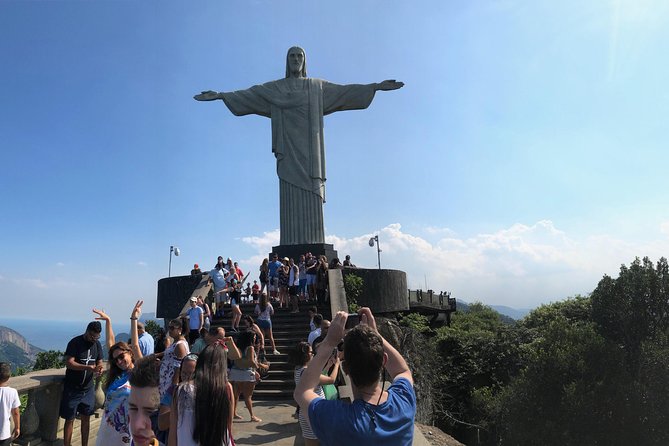
At the top of Corcovado, you see Christ the Redeemer. The statue is 38 meters / 125 feet tall, made of reinforced concrete and clad with thousands of triangular soapstone mosaic tiles. The view from here is the main event, and it’s why this stop is ticketed.
Timing is the key advantage of this tour. Starting early can mean shorter lines and fewer crowds right when the statue is at its most photogenic. The viewpoint usually gives you a broad sweep of the coastline, city neighborhoods, and the harbor area. Even if your photos aren’t perfect, you’ll still come away with the mental map of Rio that most people need.
Cloud day strategy: Mirante Dona Marta as your backup
Clouds can happen. When the summit visibility is poor, the tour uses an alternative viewpoint: Mirante Dona Marta at about 362 meters. That’s a smart move because it doesn’t leave you staring at fog. This backup plan is included, and the stop admission is free.
If you’re booking for a specific day and you’re nervous about weather, this is one of the strongest arguments for choosing this operator over a less flexible plan.
Mosteiro de São Bento: golden church energy with a simpler visit
Another free stop is the Mosteiro de São Bento, described here as the oldest monastery in the city, with a Golden Church. It’s a smaller, calmer counterweight to the big viewpoint stops. If you’re spending the whole day chasing skyline views, this is a nice reset.
Like the cathedral, interior access can vary with the day’s schedule. But even seeing the monastery stop as part of your route helps balance the day: modern infrastructure and scenic viewpoints in the morning, then cultural Rio in the afternoon.
Lunch in Ipanema: plan for an eating break, not a guaranteed feast
Lunch is not included, but your guide gives you time to eat and points you toward options. This matters because the day is packed, and hunger can drain your energy faster than you expect in Rio.
In some runs, guides have arranged or recommended Brazilian BBQ/churrascaria-style meals in the Ipanema area. You’ll pay for it yourself, but it can be an efficient way to fuel up without spending your lunch break hunting for a good spot.
What you should actually do
- Choose a place that’s fast and easy to return from
- Don’t rely on getting back to your hotel for lunch
- If it’s hot, treat water as a priority rather than an afterthought
One more practical point: Rio can be hot, even in the daytime. Some guides don’t provide water during afternoon stretch time, so bring your own if you can.
Maracanã and the Sambadrome area: you’ll see it, not tour it
Later in the day, you’ll pass by Maracanã, often called the most famous stadium in the world, and you’ll also see the Carnaval parade stadium area (the Sambadrome region). This isn’t positioned as a full stadium tour. Think of it as a “recognize the place” stop within your city overview.
That’s still useful. Even quick outside views help you connect Rio’s sports and samba culture to the geography you’ve already seen: hills, neighborhoods, and the city’s major corridors.
Price and what’s included: the real cost math
At $97 per person, this tour can feel like a bargain—until you price the main entrances. Here’s the simple breakdown:
- Included: professional guide, transport by air-conditioned minivan, and hotel pickup/drop-off for selected hotels
- Not included:
- Christ the Redeemer: $20.00 per person
- Sugar Loaf Mountain: $35.00 per person
So the ticketed total for the headline viewpoints alone is $55 extra. That puts you closer to about $152 all-in for most adults, before lunch and any optional add-ons like drinks.
Is it still good value? In my book, yes—because the day combines a lot of planning you’d otherwise pay for in time and hassle: early start, hotel transfers, a small group size (max 14), and a guided route that hits many different Rio zones in one go.
Who this tour fits best (and who should choose differently)
This is a strong fit if:
- You want a first-day or early trip orientation to Rio’s major sights
- You hate logistics and want someone to keep you on track
- You like viewpoint mornings and cultural stops later
- You prefer a small group rather than a huge bus crowd
It may be less ideal if:
- You hate ticket add-ons and want every cost included upfront
- You need lots of time at each stop for slow wandering
- You have mobility constraints that require very careful pacing through stairs
Still, the experience has handled different mobility needs on past departures, and the guide team’s job is keeping everyone moving as smoothly as possible.
Should you book Rio in Style: A Journey Thru Corcovado, Sugarloaf, Selaron?
Yes, if your goal is to see Rio’s best-known sights in a single, organized day without spending your vacation glued to transport planning. The combination of hotel pickup, early access timing, and the Mirante Dona Marta backup makes this a practical choice, not just a sightseeing checklist.
Book it especially if you’re short on time or only have one full day to get the big images of Rio—Christ the Redeemer and Sugar Loaf—plus the street-level character of Selaron Steps and the downtown landmark stops. Just go in knowing the entrance fees are extra, bring a good attitude for a long day, and wear shoes you trust on steps.
If you want, tell me your travel month and whether you plan to visit during any crowded holidays. I can help you think through how likely you are to face fog at Corcovado and when to schedule your other Rio plans.
FAQ
What time does the tour start?
It starts at 7:00 am.
Where does the tour pick up from?
The meeting point is Hilton Rio de Janeiro Copacabana, Av. Atlântica 1020, Copacabana, Rio de Janeiro.
How long is the tour?
The duration is about 8 hours.
Are hotel pickup and drop-off included?
Yes, hotel pickup and drop-off are included for selected hotels.
Are tickets for Christ the Redeemer and Sugar Loaf included?
No. Christ the Redeemer is $20.00 per person, and Sugar Loaf Mountain is $35.00 per person. These entrance fees are not included.
Is lunch included?
No. Lunch is not included, but you’ll have time to eat and your guide will suggest restaurant options.
Is there an alternative if the Corcovado summit is cloudy?
Yes. If visibility is poor at Corcovado, the tour makes an alternative stop at Mirante Dona Marta (admission free).
Is the Selarón staircase admission free?
Yes. Escadaria Selarón is free.
Can I cancel for a refund?
Yes. Free cancellation is available if you cancel up to 24 hours in advance of the experience start time.