REVIEW · RIO DE JANEIRO
Ginga Tropical – Brazilian Samba and Folklore Show
Book on Viator →Operated by GINGA TROPICAL SHOW · Bookable on Viator
Brazilian rhythm hits fast in Rio.
This 1.5-hour Ginga Tropical show brings Brazilian samba and folklore to life at Centro Cultural Veneza in Botafogo, with live music, a bar, and a Carnival-inspired finale that keeps the energy up to the end. It’s in its fifth year as a production, and you’ll still recognize the same high-octane style even though the venue has changed from the Leblon theater era.
I really like the way the night is built. You start with a samba class and live music, then you watch the full performance, so you’re not just sitting there waiting for things to happen. I also love the colorful costumes and the focus on Brazilian regions and styles through dance, drumming, and storytelling.
One consideration: this is not a quiet, sit-and-watch theater evening. You’ll be invited to move and join in, and the show can also lean into acrobatic theatrics, so if you want pure, uninterrupted dance technique, you might wish it leaned more in that direction.
In This Review
- Key Things That Make Ginga Tropical Worth Your Evening
- A Fifth-Year Samba and Folklore Show, Now in Botafogo
- Doors Open at 7, Samba at 8:30, Show Until 10:15
- Centro Cultural Veneza: Plan for an Upstairs Theater Setup
- The Samba Class at 8:30: How Interactive Really Feels
- The Main Show: Brazilian Folklore Through Dance, Drums, and Big Costumes
- Carnival-Inspired Finale: Where the Room Becomes Part of the Dance
- Drinks, Seats, and the Smart Casual Reality
- Price and Value: Is $65 a Fair Trade in Rio?
- Who This Fits Best (and Who Might Prefer Something Else)
- Should You Book Ginga Tropical? My Honest Take
- FAQ
- What time does Ginga Tropical start?
- Where does the show take place?
- Is there a samba class before the show?
- What’s included in the ticket price?
- Is hotel pickup or private transportation included?
- Can I get a free cancellation?
Key Things That Make Ginga Tropical Worth Your Evening
- A samba class before the main show so you can jump in, not just observe
- Carnival-style finale that turns the room into one big party
- Costumes and choreography built around Brazilian styles including drumming and regional dances
- Cast participation: you may be asked to dance, clap, or get on stage depending on the moment
- New venue setup at Centro Cultural Veneza (Botafogo) with live music and a bar
A Fifth-Year Samba and Folklore Show, Now in Botafogo
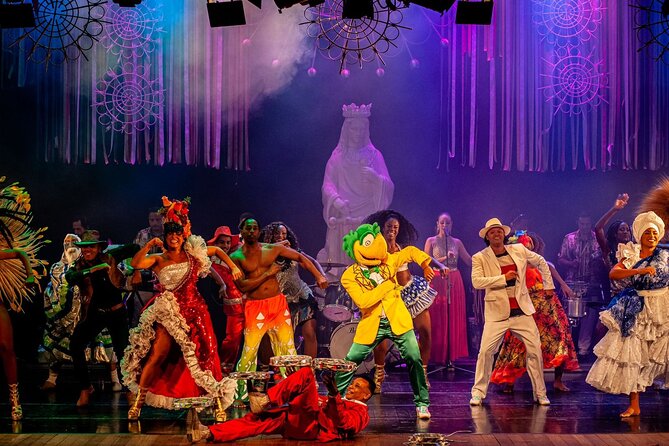
Ginga Tropical has been running for years, already on its fifth year as a show. In other words, it’s not some one-off performance you found on a random night. The production has a proven format: energetic music, strong costume work, and a big focus on Brazilian culture through movement.
The big practical change is location. You won’t find it at the Leblon theater anymore; it’s now staged at Centro Cultural Veneza, in Botafogo on Avenida Pasteur (address: 184). That matters because Botafogo is a handy base for an evening out in Rio’s South Zone, and you can usually get there by ride-hailing or local transport without making it a whole expedition.
If you like Brazilian culture but you don’t want to spend hours hunting for the right neighborhood night, this is a straightforward option. One venue, one schedule, one ticket—easy to fit into your Rio rhythm.
You can also read our reviews of more tours and experiences in Rio de Janeiro
Doors Open at 7, Samba at 8:30, Show Until 10:15
Timing is the secret ingredient here. Doors open at 7:00 pm, and you can settle in with live music and a bar. That early start makes the evening feel like a real event, not a quick ticket-scan and then silence.
At 8:30 pm, you have the samba class. From 8:45 pm to 10:15 pm, the main show runs. The advertised duration lines up with that 8:45–10:15 window, so you’re looking at roughly 1.5 hours of performance time.
This is useful if you’re planning the rest of your night. You can eat before you go, then arrive with enough buffer to grab a drink and be ready when the teaching part starts.
Centro Cultural Veneza: Plan for an Upstairs Theater Setup
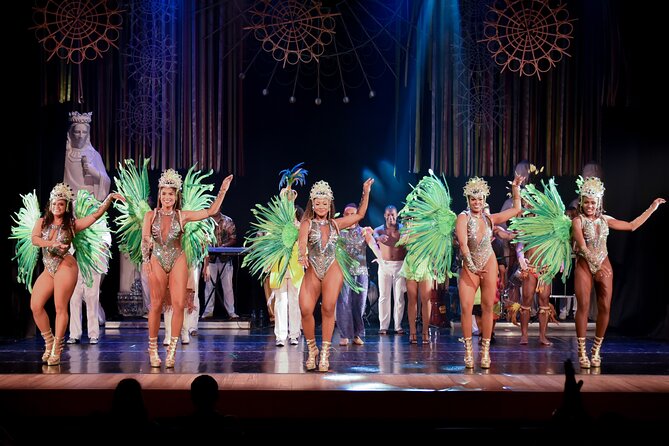
You’ll be at Centro Cultural Veneza, Avenida Pasteur 184, Botafogo. The venue is near public transportation, so you should be able to reach it without needing a private car.
A detail that can catch people off guard: the theater experience appears to be on an upper level in a mall setting. That has two upsides. First, it often feels easier to find and more “controlled” than some street-level venues. Second, there tends to be a sense of safety and comfort in the surrounding building.
The downside is simple: go in expecting stairs or an elevator ride, then show up early enough to get oriented. I’d rather you walk in, breathe, and find your row than spend the first 10 minutes hunting the right door.
The Samba Class at 8:30: How Interactive Really Feels
The samba class is part of the ticket experience, and it’s where the show shifts from performance-only to participation. Most people won’t need to be a dancer to join in. The class is built to get you moving and help you catch the basic rhythm quickly.
That said, you do need to be game. If you’re the type who freezes when asked to do something in front of other people, you’ll have to decide whether you’re okay with being included. The room energy tends to reward courage: if you participate, it gets more fun. If you hang back, you’ll still enjoy the music, but you may feel less involved.
One review mentioned the samba class space could feel a bit tight. Translation: don’t plan for a giant dance floor. Wear comfortable shoes and treat it like a warm-up with a crowd, not a private lesson.
The Main Show: Brazilian Folklore Through Dance, Drums, and Big Costumes
After the class, the production leans into folklore and Brazilian cultural styles. You can expect a mix of dance and music, with drumming and choreography used to show different regions and traditions.
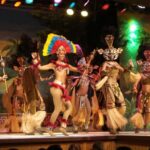
Costumes are a major part of the impact. The colorful outfits are not subtle, and they help you follow the story even if you don’t catch every spoken detail. This is one of the reasons the show works for mixed language groups: the visual rhythm does a lot of the storytelling for you.
There’s also variety beyond classic samba steps. Some viewers highlighted capoeira and described the production as having a broader performance style. Another person felt the show included more acrobatics than they expected. So think of it like a stage celebration, not only a dance recital.
A detail worth knowing if you’re watching closely: the performance space has a ceiling height that can affect flips and acrobat tricks. That doesn’t reduce the talent, but it can change what you see in terms of aerial moments.






Carnival-Inspired Finale: Where the Room Becomes Part of the Dance
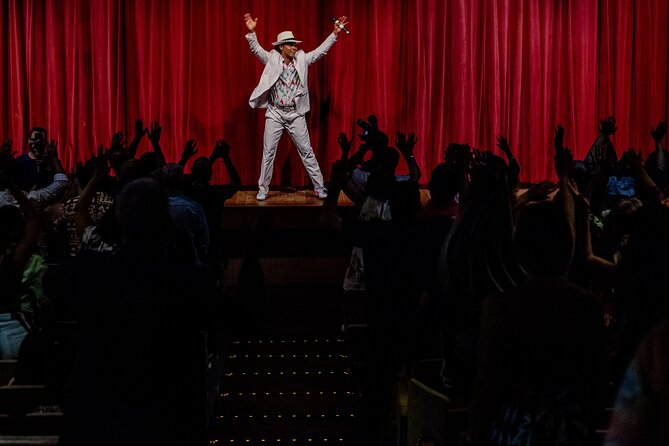
The show ends with a Carnival-inspired finale, and this is the moment that seems to win people over. This is when the cast energy peaks and the audience participation vibe gets strongest.
You might find yourself dancing, clapping, or moving with the group instead of staying in your seat. Some people specifically noted interaction and even a chance to dance on stage as a bonus. That’s not something you can plan for, but it’s consistent with the show’s overall style: they want you to feel included.
This is also where the experience feels most “Brazilian night out,” like the rhythm has spilled off the stage and into the crowd. If you’re tired of museum evenings and want one night that feels like a party, this finale is why.
Drinks, Seats, and the Smart Casual Reality
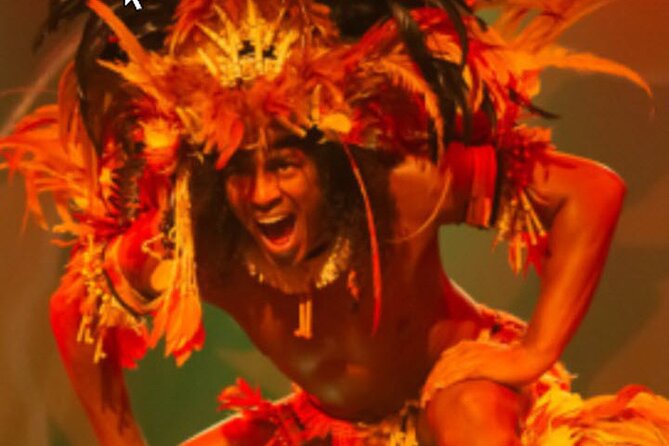
The ticket includes admission and live entertainment. Alcoholic beverages are listed as included, but availability can vary—so if you care about a drink, it’s smart to be ready to order early.
Dress code is smart casual. That means you don’t need formal wear, but you also don’t need beach shorts and flip-flops. Comfortable clothes are key, because you’re likely to stand up at least at some points, especially during the samba class and finale.
Seats are assigned by the theater box office and you won’t know the exact location in advance. That’s normal for some theater setups, but it affects expectations. If you’re sensitive about sightlines, arrive early so you can get settled and adjust wherever you can.
Also, because the event is in a theater space with a ceiling suited to performance staging, keep expectations realistic about acrobatics. Low ceiling constraints don’t usually ruin the show—they just shape how the tricks look.
Price and Value: Is $65 a Fair Trade in Rio?
At $65 per person, you’re paying for a 1.5-hour live production with music, costumes, and participation. It’s not priced like a cheap street-side spectacle, so value depends on what you want from the night.
Here’s where the math often works in your favor:
- You get the full show plus the samba class, so you’re not just buying a seat for a single act.
- The bar is part of the atmosphere, and alcoholic beverages are listed as included if available.
- The atmosphere is meant to be energetic and interactive, which can be hard to replicate for the same money elsewhere.
Where it can fall short:
- A couple of reviews called it overpriced, and one person expected more traditional dance and left early when the style felt different.
- If you want a long, seated, purely dance-focused performance with zero audience involvement, you might feel the format is too party-like for your taste.
My practical advice: if you’re the kind of traveler who likes to sing along, move a little, and treat a show like a social experience, the price is usually easier to justify.
Who This Fits Best (and Who Might Prefer Something Else)
Ginga Tropical is a good match for:
- People who want a short, high-energy cultural night in Rio without complicated planning
- Couples and groups who like interactive experiences
- Families traveling together, as long as kids are accompanied by an adult (children must have adult accompaniment)
- Visitors who want Brazilian folklore represented through dance and costumes, not just a lecture or a documentary
It may be less ideal for you if:
- You’re hoping for a quiet, sit-and-watch show where audience participation stays minimal
- You strongly prefer pure dance technique and dislike when a production includes acrobatic theatrics
- You’re very seat-sightline sensitive, since seats are assigned on the day and you won’t see your exact row ahead of time
- You want lots of English-language explanations; the storytelling here is mostly carried by music, movement, and staging, not by a detailed spoken script you can rely on
Should You Book Ginga Tropical? My Honest Take
Book it if you want one organized evening where Rio’s energy comes to you. The combination of samba class, live music, colorful staging, and a Carnival-style finale makes it an easy yes for active people who enjoy audience interaction.
Skip it if your ideal night is a calm, purely traditional dance performance with little or no crowd involvement. Also skip if you’re very picky about production style, because the show can include acrobatics alongside dance and that may not match your expectations.
One more quick tip: plan your evening so you’re not rushing. Doors open at 7 pm, the samba class starts at 8:30, and the main show begins at 8:45. If you arrive late, you’ll miss the start of the interactive part—and that’s a big reason this show earns its positive energy.
FAQ
What time does Ginga Tropical start?
The scheduled start time is 8:30 pm. Doors open at 7:00 pm, so you can arrive earlier for live music and the bar.
Where does the show take place?
It takes place at Centro Cultural Veneza, Avenida Pasteur, 184, Botafogo, Rio de Janeiro (South Zone).
Is there a samba class before the show?
Yes. A samba class starts at 8:30 pm, followed by the main show from 8:45 pm to 10:15 pm.
What’s included in the ticket price?
The admission ticket includes live entertainment. Alcoholic beverages are listed as included, but availability may need to be verified.
Is hotel pickup or private transportation included?
No. Hotel pickup/drop-off and private transportation are not included.
Can I get a free cancellation?
Yes. You can cancel for a full refund up to 24 hours in advance of the experience’s start time.