REVIEW · RIO DE JANEIRO
Rio de Janeiro: Surflessons and surfcoach.
Book on GetYourGuide →Operated by CADES · Bookable on GetYourGuide
Surfing in Rio is better with coaching.
This Cades surf lesson + surfcoach format is built for real progress, from beginners through intermediate and advanced surfers, and it focuses on reading the sea before you even paddle out. I love the small group size (max 5) because you get attention without feeling rushed, and I also like that they include filming and video analysis, so your technique has something concrete to improve. One thing to consider: the best spot depends on the day’s conditions, and that can make the exact timing and surf location feel a bit dynamic.
You’ll start at Cades headquarters, where you warm up and talk through waves, then you head to the training point for on-water work and coaching. The payoff is a session that mixes doing with understanding—and the reviews back up the teaching style, especially Henry’s patience with learners. The possible drawback is practical: transport to the meeting point isn’t included, so your total cost can rise if you’re staying far away.
In This Review
- Key points before you go
- How the Cades surfcoach session runs (warm-up to video review)
- Cades headquarters: the part that makes your lesson easier
- On the water: beginner basics and intermediate/advanced technique
- For beginners
- For intermediate and advanced surfers
- Video analysis: why that extra step feels worth it
- Small group energy (max 5) and why it changes everything
- Price and value: what $90 really buys you
- Who should book this surf lesson in Rio
- Practical tips so the session goes smoothly
- The main drawback to keep in mind
- Should you book Rio de Janeiro: Surflessons and surfcoach?
- FAQ
- FAQ
- Where is the meeting point?
- How long is the session?
- What languages do instructors speak?
- What surfer levels can join?
- How big is the group?
- What’s included in the price?
- What is not included?
- What should I bring?
- Is wheelchair access available?
- Do they film and analyze your surfing?
Key points before you go
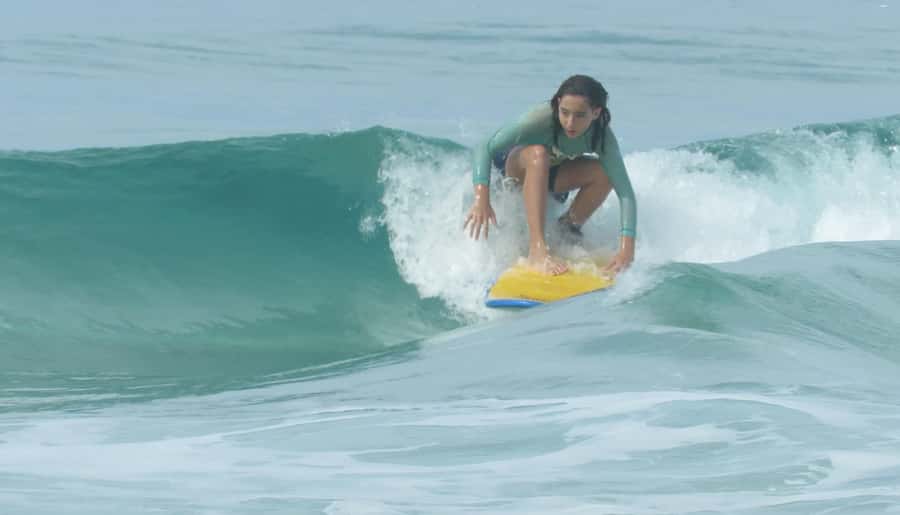
- Small group, max 5 surfers for closer coaching and faster feedback
- Video analysis included, recorded during the session for technique correction
- All equipment provided (board, leash, wetsuit, wax) so you travel lighter
- Beginners to advanced, with different training goals based on level
- HQ facilities include bathrooms, showers, and even a skateboard surf simulator track
- Coaching works around the day’s conditions, with wave/peak planning before you enter the water
How the Cades surfcoach session runs (warm-up to video review)
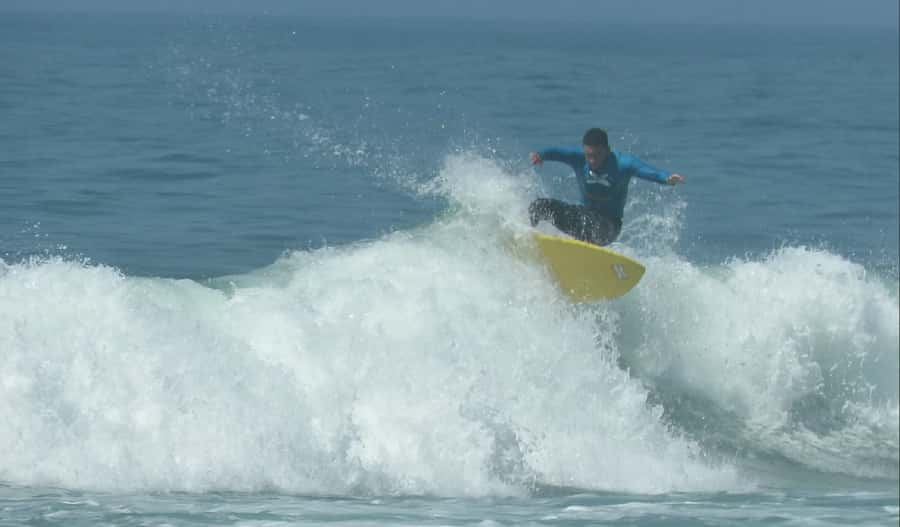
Think of this as a coached cycle: prepare, train, and then review. The session is designed so you’re not just out there catching waves blindly—you’re learning why you’re doing what you’re doing.
At Cades headquarters, the flow starts with a short warm-up (about 10 minutes). Then you spend a few minutes analyzing the sea and wave setup with your instructor (about 5 minutes). This is where the lesson gets practical. You’ll get guidance on what to look for, how the waves are behaving, and what your session objective should be.
From there, you move into real water time for practice. Technical training is paired with filming, which matters more than people expect. When you’re learning (or fixing a habit), it’s hard to remember what your body did on each attempt. The camera turns vague memories into something you can actually adjust.
The coaching continues at the surf spot used for training. There, the coach and surfer do a quick setup chat (about 10 minutes) about the peak, waves, and session objectives. Then you get another on-water training block (about 50 minutes). Finally, you finish with a video analysis session (about 20 minutes), either back at the Cades space or at the training place.
Because the official duration is listed as 1 hour, you should expect the schedule to be adjusted slightly depending on what the ocean and day conditions allow. The structure stays the same: short prep, focused wave time, and feedback via video.
You can also read our reviews of more tours and experiences in Rio De Janeiro.



Cades headquarters: the part that makes your lesson easier
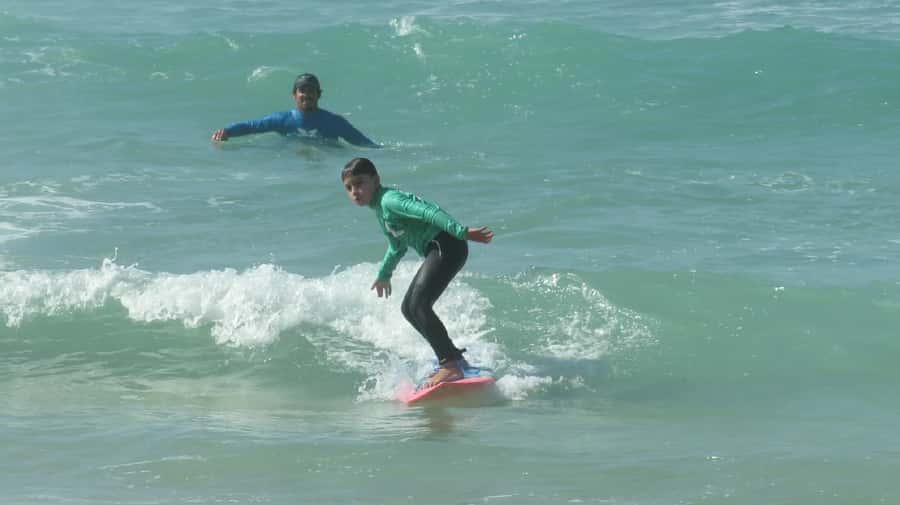
Meeting at Cades headquarters is a smart move. You’re not scrambling around Rio’s shoreline figuring out where to change, where to store things, or how to get organized. Instead, you get a real base before the water.
Here’s what the HQ experience includes:
- Bathrooms and showers, which are a big deal when you’re wearing wetsuits
- An activity room, so you can get settled and listen before going in
- A skateboard surf simulator training track, which is a unique touch (especially if you’re a beginner or trying to sharpen your balance and stance)
Even though the surfing happens outside, that pre-water setup helps the lesson start faster. You’ll also be able to change into beachwear and rinse after, without turning your outing into a logistics puzzle.
Another practical win: you can keep your wet stuff manageable. They provide what you need for the water (board, leash, wetsuit, wax), but you still need to bring a change of clothes and clothes that you don’t mind getting sandy or dirty.
On the water: beginner basics and intermediate/advanced technique
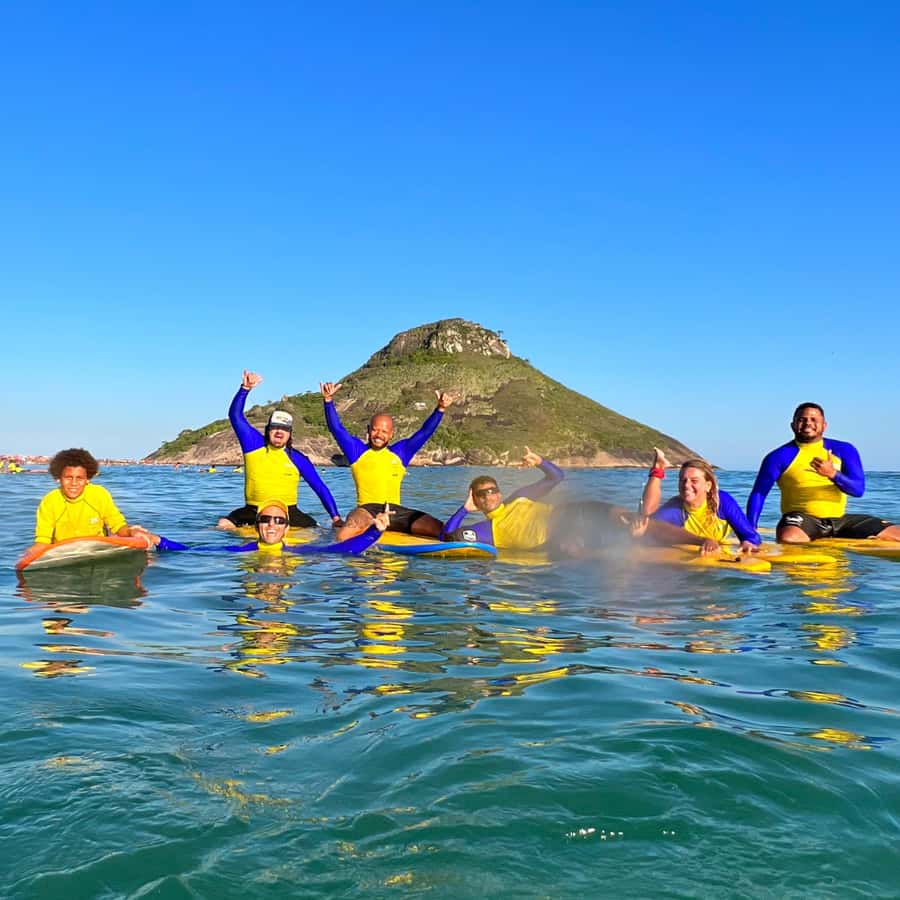
What I like about this coaching style is how it’s described as technical, not just recreational. They’re training your surfing, and that shows up in the structure: analyzing the sea first, then repeating practice with an objective, and finishing with video feedback.
For beginners
Beginners get a warm, guided entry into surfing fundamentals. The early wave discussion isn’t just small talk—it helps you understand what you’re about to face. Then you go into water practice with coaching built around your level, including work designed to build confidence and technique.
You’ll likely benefit most if you’re willing to try, fail fast, and then adjust. The video component helps because you can see what’s going on in a way you can’t during the moment you’re riding.
For intermediate and advanced surfers
If you’re already surfing, this format still makes sense. Instead of repeating generic tips, the coach and surfer set objectives based on the day’s waves and the peak. That means your training session can focus on what you actually need—like refining how you approach a wave, improving your timing, or tightening technique.
The filmed training is especially useful at this level. Small form mistakes can be hard to notice in real time, but video can reveal the difference between where you think you’re positioned and where you really are.



Video analysis: why that extra step feels worth it
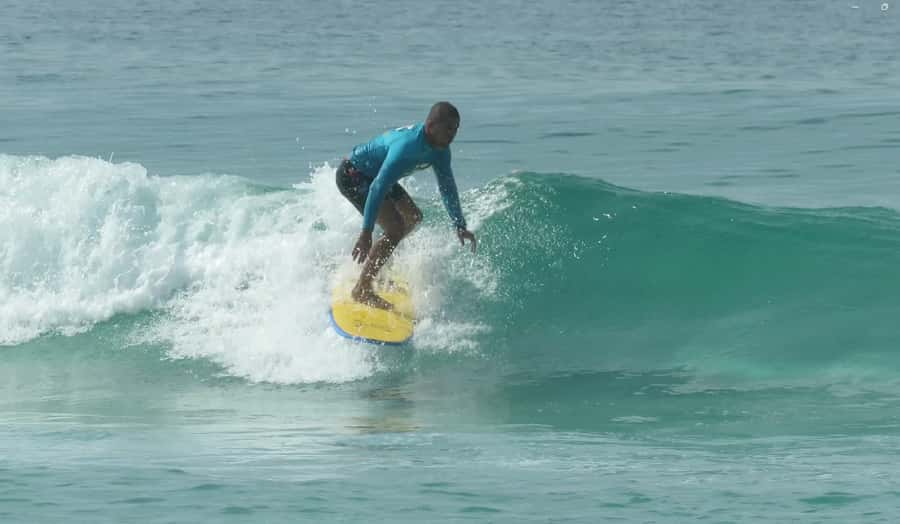
A lot of surf lessons end when you stand up and shake off sand. This one keeps going. The session includes recording images of your activity, and then you end with a video analysis period.
That last step is where the lesson becomes durable. You’re not only learning through instruction; you’re learning through comparison:
- What you did
- What the coach wants you to do
- How you can adjust next time
From the reviews, Henry stands out for being patient with learners. That matters because video feedback can feel intense if a teacher rushes you. If your instructor is calm and methodical, you get to use the footage instead of feeling overwhelmed by it.
Small group energy (max 5) and why it changes everything
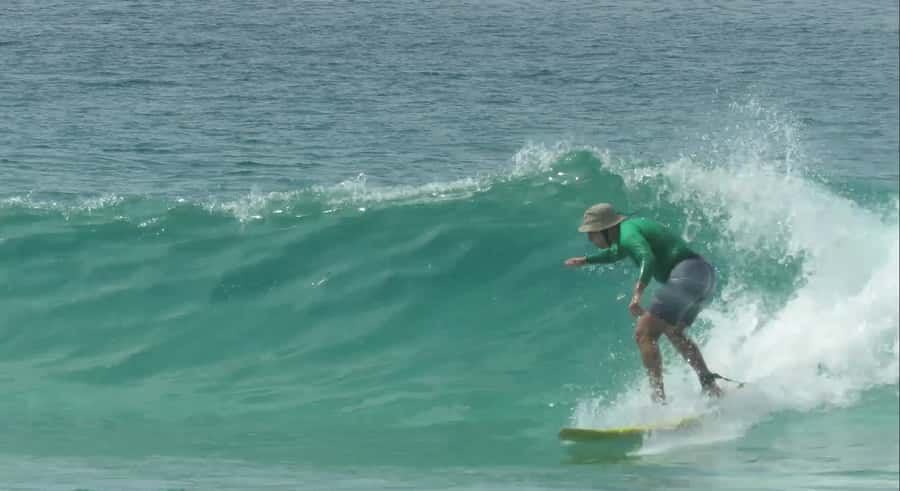
This is a small group experience, limited to 5 participants. In surfing, that limit is more than a marketing detail. It affects how much time your instructor can actually spend watching you, correcting your stance, and choosing drills that match your ability.
Small groups also reduce the usual problem in big class settings: you spend much of your lesson waiting for your turn. Here, the format stays training-focused, with on-water practice broken into guided objectives. In practice, that usually means more quality attempts and more direct coaching.
Also, languages include Portuguese, Spanish, and English, which is helpful if your group includes mixed backgrounds. You’ll want to communicate clearly about your level and what you want to improve, but you’re not left out if you don’t speak Portuguese.
Price and value: what $90 really buys you
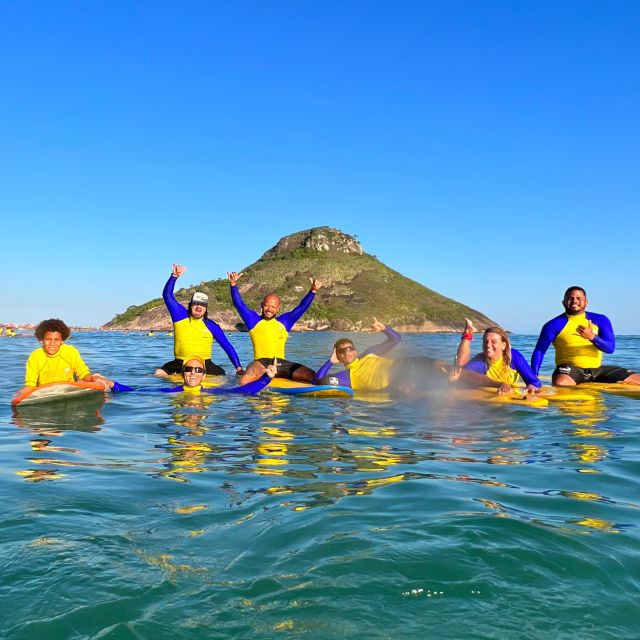
At $90 per person for about an hour, this isn’t a bargain-basement surf day. But it also isn’t just board rental with a lifeguard whistle. You’re paying for coaching structure, small group time, and the included tech and gear.
Here’s what you get for the price:
- Surfing lesson / surfcoach training
- Surfing in the best conditions of the day
- Beginner, intermediate, and advanced workouts matched to your level
- Recording images and video analysis
- All equipment: board, leash, wetsuit, and wax
- HQ facilities with bathrooms, showers, activity room, and a simulator track
- Transfers if necessary between the HQ and the surf spot
What’s not included:
- Transport to the meeting point (the cost depends on distance)
- Meals (about USD $10 per meal per person)
So the value equation depends on where you’re staying. If you’re relatively close and can handle the short ride to the HQ without overpaying, $90 becomes easier to justify. If you’re far out, factor in the transport before you decide.
Still, even with transport and food, you’re buying a coaching session with equipment and video review baked in. That combination is what usually makes a surf lesson actually stick.
Who should book this surf lesson in Rio
This is a good fit if you want real coaching rather than a casual try-it experience.
You’ll likely be happiest if you are:
- A beginner who wants guidance from the first waves and wants video feedback to improve faster
- An intermediate surfer refining technique and timing
- An advanced surfer training with objectives based on real conditions
- Someone who appreciates structure: warm-up, wave analysis, water practice, then a final review
It’s also stated as suitable for all ages, which makes it more flexible than many surf activities that skew toward adults or teenagers.
One more reason to consider it: the coaching approach is explicitly connected to the day’s ocean. If you’re coming to Rio and you want your surf time to be optimized rather than random, this style fits that goal.
Practical tips so the session goes smoothly
A few details can make your lesson easier and more comfortable.
- Bring a change of clothes and water. You’ll come out wet, and having dry clothes ready is instantly satisfying.
- Pack beachwear and clothes that you don’t mind getting dirty. Sand is going to happen.
- If you want to get the most from the session, think about what you want to work on. Beginner goals might be stability and wave selection. Intermediate/advanced goals might be trimming technique or improving takeoff.
Also, communicate your level at the start. The lesson is set up for beginners through advanced, so you’ll get more value if your coach knows what you can already do.
The main drawback to keep in mind
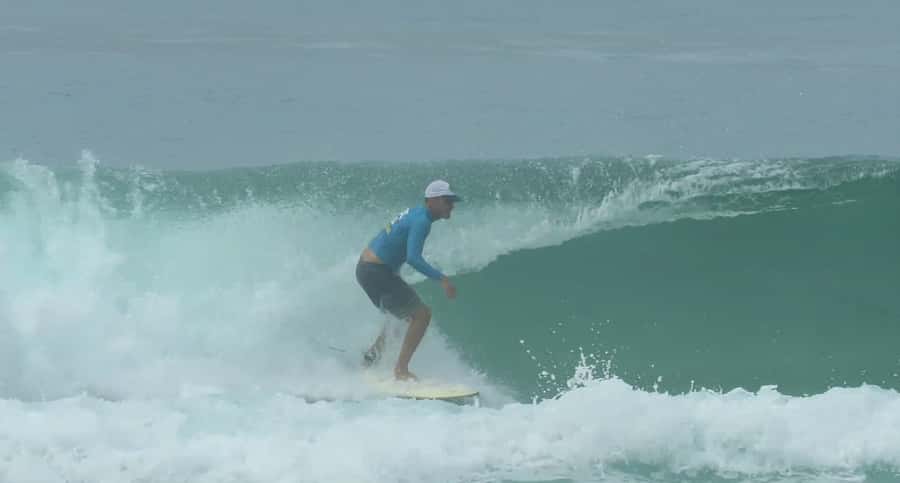
Surf days can be weather-dependent. This experience plans to surf in the best conditions of the day, which is great—but it also means you’re not guaranteed a fixed spot or identical timing every time.
If you have tight plans right after, build a little buffer. Also remember transport to the meeting point isn’t included, so make sure you’ve budgeted for getting to Cades headquarters.
Should you book Rio de Janeiro: Surflessons and surfcoach?
If your goal is to improve quickly, I think this is a strong booking. You’re getting more than a one-time ride: you’re getting small-group coaching, equipment included, and the big one—video analysis that helps you correct technique rather than repeating the same mistake.
I’d skip it or rethink it if you mainly want a casual beach activity and don’t care about coaching. This experience is built for training. Also, if you’re coming from far away and transport costs add up, double-check your total cost.
But if you want a surf lesson in Rio that treats surfing like a skill you can develop—then the Cades surfcoach format is exactly the kind of structured session that makes your time count.
FAQ
FAQ
Where is the meeting point?
You meet at Cades headquarters. The activity provides a specific meeting location link for directions.
How long is the session?
The duration is listed as 1 hour. The plan includes warm-up, sea analysis, on-water practice, and a video analysis portion.
What languages do instructors speak?
Instructors are listed as Portuguese, Spanish, and English.
What surfer levels can join?
The training is offered for beginners, intermediate surfers, and advanced surfers.
How big is the group?
The group is limited to a small group of up to 5 participants.
What’s included in the price?
Inclusions include the surfing lesson, surfing in the best conditions of the day, workouts for different levels, recording images of your activities, HQ facilities with bathrooms and showers, transfers if necessary, and all surfing equipment (board, leash, wetsuits, and wax).
What is not included?
Transport to the meeting point is not included (cost depends on distance). Meals are not included, and are listed as about USD $10 per meal per person.
What should I bring?
Bring a change of clothes, water, beachwear, and clothes that can get dirty.
Is wheelchair access available?
Yes, the activity is listed as wheelchair accessible.
Do they film and analyze your surfing?
Yes. They record images of your activities and include video analysis at the end of the session.