REVIEW · RIO DE JANEIRO
Rio de Janeiro: Hang Gliding Adventure
Book on GetYourGuide →Operated by Rio Hang Gliding · Bookable on GetYourGuide
Rio from above feels unreal. You run off Pedra Bonita at 525 meters and glide over Rio, with a strangely calm feeling that arrives fast. The best part is the mix of bird-song overhead and big-city views below.
I love the pre-flight practice. You’ll do a short training session with a tandem pilot, get fitted properly, and then take off after a set run sequence. I also love the video recording approach, including options for 360 footage, so you can actually relive the ride later.
One thing to plan for: the experience is weather dependent, and wind can mean waiting longer than you expected or adjusting how the day runs.
In This Review
- Key points to know before you fly
- Pedra Bonita’s 525-meter run: why this Rio hang gliding feels different
- The pre-flight briefing and training that turns nerves into steps
- The flight route: Sugar Loaf, Copacabana, Ipanema, Lagoa, and Niterói
- Landing on São Conrado, plus why the beach finish feels good
- Price and value: what $229 covers, and what can cost extra
- Timing, meeting point, and the real-world waiting game
- Who this suits best, and who should skip it
- Instructors and language: how to get comfortable even if you don’t speak Portuguese
- Should you book this Rio hang gliding adventure?
- FAQ
- How long does the hang gliding experience take?
- What is included in the price?
- What extra fees should I expect?
- Is the flight affected by weather?
- Who can participate?
- What should I wear for the launch?
Key points to know before you fly
- Pedra Bonita’s 525-meter takeoff: a serious drop to start, with a guided run-off from a purpose-built platform.
- Short, clear tandem instruction: you’ll practice the basics first, then take off with your instructor controlling the flight.
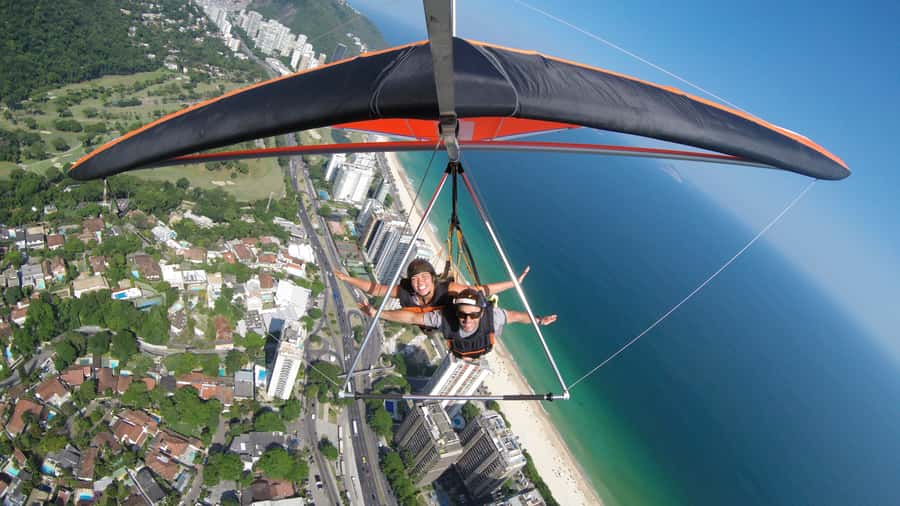
- A classic Rio view sweep: Sugar Loaf, Corcovado, Copacabana, Ipanema, Lagoa, and often Niterói across Guanabara Bay.
- Tropical forest sounds in the air: you can hear birds over the tree tops during the glide.
- Expect waiting time: the day can stretch out to the full 2–3 hours while wind and launch order get sorted out.
- Camera add-ons can cost extra: the main recording is included, but extra angles (like 360) are often sold as upgrades.
Pedra Bonita’s 525-meter run: why this Rio hang gliding feels different
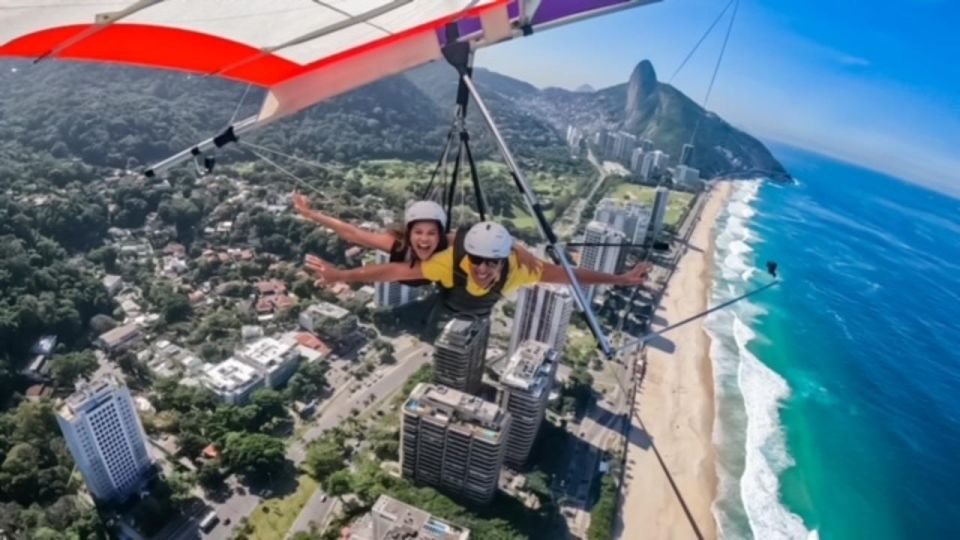
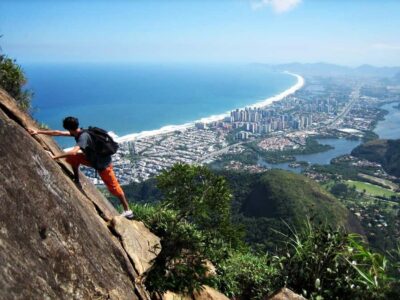
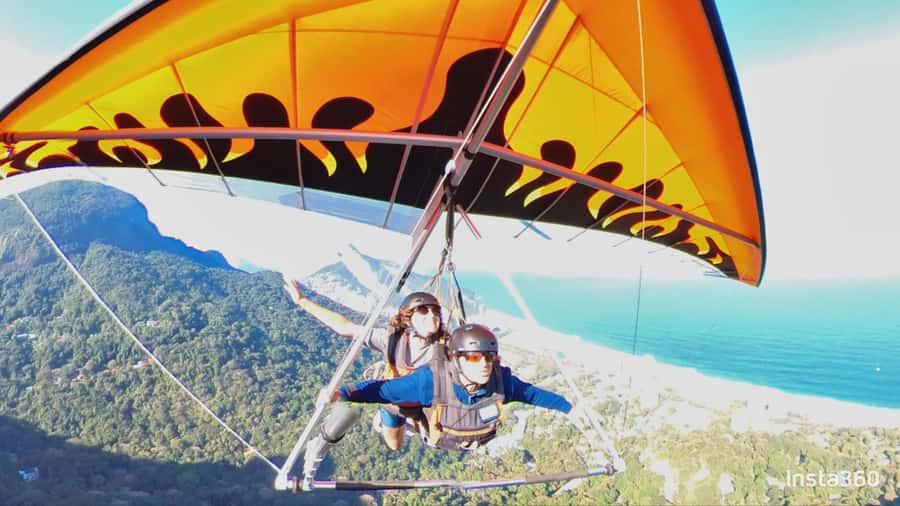
If you’ve ever seen Rio from a viewpoint and thought, I want that view from moving air, this is the fix. Hang gliding here starts at Pedra Bonita, and the takeoff platform sits 525 meters (1,700 ft) above the finish beach area in São Conrado. That height matters because it turns “pretty scenery” into “I can see the whole city at once.”
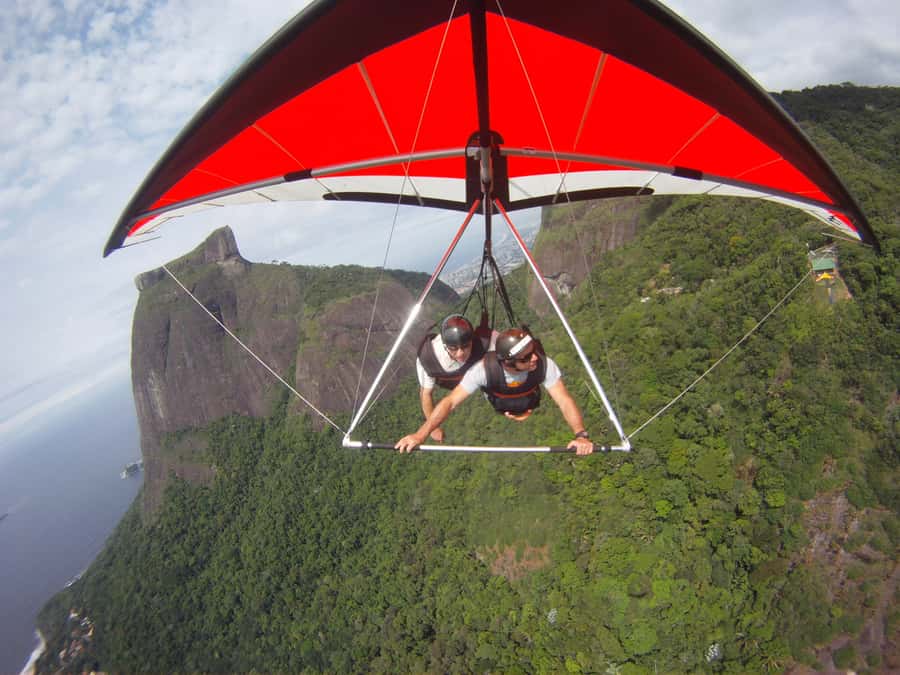
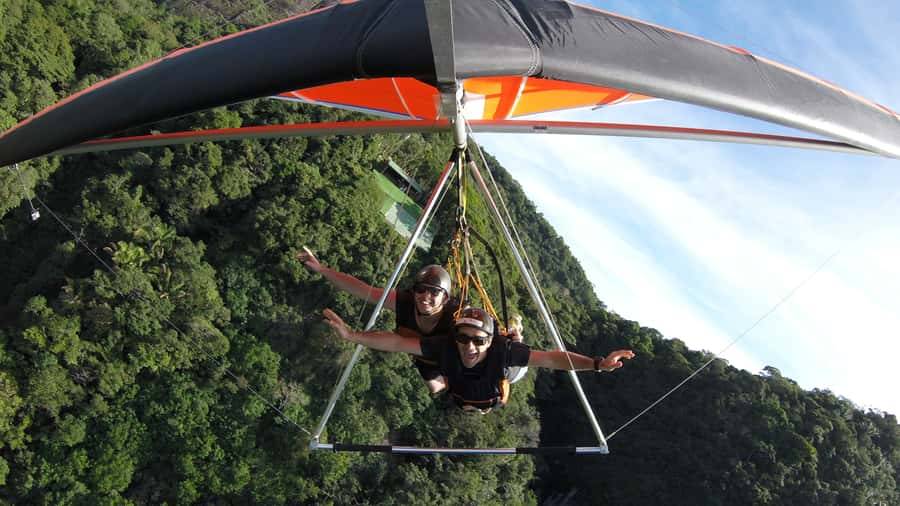
What surprised me in the way the experience is described is the tone change once you’re up there. Yes, you get the thrill. But the glide itself often feels surprisingly quiet and controlled, especially after your tandem pilot gets you set. You also get a more nature-forward moment than you’d expect for a major city. The glide passes over a tropical forest canopy, and you can hear birds flying over the tree tops while Rio sits spread beneath you.
This is also one of those experiences where the pilot quality really counts. You’ll be with an instructor tandem pilot, and you may recognize names from past days, like Konrad, Maurice, Marcelo, Claudio, Klaus, and Sigale. Different pilots, same goal: make you feel safe fast and keep the flight smooth.
You can also read our reviews of more tours and experiences in Rio De Janeiro.


The pre-flight briefing and training that turns nerves into steps
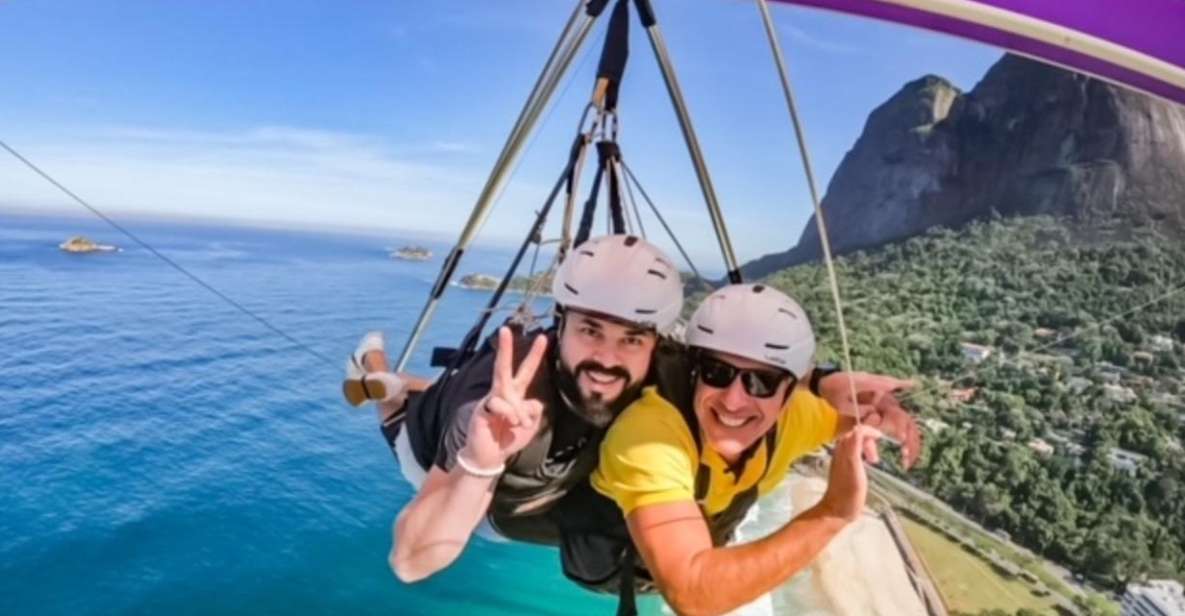
The day doesn’t start with running off a cliff. It starts with a short briefing from your tandem pilot. The briefing focuses on takeoff mechanics and what to do during flight and landing. The goal isn’t a long lecture. It’s fast, practical guidance you can follow even if you’re nervous.
You’ll also be equipped with safety gear: harness, helmets, and other safety equipment. This part matters because it helps you stop wondering if anything is being skipped. One key detail: you’ll do a small training setup at the top. You’ll practice the body position and the feel of the harness before you commit to flight.
Then comes the “oh wow” moment. After about 7 steps from the edge, you’ll glide. Those steps are the transition between “I’m still on the platform” and “I’m in the air.” It sounds simple because it is simple, but don’t underestimate the psychological effect. That controlled sequence helps many first-timers turn fear into focus.
The flight route: Sugar Loaf, Copacabana, Ipanema, Lagoa, and Niterói
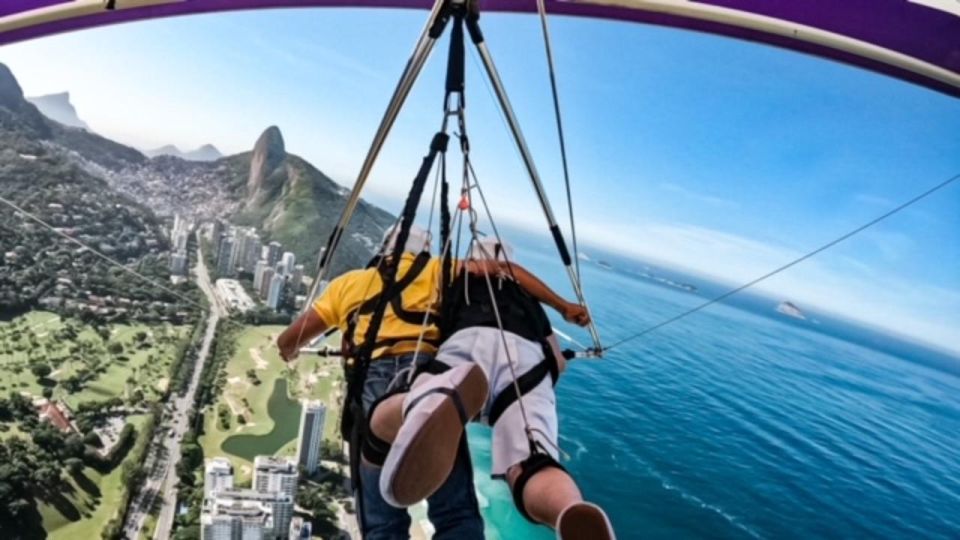
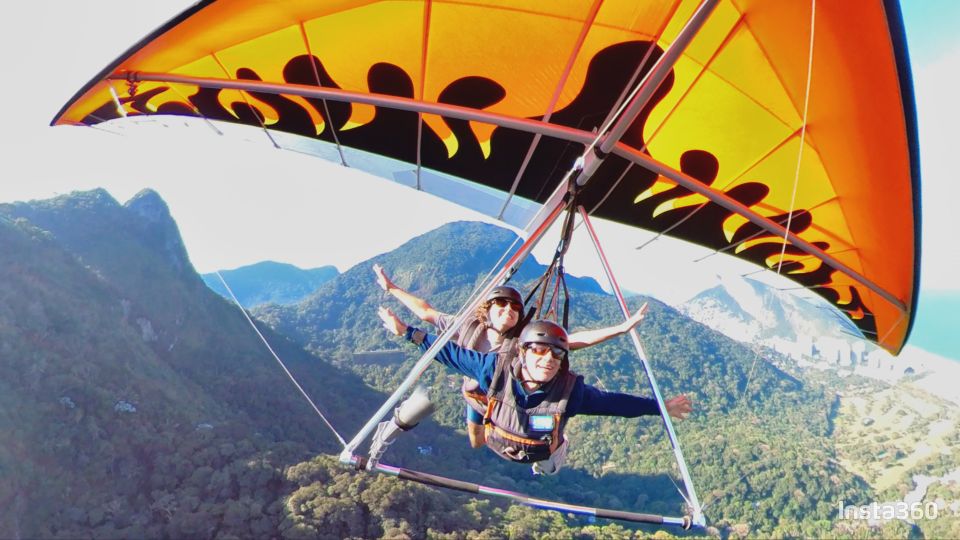
Here’s the part you came for: the views. From up above, Rio stops being a list of landmarks and becomes one connected picture—coastline, neighborhoods, bay, and mountains in the same frame.
On a clear day, your flight can include bird-eye views of:
- Sugar Loaf Mountain
- Corcovado
- Copacabana and Ipanema
- Lagoa
- Niterói, across Guanabara Bay
Even better, the “moving viewpoint” effect is real. You’re not holding still for a photo. You’re floating past the city, so you see how the shoreline bends and how neighborhoods sit against the mountains.
Flight length can vary. The schedule lists the whole activity as 2–3 hours, but the actual airborne time can change with wind and conditions. One account described flying for about 20 minutes on a windier day versus the shorter typical feel of the experience. The practical takeaway: treat the day as a half-day plan, and don’t build your schedule around a precise minute count.
Landing on São Conrado, plus why the beach finish feels good
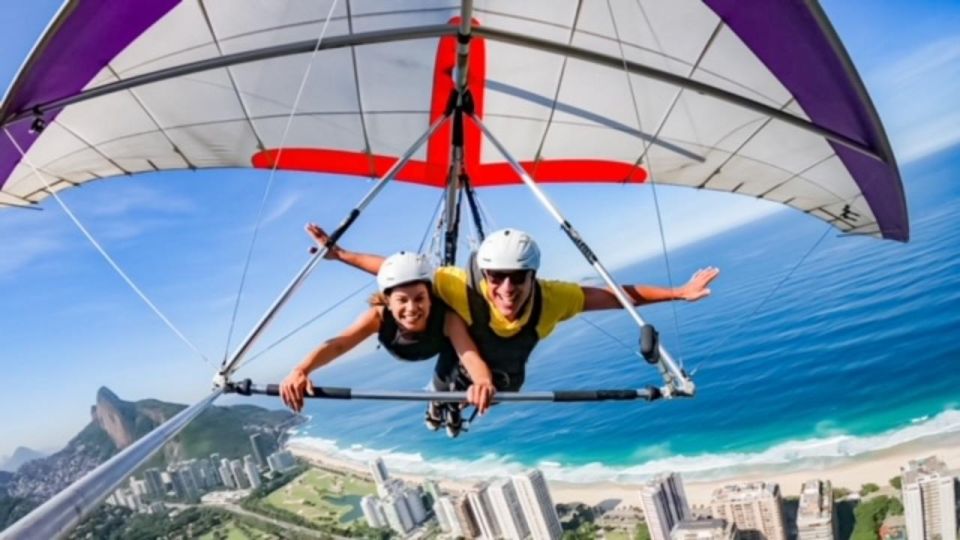
Your ride ends on a sandy beach in São Conrado. There’s something satisfying about landing on sand instead of an awkward off-field landing. You also get to watch the next pilots come in, which helps the whole operation feel organized rather than chaotic.
After your flight, you’ll typically enjoy refreshments while others land. It’s also when you see how different pilots handle timing and wind. Watching from the beach makes it easier to understand why they’re strict about conditions and why waiting happens.
Then there’s the “relive it” bonus. The activity includes video recording with cameras attached to the glider, so you’re not only leaving with memories—you’re leaving with footage. Many people love the immersive replay effect, especially with the option for additional angles such as 360 footage. If you’re a big camera person (or you just want proof you did it), ask what’s included and what’s optional before you commit to upgrades.
One useful real-world detail: if you lose your phone the next day, it doesn’t automatically mean you lose the video. There’s been at least one case where the company still had the footage and sent it over. That’s the kind of backup you want.
Price and value: what $229 covers, and what can cost extra
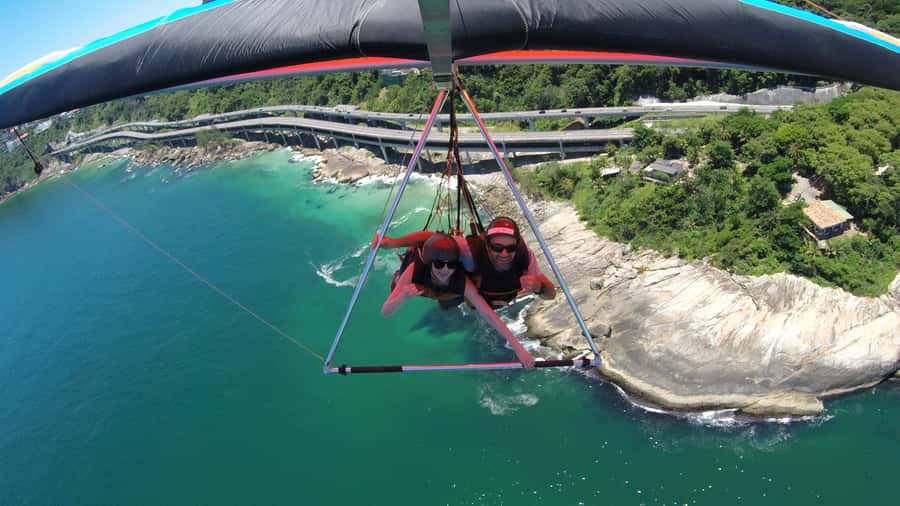
The price listed is $229 per person for a 2–3 hour experience. For many people, that’s the main question: is it worth it?
Here’s what you’re paying for, and why it’s not just a “tour photo”:
- Tandem hang gliding flight with an instructor
- Pre-flight training
- Harness, helmets, and safety equipment
- All necessary safety equipment
- Hotel pick-up if you select that option
What’s not included is also clearly stated. You should budget for:
- Flight insurance
- A launch usage fee of 120 Brazilian Reais cash (about US$20). Paying by card can trigger a 10% fee, charged by the local hang gliding club.
On top of that, camera add-ons can appear during or after the flight. Reviews mention extra costs for additional camera angles, with examples like upgrades for a 360 camera and extra GoPro angles. Those upgrades can be optional, but if you care about sharing on social media, it may be worth pricing them in before you arrive.
My rule of thumb for value: the base price is usually fair when you treat it as a full safety-and-flight service with real video documentation. But if you’re strict on budget, decide ahead of time how much you want to spend on camera extras.



Timing, meeting point, and the real-world waiting game
This is a half-day activity in practice. The official duration is 2–3 hours, but the day often stretches because launches depend on wind and weather and because pilots must reset and prepare for each flight.
So plan like this:
- You’ll meet at a meeting point that may vary depending on the booking option.
- Hotel pickup is optional. If you choose pickup, you’ll wait outside the building, and pickup is typically arranged at the selected time.
- If pickup isn’t included, you’ll likely need to get yourself to the meeting area.
Expect the possibility of waiting at the top and/or at the beach. Some people were delayed due to weather like fog or wind shifts, and at least a couple reviews complained about unclear updates while waiting. The practical fix is simple: confirm what happens if the day changes, and keep your expectations flexible.
Also, if you see one launch go first, don’t assume yours is immediate. Each flight has to be reset properly before the next person goes.
A small but smart tip from experience descriptions: bring bug repellent. The launch area is around jungle, and waiting can expose you to mosquitoes.
Who this suits best, and who should skip it
Hang gliding is thrill work, but it’s also safety work. That’s why the rules matter.
Good match if you:
- Want an aerial view of Rio’s coast and mountains in a single flight
- Are comfortable with heights for a short time (and you like the controlled, tandem format)
- Want a memorable Rio activity plus real footage, not just photos from the ground
Not a fit if you:
- Are pregnant
- Have pre-existing medical conditions (the activity states it’s not suitable)
- Are under 14 years old (minimum age is 14). If minors participate, they must be accompanied by a legal guardian and both need photo IDs presented.
Body weight also affects decisions. People over 90kg (about 200 lb) can be directed to paragliding if atmospheric conditions create safety concerns. Even if you’re near that boundary, treat it as a safety policy, not a negotiation topic.
Footwear matters too. You can’t wear sandals or flip flops, and bare feet are not allowed. Bring closed-toe footwear that stays put while you walk and move near the launch area.
Finally, think about motion sickness. One person reported feeling motion sickness during the flight and getting sick mid-air. If that’s a real risk for you, consider telling your pilot during the briefing so they can help you manage it as best as possible.
Instructors and language: how to get comfortable even if you don’t speak Portuguese
The instruction team includes languages such as Spanish, English, French, German, and Portuguese. That flexibility helps a lot for first-timers, but even when a guide doesn’t speak your language well, you can still be guided effectively if they’re clear and consistent.
In one example, a guide didn’t speak much English but still explained what to do very clearly, repeating guidance multiple times. That’s the takeaway: don’t hide your nervousness. If you need reinforcement, ask for it. Tandem pilots expect nerves.
Also, safety checks can be strict. One account described government officials double checking a participant was properly connected to the guide. That’s not something you control, but it’s reassuring if you like seeing independent safety oversight.
Should you book this Rio hang gliding adventure?
Book it if:
- You want a genuinely different Rio perspective from the air
- You’re excited by the mix of nature sounds overhead and city landmarks below
- You’re okay with a weather-dependent schedule and you can spare a bit of patience for waiting
Consider skipping or switching plans if:
- You can’t handle uncertainty around launch timing
- You strongly dislike waiting around outdoor jungle conditions (mosquitoes and time gaps happen)
- You have significant motion sickness risk or medical concerns that make flight unsafe
- You’re on a tight budget and don’t want to consider optional video upgrades and fees
If you do book, my practical advice is simple: plan your day so you’re not rushing. Wear closed-toe shoes, bring bug repellent, and treat the briefing as your safety shortcut. Once you’re in the air, it’s easy to understand why people call it one of the standout things to do in Rio.
FAQ
How long does the hang gliding experience take?
The activity duration is listed as 2 to 3 hours. Flight timing can vary based on weather and wind.
What is included in the price?
You get a hang gliding tandem flight with an instructor, pre-flight training, harness/helmets, and all necessary safety equipment. Hotel pick-up is included only if you choose that option.
What extra fees should I expect?
Flight insurance and a launch usage fee of 120 Brazilian Reais cash (about US$20) are not included. If you pay by card, there is a 10% fee. Optional extra video/camera angles may also cost extra.
Is the flight affected by weather?
Yes. The activity is weather dependent, and delays or cancellations can happen due to wind and weather. It’s recommended to contact the operator before you head over for the latest conditions.
Who can participate?
The minimum age is 14. Pregnant women and people with pre-existing medical conditions are not suitable. Weight can also affect safety decisions, and people over 90kg may be directed to paragliding if needed.
What should I wear for the launch?
Sandals, flip flops, and bare feet are not allowed. Wear appropriate footwear with closed toes.