REVIEW · RIO DE JANEIRO
Rio: Boat Tour of Guanabara Bay
Book on GetYourGuide →Operated by C2RIO TOURS & TRAVEL · Bookable on GetYourGuide
Rio from the water changes everything. This guided catamaran ride through Guanabara Bay shows Rio’s major landmarks from sea level, with narration in Portuguese, English, and Spanish.
I particularly like the way the route strings together famous names without feeling rushed—Sugarloaf Mountain is right there for photos, and the views keep widening as you head across to Niterói. I also appreciate that it’s built for photography: you get multiple recognizable coastal viewpoints, including fortresses and beaches along the return.
One thing to plan around: the boat’s narration can be hard to hear in windy conditions, with engine noise and chatter competing with the speaker.
In This Review
- Key takeaways before you go
- Marina da Glória: finding the boat and starting your loop
- From Museum of Tomorrow to Niterói: the outbound route in plain sight
- Oscar Niemeyer’s MAC in Niterói: a signature architecture moment
- Beaches, fortresses, and the Sugarloaf photo window on the return
- Listening to the narration: what to do when wind wins
- Morning vs sunset: which timing fits your day
- What the 1.5 hours feels like (and why there’s no wandering around)
- Who should book this catamaran loop
- Should you book Rio Boat Tour of Guanabara Bay?
- FAQ
- Where does the tour start and where do I meet the boat?
- How long is the Rio: Boat Tour of Guanabara Bay?
- Do we stop onshore during the tour?
- Is there an audio guide, and what languages are available?
- Is the boat accessible for wheelchairs?
- What should I bring for the boat trip?
- Are children allowed?
- What happens if weather is bad?
Key takeaways before you go
- Marina da Glória is your easy launch point, and you can add breakfast if you choose the morning option.
- You’ll see both Rio and Niterói in one loop, including Rio–Niterói Bridge views and Oscar Niemeyer architecture.
- Photo stops are time-limited, so choose your side and be ready with your camera.
- Audio guide volume can be affected by wind, so seating choice matters.
- Weather is real here: strong wind can cancel the trip, so have a backup plan for your day.
Marina da Glória: finding the boat and starting your loop
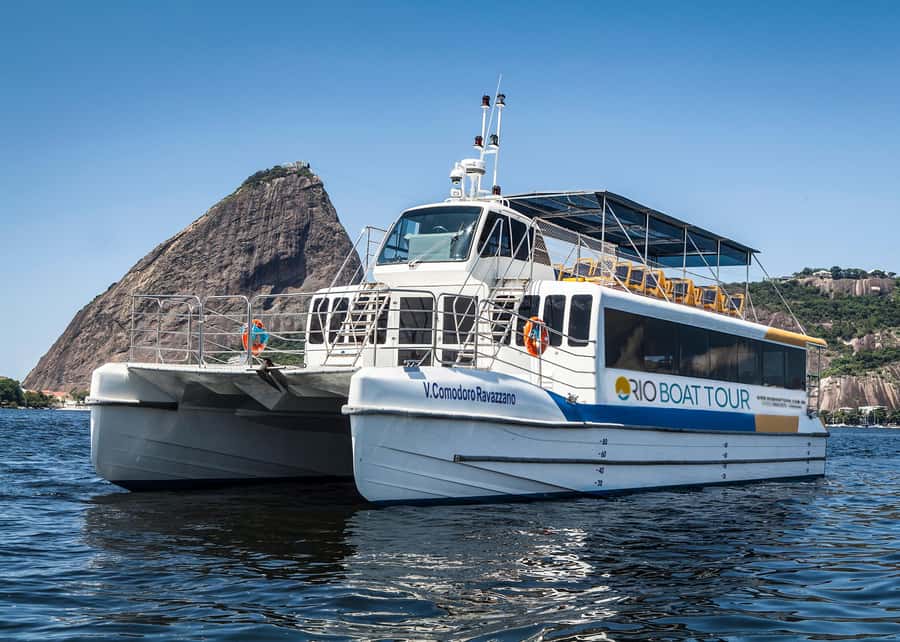
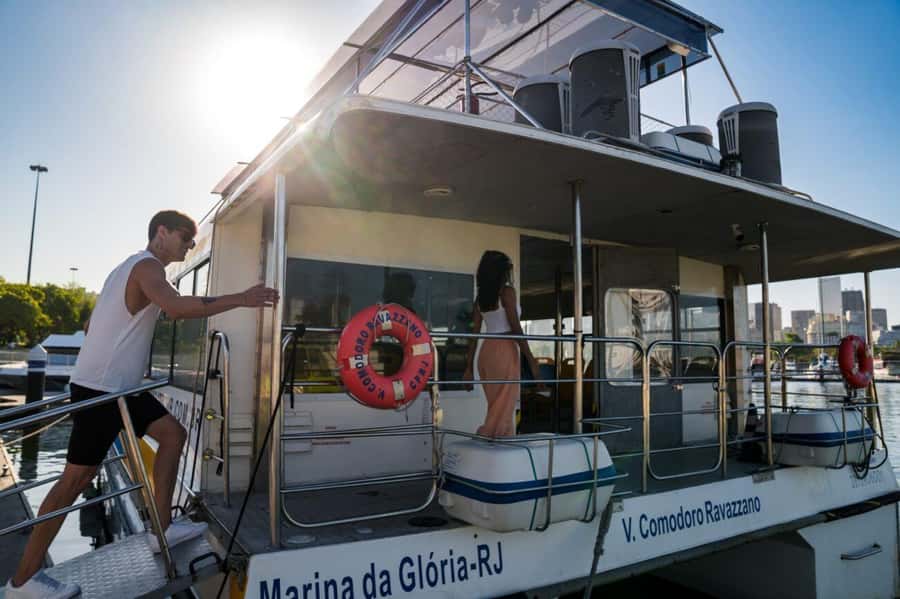
Your tour starts at Marina da Glória (boarding begins there). If you’re staying nearby, this is a great “first taste” activity because you get a big chunk of Rio’s skyline and waterfront without dealing with traffic.
A practical tip: arrive with extra buffer time. One common snag is that the meeting area can feel confusing if you’re not watching closely for the right boat/crew instructions. If you’re using rideshare, you’ll likely find the area is reachable with Uber, and the same method often works for the return, too.
If you booked the option with breakfast, you’ll start with it right by Marina da Glória, then board afterward. The coffee shop is located right in front of the embarkation point, so you don’t lose your place hunting for caffeine.
On Sundays and holidays, vehicle access to lanes leading to Aterro do Flamengo isn’t allowed. That doesn’t change your boat departure time, but it can affect how long it takes to get to the marina—so plan for that if you’re arriving by car or taxi.
You can also read our reviews of more boat tours in Rio De Janeiro

From Museum of Tomorrow to Niterói: the outbound route in plain sight
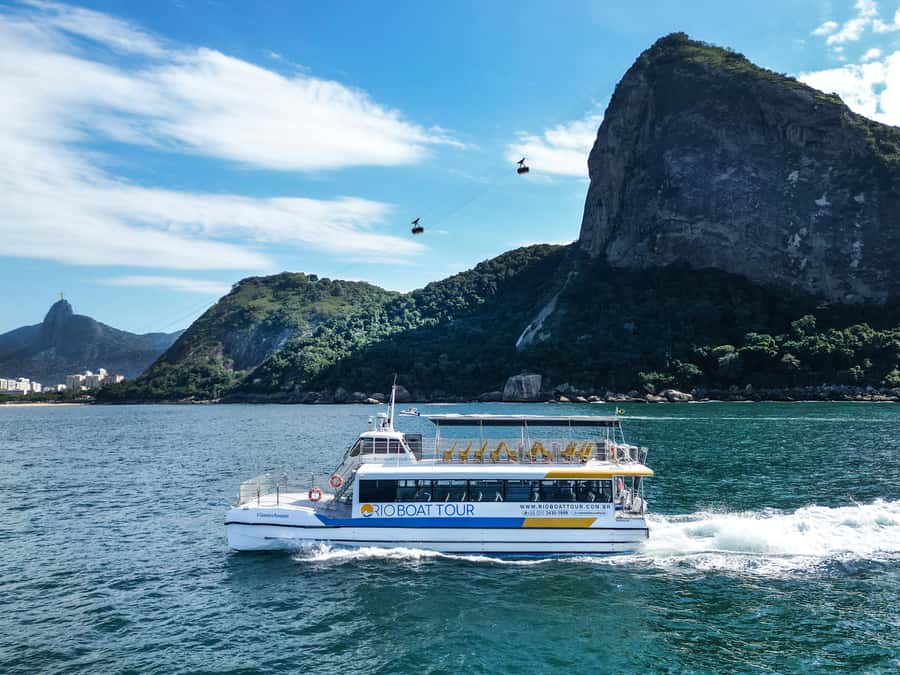
Once you’re on the catamaran, the ride is all about perspective. You’re not just “watching scenery”—you’re moving along the coast in a way that makes Rio’s geography feel logical: port area first, then bridge-and-city views, then the far shoreline.
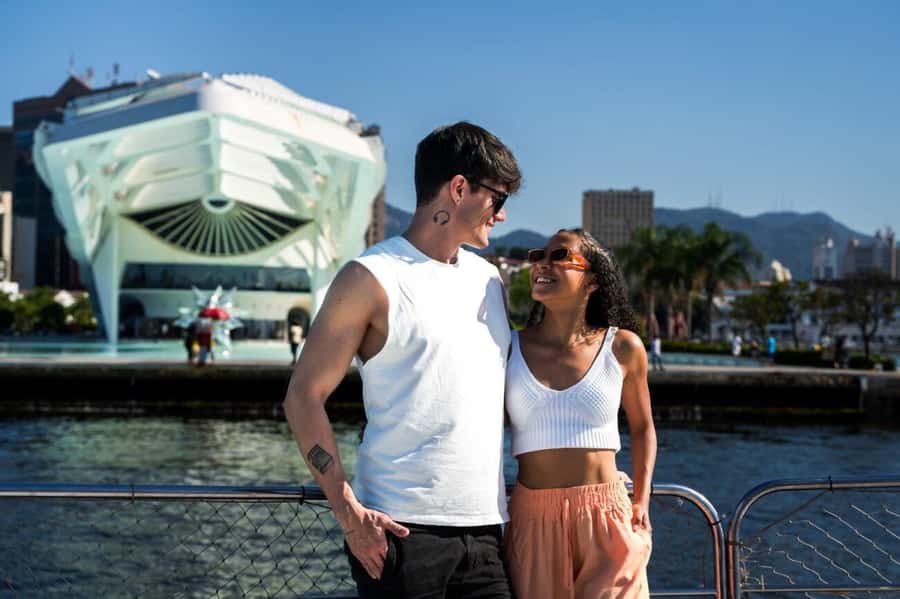
The catamaran heads toward the Museum of Tomorrow in Rio’s Porto Maravilha port region. It’s a strong visual anchor because it’s modern and architectural, and it sets the tone for what you’ll keep seeing: Rio as a working harbor and a city stacked on steep hills.
On the way, you pass key port and aviation/industrial landmarks, including:
- Villegagnon Island
- Santos Dumont Airport
- Fiscal Island
- Arsenal of the Navy
These aren’t “postcard” stops so much as “now you get it” sights. From the water, you can understand how the city’s entertainment strip and its real maritime backbone share the same horizon.
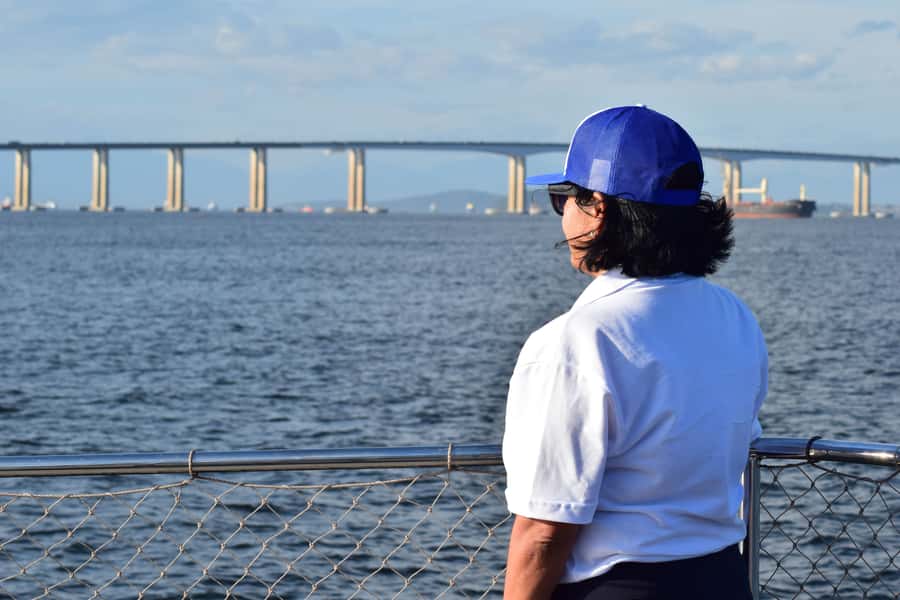
Then you continue toward Niterói, crossing the area near the Rio–Niterói Bridge. You also pass Concha Acústica (Acoustic Shell)—another moment where the boat angle helps. The architecture reads clearer from the waterline, and it’s a good target if you like urban shapes and not just skylines.
Oscar Niemeyer’s MAC in Niterói: a signature architecture moment
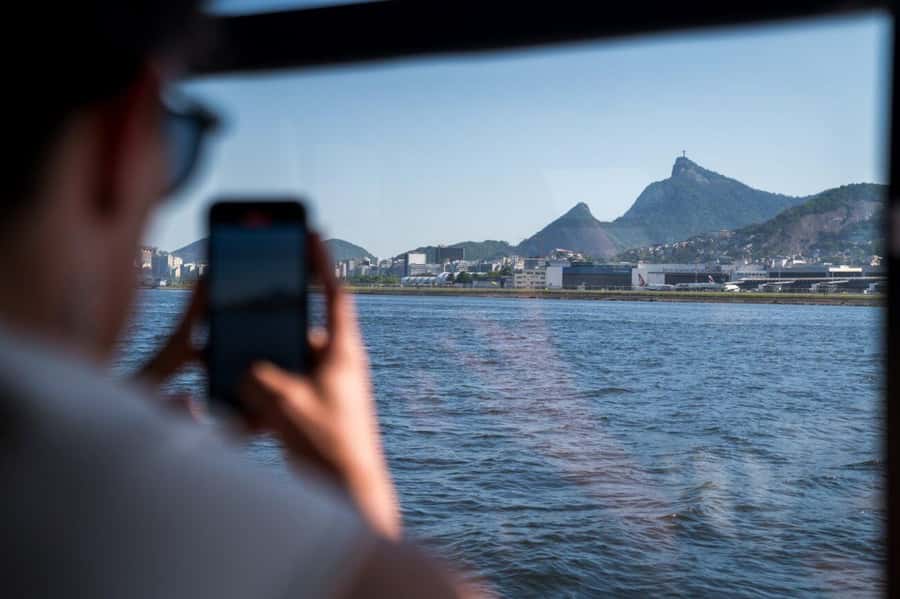
After reaching Niterói, the route brings you by the Museum of Contemporary Art (MAC), designed by Oscar Niemeyer. The description you’ll hear is that it’s shaped like a disc, and that’s exactly the kind of feature that rewards the sea view.
This part works well for two reasons:
- The museum’s form is easy to understand from a moving vantage point.
- It gives you a contrast break—after port buildings and airport-adjacent views, you get something more sculptural and civic.
For photos, look for a moment when the boat angle lines up the building with the water. You don’t need to wait forever; just treat this as one of your “lock in the shot” sections. The trip is only about 1.5 hours, so short photo windows add up.
Beaches, fortresses, and the Sugarloaf photo window on the return
On the return to Rio de Janeiro, the bay-view changes again. You start seeing a chain of coastal sights that feel like they belong to different eras—beaches and military fortifications both share the same shoreline.
You’ll pass notable areas including:
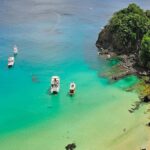
- Adão and Eva Beaches
- Santa Cruz Fortress
- Lage Fortress
- São José Fortress
- São João Fortress
Even if you don’t know the history, you’ll get the vibe fast. From the water, the fortresses aren’t “ruins on a hill.” They’re strategic markers. They read like geography, and it helps you connect Rio’s dramatic terrain to why certain places were defended in the first place.
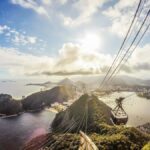
Then comes the highlight for many people: Sugarloaf Mountain. You’ll pass by and get a few minutes to take pictures from the catamaran. This is your “bring your camera ready” segment.
A photo note that matches how the boat is typically set up: if you care about getting the best angles, plan to sit on the side that gives you the clearer view of the major points. One practical suggestion that comes up is choosing the left side toward the back for good sightlines and easier listening to announcements. (If you want the widest views, the upper deck also tends to be the best option.)
As you near Marina da Glória, you’ll pass:
- the old Urca Casino
- Flamengo Beach
That final stretch is a nice way to end. The city feels closer, less distant, and you finish with the sense that you’ve done more than a ride—you’ve stitched together a complete loop of Rio’s waterfront identity.
Listening to the narration: what to do when wind wins
An audio guide is included, with Portuguese, English, and Spanish. In a calm moment, it can be a genuinely helpful way to connect what you’re seeing to the right names and context.
But here’s the real-world caution: the boat is out in the open, and wind can interfere. Some trips report that the speaker is too quiet or hard to hear because of breezes, people talking, and engine noise.
So when you want the narration to land:
- Sit where you can hear the speakers more clearly (often toward the back and near the audio source).
- Consider the upper deck only if you’re comfortable with wind noise. If you’re sensitive to audio, you might prefer being more protected.
If you’re the type who reads the labels later, no worries. You’ll still catch plenty of landmarks visually. Still, better listening makes the experience feel more “guided” than “just pretty.”




Morning vs sunset: which timing fits your day
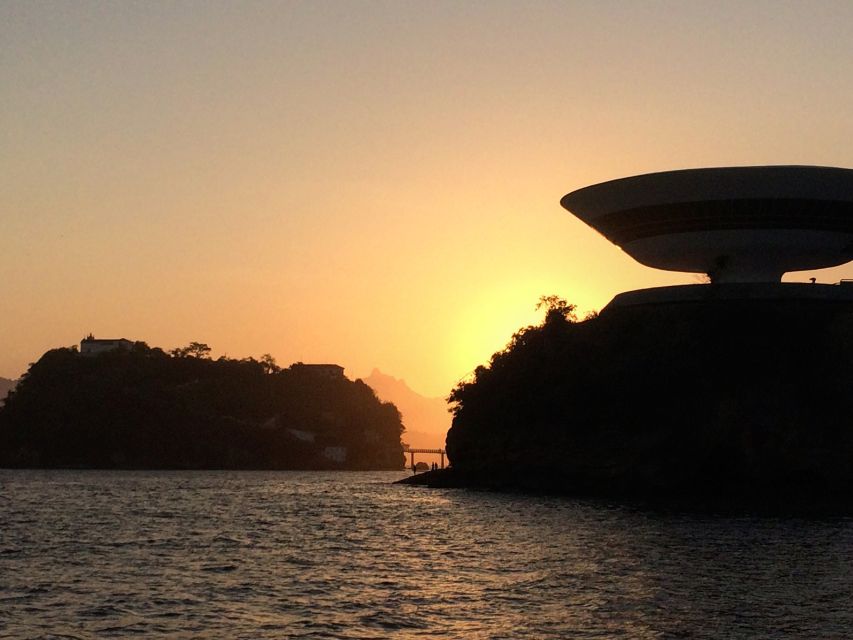
This tour runs in the morning and also in the evening at sunset. Both work, but the vibe changes.
Morning tends to feel fresher. The light is cleaner and the city looks crisp. It also pairs well with a day plan that includes beaches, museums, or a hike afterward because you’re not done at sunset.
Sunset is for the mood. You’ll be on the water when Rio looks softer and more theatrical. If you want that golden-hour glow on Sugarloaf and the bay, this is your pick.
One caution: this is also a boat trip, and it’s subject to conditions. The operator notes that if weather gets too rough, the trip may not take place—strong wind is specifically mentioned. If you’re traveling with tight schedules, treat sunset as a “plan B-friendly” option. Having a second activity you can swap in can save the day.
What the 1.5 hours feels like (and why there’s no wandering around)
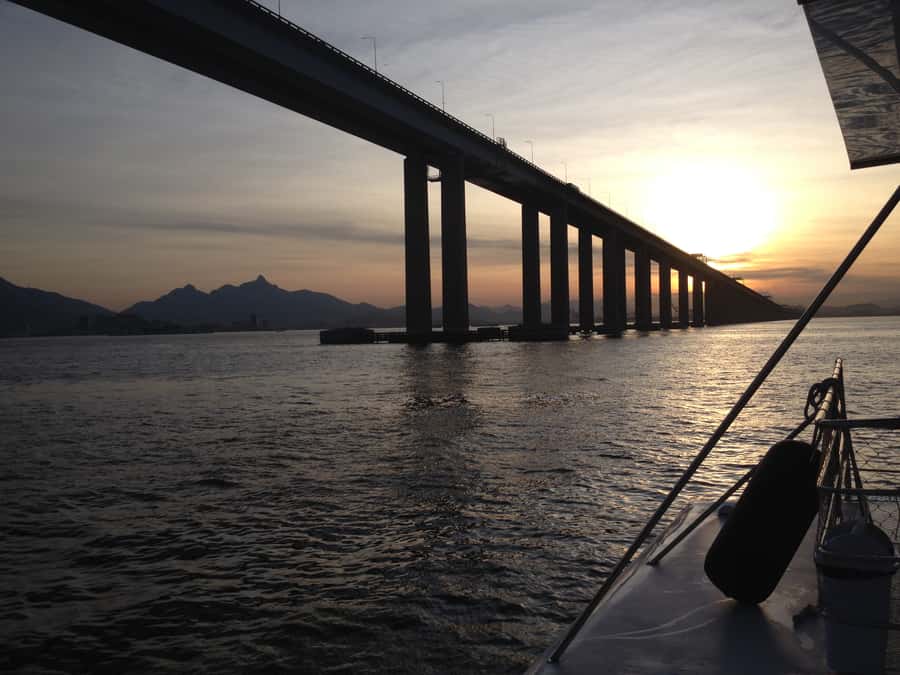
This is a no-long-stops tour. There are no disembarkations and no diving stops. That’s not a downside—it’s the reason it moves so smoothly through so many sights in a short time.
Instead of time on land, you get continuous movement plus dedicated photo passes. That makes it ideal when:
- you want big views without committing a half-day
- you’re traveling with people who don’t want to change plans constantly
- you only have one day to get a “full-sight” picture of the bay
Because you don’t get off the boat, you’ll also avoid the stress of searching for meeting points again later. You just ride, listen when you can, and take photos during the windows that come up.
Who should book this catamaran loop
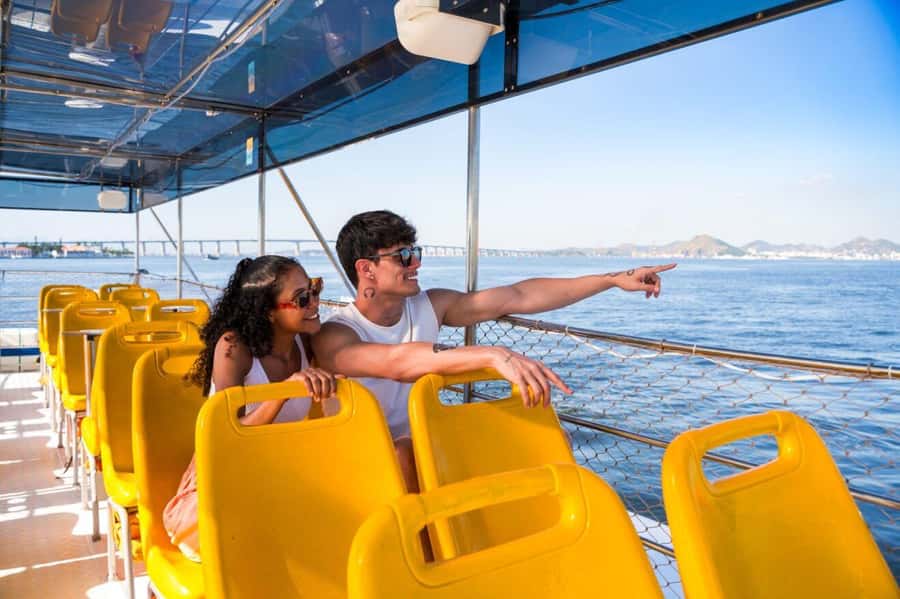
This tour fits best for:
- couples and solo travelers who want classic Rio scenery at sea level
- first-timers who want an efficient orientation to the waterfront
- photographers who like recognizable landmarks (especially Sugarloaf and Niterói’s skyline)
It’s also a good “middle day” option: not as intense as a hike, not as slow as a museum day.
A few practical fit notes from the provided details:
- The tour is wheelchair accessible.
- Unaccompanied minors aren’t allowed.
- Children 4 and younger are complimentary if they don’t occupy a seat.
- Expect a guided audio experience, not a hands-on interaction tour.
If you’re hoping to chat a lot with a guide personally throughout, you might find the format more structured around narration and viewpoints than conversation. Still, a strong guide can make those names and places click, and guides such as Renato Marino, Carla, and Claissa are specifically mentioned in past experiences as being friendly and informative.
Should you book Rio Boat Tour of Guanabara Bay?

Yes—if your goal is to see Rio from the water in a compact window, this is a smart use of time. The loop layout gives you both sides of the bay, with a clear payoff at Sugarloaf Mountain and an architecture moment at MAC (Oscar Niemeyer).
Book it if you can handle two realities:
- Photo time is limited, so pick your seating side and have your camera ready.
- Wind can make the narration harder to hear, so don’t rely on audio as your only information source.
Skip it (or compare options) if you’re obsessed with a perfectly silent, fully narrated experience, or if your schedule absolutely depends on sunset and you don’t have any flexibility for weather.
If you want a fun, scenic, and efficient “Rio waterfront equals real perspective” outing, this catamaran route is a solid bet.
FAQ
Where does the tour start and where do I meet the boat?
You meet at Marina da Glória for boarding.
How long is the Rio: Boat Tour of Guanabara Bay?
The duration is about 1.5 hours.
Do we stop onshore during the tour?
No. The tour has no disembarkation stops and does not include diving.
Is there an audio guide, and what languages are available?
Yes. An audio guide is included in Portuguese, English, and Spanish.
Is the boat accessible for wheelchairs?
Yes. The tour is wheelchair accessible.
What should I bring for the boat trip?
Bring passport or ID, a camera, sunscreen, and water.
Are children allowed?
Unaccompanied minors aren’t allowed. Children 4 and younger are complimentary if they don’t occupy a seat.
What happens if weather is bad?
The tour is subject to favorable weather conditions, and if it’s canceled due to poor weather, you’ll be offered an alternative date. In case of strong wind, the boat trip will not take place.