REVIEW · RIO DE JANEIRO
Jewish Tour in Rio de Janeiro
Book on Viator →Operated by Guided Tour In Rio · Bookable on Viator
Jewish Rio deserves more than a drive-by. This 3-hour small-group tour threads together synagogues, museums, and community life across some of Rio’s best-known neighborhoods, with hotel pickup and a local guide handling the how-and-why. I especially like that the schedule is tight but not rushed, and a heads-up: some interiors are time-dependent, including parts of the Great Temple of Israel.
I also love how the route connects Jewish history to the city you’re standing in. You’ll get guided stops that range from the Beit Lubavitch Synagogue area in Leblon to the ARI synagogue and community institutions in Botafogo, plus the Museu Judaico do Rio. The main consideration is simple: with several stops capped around half an hour each, it’s an introduction, not a semester-long course.
In This Review
- Key highlights worth caring about
- What this Jewish tour gives you in 3 hours
- Price and what you’re actually paying for
- Pickup, timing, and how the morning flows
- Leblon’s synagogue stop: Beit Lubavitch and the Midrash Center
- Ipanema beach and the CIB Jewish Community Center
- Botafogo Beach: Anne Frank education and the ARI presence
- Botafogo Bay viewpoint: Itzhak Rabin Park on Morro de Pasmado
- Museu Judaico do Rio: a museum with research behind the scenes
- Grande Templo Israelita do Rio: when the doors open
- Small-group attention: why the guide matters
- What I’d watch out for before you go
- Who this tour fits best (and who should pass)
- Should you book this Jewish heritage tour in Rio?
Key highlights worth caring about
- A guide who teaches as you go: Expect explanations not just at the doors, but also during the drives
- Small group size (max 14): Easier questions, better pace, more personal attention
- Real institutions, not stand-in facts: Community centers, synagogues, and a Jewish museum with research resources
- Breathing room in major neighborhoods: Leblon, Ipanema, Copacabana-area meeting point, and Botafogo viewpoints
- Limited-time site access: The Great Temple and some memorial spaces may not be open every day
- Value in logistics: Pickup and drop-off removes the hassle of taxis and route planning
What this Jewish tour gives you in 3 hours
If your first thought about Rio is beaches, fine. This tour adds a second layer fast: Jewish life in Rio—where it settled, how communities built institutions, and how those stories show up in everyday streets and buildings.
The format is practical. You start with pickup near the Copacabana area, ride in a comfortable vehicle, and get focused stops rather than a long list that never really lands. I liked that the experience doesn’t feel like a scavenger hunt.
You also get a guide who can tailor the tone to you. In recent groups, guides such as Ephraim and Leonardo were praised for being friendly and for answering questions with enough detail to make the sites make sense.
You can also read our reviews of more tours and experiences in Rio de Janeiro.



Price and what you’re actually paying for
The tour costs $95 per person for about 3 hours, with a small group capped at 14. That might feel steep until you break down what’s included: pickup and drop-off, transport by car or van, and a professional guide leading the whole sequence.
What you’re paying for is access and explanation in one package. With this kind of itinerary—synagogues, a Jewish museum, and community institutions—getting there efficiently matters. You’re not sorting out neighborhoods, entrances, and timing on your own.
One honest note: if your only goal is to see buildings from outside, you could technically do some of this independently. But the value here is the context, plus the fact that you’re taken to the places where Jewish community life is actually organized.
Pickup, timing, and how the morning flows
The tour starts at 9:00 am and meets at Hilton Rio de Janeiro Copacabana (Av. Atlântica, 1020). Pickup is included for selected hotels, and there’s also port pickup and drop-off, which is helpful if you’re on a cruise.
In a perfect world, you show up, get moving, and every stop works. In the real world, some stops can be affected by access or opening hours. I’d treat this itinerary as a guided plan with a few moving parts rather than a guaranteed checklist of closed captions.
For the smoothest experience, I suggest you confirm your exact pickup location and time with the company before the morning. That one step can prevent the kind of start-time frustration you don’t need while traveling.
Leblon’s synagogue stop: Beit Lubavitch and the Midrash Center
Leblon is Rio at its most upscale, and the neighborhood alone helps set the scene. Here you’ll see the Beit Lubavitch Synagogue and the nearby Midrash Cultural Center.
This stop works because it isn’t just architecture. It gives you a sense of religious learning and community programming as part of Jewish presence in the city—not only worship, but education and cultural continuity.
Time here is short, around 20 minutes, and in this tour format that’s enough for a guided overview and orientation. Expect the guide to explain what you’re looking at and why the location matters in the broader Rio map.
Ipanema beach and the CIB Jewish Community Center
From Leblon, the route shifts toward the Ipanema side of the story, where you’ll spend time around the beach corridor. This is where you’ll connect Jewish life to the city’s social energy, because people in Rio really do organize around neighborhoods and sea-air routines.
This portion includes a visit to the CIB (Jewish Community Center) in the Ipanema area. Think of it as more than a building: it’s community infrastructure—programs, services, and a place for Jewish life to happen in daily rhythms.
A practical benefit here: even if you’re not staying in the area, you’ll get a feel for Rio’s “where people actually spend time” geography. And you’ll learn how community centers fit into that bigger pattern.



Botafogo Beach: Anne Frank education and the ARI presence
Botafogo Beach is where you get a classic postcard angle of Rio. It’s also where the itinerary connects Jewish identity to education and public values.
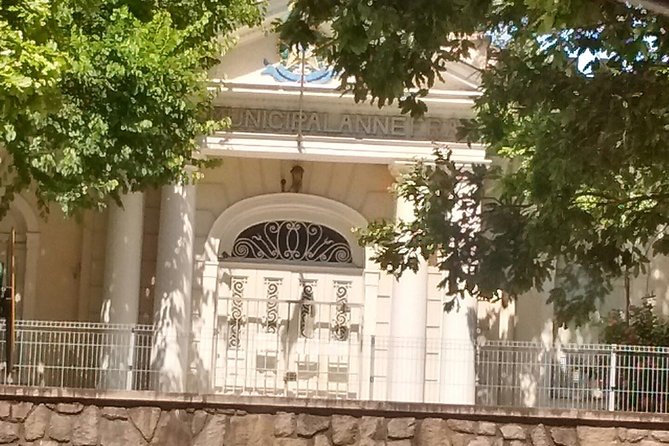
One of the most meaningful links is a municipal school named after Anne Frank, part of a network run with other selected organizations. The goal is to promote values associated with Anne Frank, including peace, respect for diversity, and human rights—ideas that show up through community partnerships rather than only symbolism.
You’ll also visit the A.R.I. Synagogue area in this neighborhood. This is tied to the Progressive Judaism community in Rio and is affiliated with the World Union for Progressive Judaism. It’s a strong stop if you want to understand that Jewish life isn’t one single stream; it’s several traditions sharing a city and sometimes different ways of practicing.
The ARI world includes the Rabbi Henry Lemle Community Center opened in 1997, with spaces like classrooms and an auditorium, and the synagogue named Henrique Peres. The same complex includes a Center for Reference and Research on the Holocaust Zinner Family, which is a heavy theme handled in an institutional setting.
Botafogo Bay viewpoint: Itzhak Rabin Park on Morro de Pasmado

You’re not just doing indoor stops. The tour includes Itzhak Rabin Park in Botafogo, located on Morro de Pasmado.
This is one of those “quick, useful viewpoint” moments. From here, you can see Botafogo Bay and Urca Bay, which helps you understand why people settled, built, and traveled the way they did.
There’s also a political-symbolic layer. The park includes a bust of Itzhak Rabin and connects it to the relationship between the Brazilian state and the state of Israel. If you’ve ever wondered how world events land locally, this is a direct, physical example.
Museu Judaico do Rio: a museum with research behind the scenes
Next is the Jewish Museum of Rio de Janeiro (Museu Judaico do Rio de Janeiro). The museum was founded in 1977 after a donation of a menorah, and it positions itself as a cultural center that connects Jewish memory and Jewish culture to the broader city.
The big reason I like this stop: it doesn’t feel like a dusty room of objects. It runs exhibits about the Jewish community in Rio and Jewish traditions across religious, cultural, and historical aspects. It also supports academic research related to migration.
You’ll also hear about the museum’s study center, which conducts research on migration and the Holocaust, and a video archive with over a thousand films, plus a library. Even if you only walk through part of the space in the time given, the scope makes the museum feel anchored and serious.
Budget note: the museum stop has an admission fee that is not included in the tour price. Plan for that cost so you’re not surprised at the counter.
Grande Templo Israelita do Rio: when the doors open
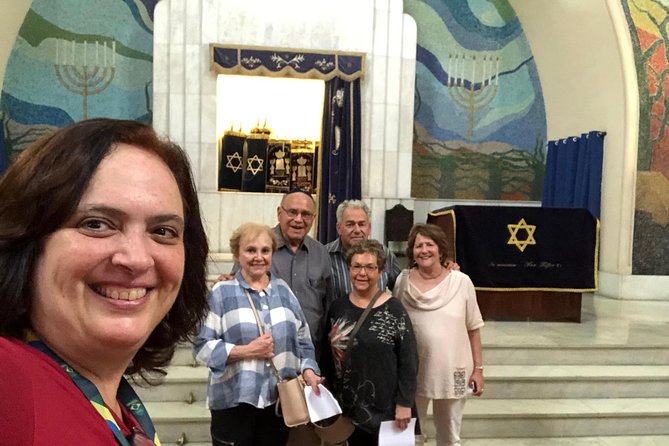
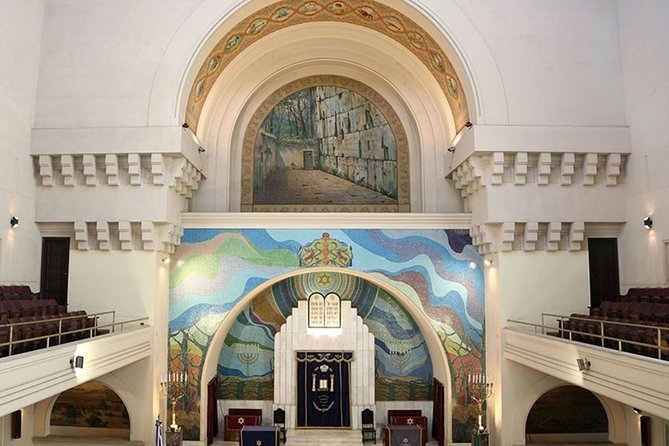
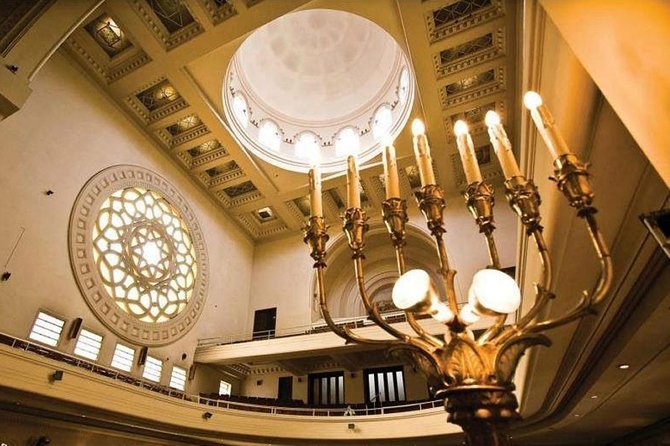
The final major cultural stop is the Grande Templo Israelita do Rio de Janeiro, which is described as Ashkenazi. This is one of the biggest monuments linked to the Yishuv history and to Jewish presence in Rio.
The temple opened in 1932, designed in an eclectic style that mixes elements of Hebrew origin with classical architecture. The mosaics were made in 1976 by Humberto Cozzo. The site also has a tragic chapter: it collapsed in 1987.
Here’s the key practical thing for you: the temple is currently open only during High Holidays, special events, and tourist visits. So even with a great guide, your ability to see inside may depend on timing. If the temple isn’t accessible at the moment, don’t let it ruin your morning—this tour is still worth it for the surrounding stops and the guided context.
Admission here is also not included in the tour price.
Small-group attention: why the guide matters
This is where the reviews strongly point, and you’ll feel it in real time. With groups capped at 14, guides can respond when you ask questions, not just read a prepared script.
Guides including Ephraim, Leonardo, and Gisela (often mentioned in the same breath as the guiding team) were praised for warmth and for turning the tour into more of an exchange than a lecture. In a couple of experiences shared, the guide also offered extra steps beyond the standard route, such as pointing guests toward Shabbat services at the relevant community synagogue—only if it fits the day and the schedule.
Even when you’re not staying for extra religious programming, that kind of personal connection changes how you see the spaces. You start noticing details you would otherwise ignore: the purpose of the building, the community’s structure, and the way multiple Jewish traditions coexist in one city.
What I’d watch out for before you go
Two “keep your expectations realistic” points can make a big difference.
First, time is limited. With stops around 20–30 minutes each, you’re getting an informed overview. If you’re hoping for lots of time inside every site, you may want to plan a follow-up visit to the museum or another place that interests you most.
Second, access can vary. Some groups reported that a Holocaust-related memorial stop or viewpoint area wasn’t accessible at the time of their visit, and the Great Temple has limited opening windows. That doesn’t mean the tour is poorly planned—it means Rio can be day-dependent like any city, and the itinerary includes places with specific scheduling.
A separate caution: one negative review criticized the guide’s leadership during a delayed start and while a participant went to use a bathroom, then had trouble finding the group. That sounds like an outlier, but it’s also a reminder to stay close to the group and confirm the meeting point inside any larger facility.
Who this tour fits best (and who should pass)
This is a great fit if you want an efficient, guided introduction to Jewish Rio without spending half your vacation figuring out where everything is. It’s especially good for first-timers who want context across multiple neighborhoods—Leblon/Ipanema/Botafogo—and not only in one district.
You’ll likely enjoy it if you care about:
- synagogue and community-center life
- the story of migration and cultural institutions
- education and remembrance connected to Jewish communities
If you’re a die-hard architecture hunter or you need hours inside each building, you might feel boxed in by the time limits. In that case, pair this tour with additional self-guided time afterward.
Should you book this Jewish heritage tour in Rio?
I think you should book it if you want a guided route that connects Jewish history to the streets you’ll actually walk through in Rio. The transport + pickup alone saves hassle, and the guided stops give you a story you can’t easily assemble on your own in the same morning.
I’d hesitate only if you’re expecting guaranteed full interior access at every religious site, or if you already have a lot of background and want a longer, deeper lecture format. With places like the Great Temple having limited opening times, a little flexibility is part of the deal.
If your goal is to get your bearings on Jewish Rio quickly—with synagogue visits, a serious Jewish museum, and community connections—this tour is a solid buy at $95, especially because it handles logistics and interpretation in a small group format.