REVIEW · RIO DE JANEIRO
Climb Rio de Janeiro: Rock Climbing Tailored for All Levels
Book on Viator →Operated by Itaway Ecotours · Bookable on Viator
Sugarloaf gets real. This climb turns Rio’s famous skyline into a hands-on lesson on Sugar Loaf Mountain with small-group coaching that fits beginners through advanced climbers. Routes are picked based on your past experience, so you’re not thrown into something over your head or bored by something too easy.
The second thing I really like is the setup: a certified bilingual instructor, full climbing gear (shoes, harness, helmet, and the belay/rappel device), plus ropes and anchor-building equipment. One thing to consider: this experience needs good weather, and if conditions are poor you’ll either switch dates or get a full refund.
In This Review
- Key highlights to know before you climb
- What you’re really getting in 3 hours at Urca
- How your route gets chosen: top-rope vs multi-pitch
- Gear and instruction: the setup that keeps nerves in check
- Climbing Sugar Loaf: up to two hours of real technique
- Picking morning vs afternoon: plan your day around Rio’s mood
- Price and value: why this cost can make sense in Rio
- Who this tour is best for (and who should pause)
- Practical stuff you should do before you show up
- Should you book Climb Rio de Janeiro for Sugar Loaf?
- FAQ
- How long is the climbing tour?
- Where does the tour start?
- Is the tour private?
- What climbing options are available for different skill levels?
- How do they decide what route you climb?
- What gear is included?
- Is a cable car ticket included?
- What’s not included in the price?
- What happens if weather is bad?
Key highlights to know before you climb
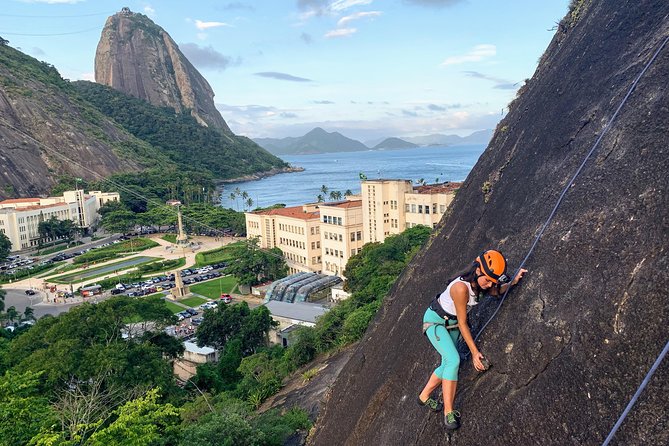
- Up to two hours on the rock around Sugar Loaf, with route choices for your level
- All abilities welcome, from first-timers on top-rope to advanced multi-pitch options
- Two people per instructor, so you’re not lost in a big crowd
- Bilingual certified instructor, with coaching you can actually use
- Cable car descent included to Morro da Urca when you climb Sugar Loaf
What you’re really getting in 3 hours at Urca
This is a compact, high-impact activity: about 3 hours from start to finish, beginning at Praça Gen. Tibúrcio, 75 – Urca, Rio de Janeiro. The time math matters here. You’re not signing up for an all-day “maybe we climb” plan. You’re here to climb, learn, and finish while Rio is still doing its thing.
The pricing is around $127.42 per person, and the value comes from what’s included. You’re paying for coaching plus the full climbing system: individual gear, collective rope and anchor gear, and (when you climb Sugar Loaf) a cable car descent ticket to Morro da Urca. For a guided activity in a premium view location, that combination is the key.
Also, this is a private tour/activity. That matters more than people think. With a max of two people per instructor, the guide can slow down for questions, adjust your technique fast, and keep the whole session feeling calm instead of chaotic.
You can also read our reviews of more tours and experiences in Rio de Janeiro.



How your route gets chosen: top-rope vs multi-pitch
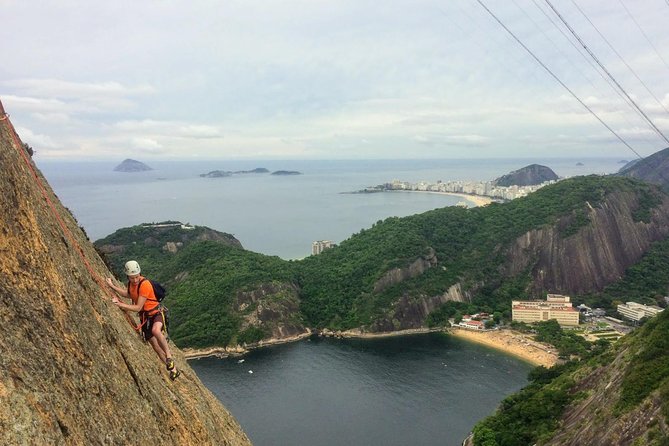
You’ll choose your option to match your skill level, but there’s an extra layer. An Itaway agent determines your route based on your past rock climbing experience. That step is useful because climbing difficulty isn’t only about strength—it’s about technique, comfort with exposure, and how you handle belaying, footwork, and control.
Here’s the practical breakdown:
- Top-rope is the right call if it’s your first time or you’re new to climbing basics. You’re learning the system with the route set up so you can focus on movement and safety.
- Multi-pitch climbing exists across experience levels too—beginner, intermediate, and advanced options are available. Multi-pitch isn’t just harder; it’s more about route-finding, transitions, and managing longer sequences with proper protection and anchors.
So your day isn’t a one-size-fits-all “climb something and hope.” It’s designed so the wall feels achievable, whether you’re just learning or you’re already comfortable on real climbs.
Gear and instruction: the setup that keeps nerves in check
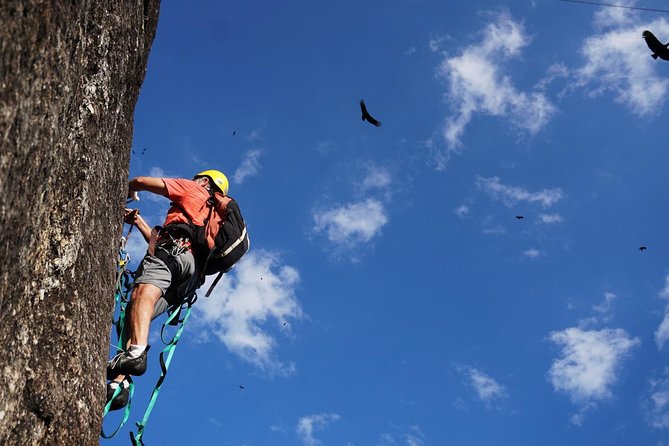
Climbing scares a lot of people for the same reason roller coasters scare them: your brain knows there’s risk. The difference here is that you’re not going in blind.
You’ll get individual equipment: climbing shoes, harness, helmet, and a belay/rappel device. That’s important because the fit and the basics are what determine whether you spend the climb thinking, or actually climbing.
You also get the collective kit—rope, quickdraws, and anchor building equipment—so you’re not missing pieces when you move into more technical routes. And you’re working with a certified bilingual instructor, which helps if you want clear explanations instead of guesswork.
In the guidance style, two guide names show up for good reason: Victor and Adilio. If you end up with Victor, you’ll likely appreciate how he makes first-time outdoor climbing feel comfortable and well managed. And if you’re with Adilio, the focus is on route quality and a relaxed, friendly teaching vibe—exactly what you want when the objective is learning, not proving.
Climbing Sugar Loaf: up to two hours of real technique
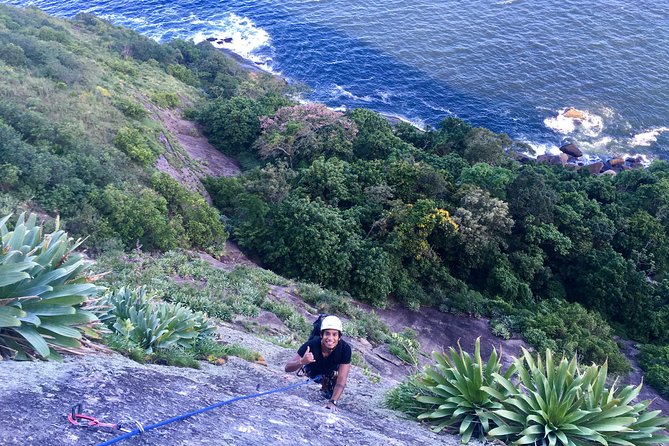
The main action happens at Urca, with climbing on the rock at Sugar Loaf Mountain. You can get up to two hours of climbing, which is a solid chunk of wall time. A short coaching session is nice; a session long enough to build muscle memory is better. That’s what this length supports.
One of the best parts, based on how the guides structure the day, is that you’re not just dropped onto the route and told to figure it out. You’ll be taught properly, including practicing key movements before the main climbing sequence. In this area, the setting makes the learning feel special too. The view of the beaches and the Sugar Loaf forms a constant backdrop, so even when you’re focusing on technique, the reward is already there.
As you climb, expect coaching to cover:
- safe body positioning and foot placement (the stuff that keeps you from burning out)
- how to handle the rhythm of a route without rushing
- belay basics and control (especially for top-rope and beginner progressions)
- confidence-building during transitions, particularly if you’re doing multi-pitch
If you’re an experienced climber, the multi-pitch options let you practice real sequences. If you’re brand new, the top-rope approach keeps you in the zone where learning can actually stick.
And yes, you get a built-in sightseeing perk: if you climb Sugar Loaf Mountain, your plan includes a cable car descent ticket to Morro da Urca. That’s a clean way to wrap the day—less guessing, less hustling, just a smooth return with the whole coastline vibe fading in behind you.
Picking morning vs afternoon: plan your day around Rio’s mood
You can choose either a morning or afternoon tour, which helps you build a Rio day that fits the rest of your sightseeing. I like this flexibility because Rio isn’t just one lighting condition—it changes hour to hour.
A morning climb can feel crisp and focused, good if you prefer a quiet start and want to keep the rest of the day open. An afternoon slot can match a more relaxed itinerary, especially if you’re stacking it alongside other Urca/Sugar Loaf area stops.
No matter the time, remember the main constraint: good weather matters. If clouds or rain show up, the day may shift. So treat the time choice like a way to suit your schedule, not as a guarantee of perfect conditions.



Price and value: why this cost can make sense in Rio
Let’s talk money without hand-waving. At $127.42 per person, this isn’t a “cheap thrill.” But it’s also not priced like a luxury gondola ride.
Here’s what you’re paying for:
- a certified bilingual instructor
- gear rental for the full climbing setup (shoes, harness, helmet, belay/rappel device)
- the climbing infrastructure gear (rope, quickdraws, anchor building equipment)
- and, for Sugar Loaf climbing, a cable car descent ticket to Morro da Urca
What’s not included is also clear: snacks and bottled water, plus tips (a 10–20% range is typical). If you’re comparing this to other “activity” tours, the gear and the instructor time are the main difference. Those add up quickly if you tried to piece it together on your own.
The other value angle is the group size: a private setup with only two people per instructor. That’s where the experience gets more precise. You can ask questions mid-session and actually get a response that changes what you do next.
Who this tour is best for (and who should pause)
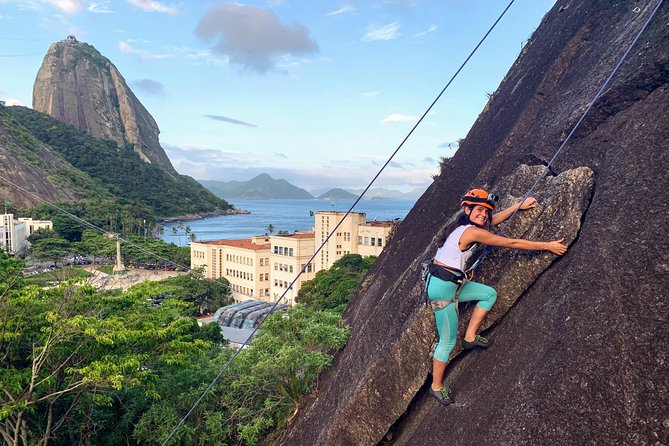
This tour is built for variety, and the wording around “most travelers can participate” is supported by the route options. In real terms, that means:
- First-timers who want a controlled entry (top-rope is the right fit)
- Beginners who want instruction and structure instead of trial-and-error
- Intermediate climbers who want to practice real routes with proper safety setup
- Advanced climbers who can choose multi-pitch climbing options
What might give you pause is the part you can’t coach away: weather and comfort with being on rock with ropes and height exposure. If you’re uneasy with heights, make sure you choose the option that matches your experience honestly and be upfront about your comfort level. The whole point of tailoring your route is to keep the session challenging but manageable.
Practical stuff you should do before you show up
You’ll meet at Praça Gen. Tibúrcio, 75 – Urca. The meeting point is near public transportation, which is handy in a city where getting around can be its own mini-adventure.
Because snacks and bottled water aren’t included, I recommend planning for that gap. Bring what you need or grab it before you start, so you don’t end up running on low energy mid-climb.
You’ll also end back at the meeting point. That makes the tour easy to plug into a longer Rio day: climb first, then move on.
Finally, take the instruction step seriously. The chosen climbing route depends on your past experience, so if you have even a small amount of climbing background, it’s worth being clear about what you’ve done before.
Should you book Climb Rio de Janeiro for Sugar Loaf?
If you want a Rio experience that’s more than looking from a viewpoint, this is a strong pick. The mix of real wall time, gear included, and tight instructor-to-climber focus makes it especially good if you care about learning, not just checking a box.
Book it if:
- you want top-rope or multi-pitch tailored to your level
- you like the idea of an instructor working closely with just you and one partner
- you want the Sugar Loaf area without turning the day into complicated logistics
Hold off if:
- weather is likely to be rough during your trip window and you can’t be flexible
- you know you’re not comfortable with heights and exposure, even with top-rope and instruction
When it works, this tour hits that sweet spot: guided, structured, and genuinely active, with Sugar Loaf’s skyline right there where you can feel it.
FAQ
How long is the climbing tour?
It runs for about 3 hours (approx.).
Where does the tour start?
The meeting point is at Praça Gen. Tibúrcio, 75 – Urca, Rio de Janeiro – RJ, 22290-270, Brazil.
Is the tour private?
Yes. It’s a private tour/activity, and only your group participates.
What climbing options are available for different skill levels?
You can choose options that include top-rope for first-time climbers and beginners, and multi-pitch climbing for beginner, intermediate, and advanced levels.
How do they decide what route you climb?
Your route is selected based on your past rock climbing experience, determined by an Itaway agent.
What gear is included?
You receive individual equipment including climbing shoes, harness, helmet, and a belay/rappel device, plus collective equipment like rope, quickdraws, and anchor building equipment.
Is a cable car ticket included?
If you’re climbing Sugar Loaf Mountain, a cable car descent ticket to Morro da Urca is included.
What’s not included in the price?
Snacks and bottled water are not included. Tips for guides are not included; 10–20% of the trip cost is typical.
What happens if weather is bad?
This experience requires good weather. If it’s canceled due to poor weather, you’ll be offered a different date or a full refund.