
REVIEW · RIO DE JANEIRO
The Best of Rio de Janeiro in a Private Guided Tour
Book on Viator →Operated by Carioca Tropical Tour Operator · Bookable on Viator
Rio moves fast. This tour keeps up.
What I like most is the private guide + driver setup, so you’re not stuck watching a clock or herding with strangers. You also get real custom itinerary planning—tell your guide if you want food, football, history, or slow scenic breaks, and they’ll steer the day. The trade-off: it’s a long day packed with options, so you’ll want to be clear about must-sees vs. nice-to-haves.
One more thing I value here is the mix of “big postcard Rio” with places that feel more like Rio’s everyday rhythm. You’ll roll from the green relief of Tijuca to the views of Sugarloaf and Corcovado, then cut through downtown churches, libraries, and museums before finishing in neighborhoods like Santa Teresa and Lapa. The one caution: entrance tickets are mostly your expense, and some cost big (like Sugarloaf and Christ), so build that into your budget and plan for heat and travel time between stops.
In This Review
- Key Highlights Worth Your Attention
- Getting Rio in One Day: Private Car, Real Flexibility
- Price and Value for a Private Day (Up to 3 in Your Group)
- Hotel Pickup and the 8:00 AM Start That Sets the Tone
- The Pre-Tour Planning Call: How Your Route Gets Personal
- Parque Nacional da Tijuca: Urban Rainforest, Waterfall Energy
- Sugarloaf Mountain: Big Views and the Value of Fast Planning
- Botanical Garden: Calm Walks and Orchids (Ticket Usually Extra)
- Museu de Arte Moderna do Rio (Flamengo Park): Modern Art with a Setting
- CCBB Rio de Janeiro: Free Culture in a Historic Building
- Copacabana, Ipanema, Leblon, São Conrado, and Barra: Beaches with Different Personalities
- Mosteiro de São Bento: Baroque Detail and Gregorian Sound
- Metropolitan Cathedral of Saint Sebastian: Modern Shape, Huge Interior
- Biblioteca Nacional: A Big Library Pause (Free)
- Igreja de Nossa Senhora da Candelária: Baroque Façade with a Serious Center
- Centro Downtown Squares: Praca Quinze de Novembro and Cinelândia
- Museums Around Flamengo to Praça Mauá: MAR and the Big-Architecture Factor
- Casa Franca-Brasil and Correios Cultural Centre: Culture in Old Spaces
- Niterói’s Museu de Arte Contemporânea (Oscar Niemeyer): One Architect, Big Bay Views
- Mirante Dona Marta: The Sunrise Feel That Saves a Foggy Day
- Arcos da Lapa and Santa Teresa: Aqueduct Energy and Tram Vibes
- Escadaria Selarón: The Color Staircase You’ll Want to Find
- Palaces and Government Buildings: Tiradentes Palace and Pedro Ernesto
- Carnival and Football: Sambadrome and Maracanã
- Santa Teresa and the Quiet Hilltop Feel
- Smart Tips for Tickets, Heat, and Timing
- Should You Book This Tour?
- FAQ
- What time does the tour start?
- How long is the Best of Rio de Janeiro in a Private Guided Tour?
- How much does the tour cost?
- Is hotel pickup and drop-off included?
- Do I get a private guide and driver?
- Can the itinerary be tailored to my interests?
- Are entrance tickets included?
- What are some of the main stops on the tour?
- Is free cancellation available?
Key Highlights Worth Your Attention

- A pre-tour planning chat that shapes the route so the day fits your interests, pace, and priorities
- Private transport with a multilingual guide and driver for direct, efficient sightseeing
- Two skyline view anchors (Sugarloaf and Corcovado/Christ the Redeemer) plus backup viewpoints when weather turns
- Downtown culture stops like CCBB, Cinelândia, the Cathedral, and Brazil’s National Library
- Neighborhood flavor after the icons with Lapa’s arches, Santa Teresa, and the Selarón steps
- Carnival and football context at the Sambadrome and Maracanã if those matter to you
Getting Rio in One Day: Private Car, Real Flexibility

Rio de Janeiro is one of those cities where “seeing it all” can turn into “rushing everywhere.” This private format works because it’s designed around a single group. Instead of arriving at places when everyone else does, your guide can adjust pacing, swap in a better photo angle, and shift the order if queues or weather slow things down.
That’s a big deal for two reasons. First, Rio’s most famous viewpoints (especially Christ the Redeemer and Sugarloaf) can be time-sensitive. Second, the city has serious geographic variety—coast, forest, and downtown feel like different worlds. Having a driver means you get the connections without wasting hours on buses, lines, and transfers.
The guides in this operation include people like Victoria, Ederson, Gabo, Angelie, and Niels—names that come up repeatedly because they do the basics well: show up on time, explain what you’re looking at, and keep the day moving. If you care about language, this is also where you’ll notice the difference; the tour is offered with certified multilingual guidance, and some guides handle Portuguese, English, German, and Spanish.
You can also read our reviews of more guided tours in Rio de Janeiro



Price and Value for a Private Day (Up to 3 in Your Group)
The price is $480 per group (up to 3) for about 8 hours, with hotel pickup and drop-off included. If your group maxes out at three, that’s $160 per person, which is the kind of number that makes sense for a “Rio highlights day” when you compare it to the cost of multiple taxis, timed entries, and your own wasted planning time.
If you’re traveling as a couple or solo, private can still be a good value because it replaces guesswork with a plan. But be honest with yourself: this is not a slow coffee crawl. It’s a full day that can include a lot of stops, so you’re paying for efficiency and context—not for a relaxed, unhurried pace.
One practical detail: the tour is private only for your group, and it can be listed as larger than three in some configurations. For your exact booking, confirm the group size included with your reservation so you know how many people will be in the vehicle.
Hotel Pickup and the 8:00 AM Start That Sets the Tone
You start at 8:00 am with pickup from your Rio hotel, then return for drop-off at the end of the day. Early matters in Rio. It gives you the best chance to hit viewpoints before fog or clouds thicken, and it keeps downtown stops from turning into a lunchtime crush.
You’ll also spend less time “waiting around.” This tour is built for movement—your guide coordinates the order and timing so you’re not stuck standing in heat while everyone else slowly figures things out.
The Pre-Tour Planning Call: How Your Route Gets Personal
Before you go, your guide contacts you to talk through the itinerary. This is the part that turns a standard highlights tour into something that actually fits you. Want traditional food joints instead of only museums? Want beaches plus viewpoints, but less downtown? Want football history or Carnival energy?
Your guide can build a route around themes like food, sport, history, and culture, then plug in “major icons” as anchors. That’s how you get a day that feels intentional instead of checklist-y.
It’s also where I’d do your homework: send a simple priority list. For example:
- Top 3 sights you really want
- 1 or 2 “if time allows” options
- The one thing you’d rather skip
This helps your guide make trade-offs when the city’s pace forces choices.
Parque Nacional da Tijuca: Urban Rainforest, Waterfall Energy
You start with Parque Nacional da Tijuca, a rainforest inside the city that feels like a reset button after busy streets. It’s known for hiking trails, waterfalls, and big views—plus it’s part of the Atlantic Forest ecosystem. Even if you don’t go far on foot, the drive through and the chance to pause in cooler air is a meaningful break.
What to watch for: Tijuca can mean walking on uneven ground and stairs depending on the exact spot and viewpoint your guide chooses. If anyone in your group has mobility limits, tell your guide early so they can pick lower-effort stops.
You can also read our reviews of more private tours in Rio de Janeiro






Sugarloaf Mountain: Big Views and the Value of Fast Planning
Sugarloaf Mountain is a granite peak with panoramic cable car rides over Guanabara Bay. It’s a must if you want the classic Rio skyline in one frame—and it’s a strong sunset choice, too.
Tickets aren’t included, so this is one of the spots where your day can hinge on planning. In practice, a good guide will help you manage timing and queues; some guides have even offered fast-pass style options for Sugarloaf, with you reimbursing the guide for the ticket. Ask your guide about best timing as soon as your planning call starts, especially if your dates fall around busy weekends.
If fog or clouds roll in, Sugarloaf can still deliver. But don’t bet the whole day on one perfect visibility window—this tour often includes alternative lookouts for backup.
Botanical Garden: Calm Walks and Orchids (Ticket Usually Extra)
The Botanical Garden is a serene pause from city noise, with thousands of tropical and subtropical species. It includes orchid areas and avenues of imperial palms—plus it’s a comfortable place to slow down for photos and shade.
Here’s the catch: admission is typically not included, so budget for it. If you love plants and gardens, it’s worth adding. If your group wants only iconic landmarks, your guide may steer you toward other stops that feel more urgent.
Museu de Arte Moderna do Rio (Flamengo Park): Modern Art with a Setting
The Museu de Arte Moderna do Rio (MAM) is modernist in both art focus and architecture, set in Flamengo Park. It’s one of those stops that works if you like contemporary Brazilian creativity and don’t mind a museum break in the middle of sightseeing.
Ticket admission isn’t included, so check the day’s schedule and whether you’ll have time for more than quick highlights. Museums are best when you treat them as a short stop, not a full immersion.
CCBB Rio de Janeiro: Free Culture in a Historic Building
Centro Cultural Banco do Brasil (CCBB) Rio de Janeiro is a cultural hub housed in a historic neoclassical building. It regularly hosts art exhibitions, theater, and cinema-style programming.
The good part: it’s listed as free for admission on this route. That makes it a low-risk stop that can still feel meaningful—especially when you want something cultural without spending extra.
Copacabana, Ipanema, Leblon, São Conrado, and Barra: Beaches with Different Personalities
Rio’s beaches aren’t one thing—they’re five different moods.
- Praia de São Conrado: backed by mountains and known for hang gliding landings and surfing. It’s popular with locals and adventure-minded visitors. It’s also a nice change of pace if you’re tired of only the most famous beaches.
- Ipanema Beach: famous worldwide for its vibe. It’s great for swimming and people-watching, and the sunset view idea from Arpoador Rock is a strong match for an evening-friendly beach timing.
- Praia do Leblon: quieter and more family-friendly than Ipanema, right next door. You also get the Two Brothers mountain (Morro Dois Irmãos) view energy.
- Barra da Tijuca Beach: the longer stretch, often associated with surfing and beach sports, plus a more laid-back feel compared to the core tourist beaches. It’s a smart choice if you want space and a slower coastline mood.
Even though these beach stops are listed as free, treat them like time purchases. You’ll want sunscreen, water, and a plan for where you’ll stand for photos. Rio sun can be relentless, even when the day starts cool.
Mosteiro de São Bento: Baroque Detail and Gregorian Sound
Mosteiro De São Bento is a 17th-century Benedictine monastery with Baroque interior decoration and daily Gregorian chants. This stop is a rare mix of visual beauty and sound—quiet, focused, and very “Rio in a different register.”
Admission is listed as free. Timing matters for the chants, but your guide should help you line up with the rhythm of the day. Go in expecting stillness, not a fast photo sprint.
Metropolitan Cathedral of Saint Sebastian: Modern Shape, Huge Interior
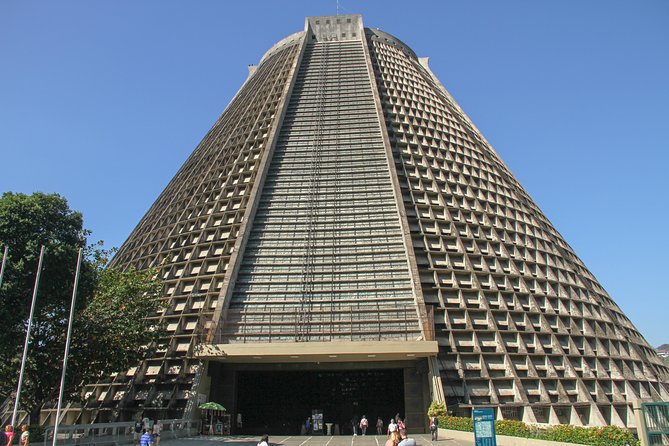
The Metropolitan Cathedral of Saint Sebastian is modernist and visually striking, resembling a Mayan pyramid from outside. Inside, stained-glass panels create a dramatic light effect, and the cathedral holds an enormous crowd.
This is a good stop if you want a change from the classic Christ-and-Sugarloaf panorama. Like other free stops here, it’s easy to fit if you’re moving through downtown efficiently.
Biblioteca Nacional: A Big Library Pause (Free)
Brazil’s National Library is one of the largest in the world and includes rare manuscripts, maps, and historical documents. Even if you don’t spend long reading displays, the scale alone tells you something about Brazil’s intellectual footprint.
It’s listed as free on this route. This is a perfect “sit down for a bit” stop when your legs have had enough.
Igreja de Nossa Senhora da Candelária: Baroque Façade with a Serious Center
Church of Our Lady of the Candelaria is known for an ornate Baroque façade and a richly detailed interior. It’s a strong downtown landmark and a good anchor for people who like architecture and religious art.
Admission is listed as free here, which makes it a low-cost, high-impact stop.
Centro Downtown Squares: Praca Quinze de Novembro and Cinelândia
Two stops that help you understand Rio’s civic and cultural backbone are Praca Quinze de Novembro and Cinelândia.
- Praca Quinze de Novembro is a historic square with colonial architecture and the Imperial Palace. It’s a reminder that Rio has been a seat of power for a long time.
- Cinelândia is a busy cultural and intellectual center with historic theaters, cinemas, and museums around the square. It’s a practical stop for seeing how downtown blocks connect visually.
Both are listed as free, so treat them as “walk-and-look” breaks that add context without draining your budget.
Museums Around Flamengo to Praça Mauá: MAR and the Big-Architecture Factor
Two different museum-and-architecture moods show up on this route.
- Museu de Arte do Rio (MAR) at Praça Mauá: it blends historic and modern architecture and focuses on art, history, and social change. Admission isn’t included.
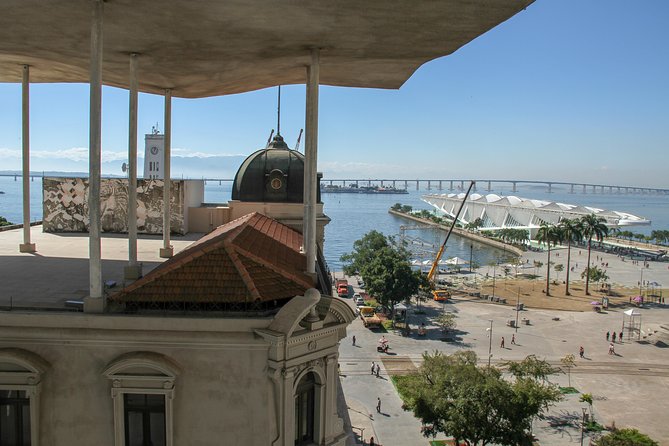
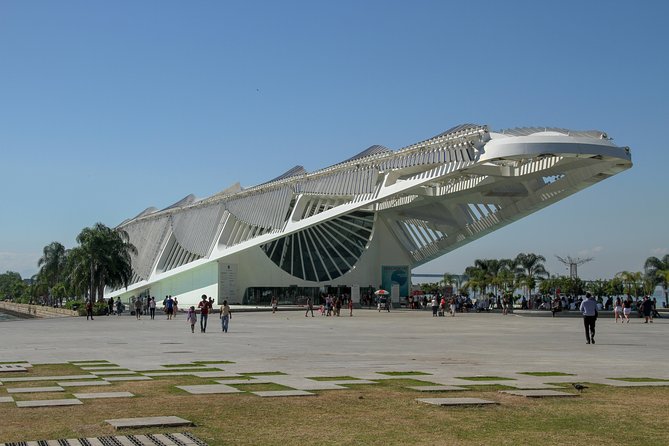
- Museu do Amanhã (Museum of Tomorrow): a futuristic science museum focusing on sustainability and innovation, designed by Santiago Calatrava. Admission also isn’t included.
These stops are where you decide what you want today: traditional culture and church interiors, or the “Rio thinking about the future” angle. If you’re short on time or tickets get expensive, let your guide choose which museum best matches your interests.
Casa Franca-Brasil and Correios Cultural Centre: Culture in Old Spaces
Two smaller cultural stops can be great breathing rooms:
- Casa Franca-Brasil: a neoclassical building turned cultural center focused on Brazil-France historical ties. It’s listed as free.
- Correios Cultural Centre: a former post office used for exhibitions, music performances, and workshops. It’s listed as free too.
These are ideal when you want culture that isn’t only in major museums. They also work well if you’re starting to feel “museum fatigue.”
Niterói’s Museu de Arte Contemporânea (Oscar Niemeyer): One Architect, Big Bay Views
The Museu de Arte Contemporânea de Niterói is designed by Oscar Niemeyer, and the museum’s saucer-shaped design faces Guanabara Bay. It’s a powerful architectural stop if you’re a fan of Niemeyer’s forms.
Admission isn’t included here. Your guide will decide if it fits your time window based on your other priorities.
Mirante Dona Marta: The Sunrise Feel That Saves a Foggy Day
Mirante Dona Marta is a scenic lookout with one of the best panoramic views of Rio, including Sugarloaf and Christ the Redeemer. It’s a great sunrise spot for photos, and even beyond sunrise, it’s a smart backup viewpoint if clouds limit what you can see from other high spots.
This is also where a good guide can turn a weather disappointment into a great moment. Some days, Christ visibility is limited, and a lookout like Mirante Dona Marta becomes the plan B that keeps the views strong.
Arcos da Lapa and Santa Teresa: Aqueduct Energy and Tram Vibes
Arcos da Lapa is an 18th-century aqueduct now functioning as a bridge for the Santa Teresa tram. In the late afternoon and evening, the area can feel lively and photographic, and it’s a strong “Rio at street level” experience.
Admission is listed as free. This is also a good place for photos that don’t look like postcards—more street, more texture.
Escadaria Selarón: The Color Staircase You’ll Want to Find
Escadaria Selarón is the famous colorful mosaic staircase created by artist Jorge Selarón. It’s an iconic photo stop and one of the city’s easiest “stand still and absorb” moments.
Admission is listed as free. Even if you’ve seen the stairs before on your screen, being there in person hits different: the color density is real, and you’ll want time to get the angle right.
Palaces and Government Buildings: Tiradentes Palace and Pedro Ernesto
Two architecture-heavy stops help you see the civic side of Rio:
- Tiradentes Palace: the state legislative assembly known for grand architecture and historical murals. Listed as free.
- Palacio Pedro Ernesto (Rio’s municipal chamber): an elegant neoclassical building housing Rio’s municipal chamber. Listed as free.
These are best if you like big public buildings and murals, or if you want the day to include more than coastline scenery.
Carnival and Football: Sambadrome and Maracanã
If you care about sport and samba culture, these two stops are worth flagging:
- Maracana: iconic football stadium with FIFA World Cup final history. Admission isn’t included.
- Sambodromo da Marques de Sapucai: the Carnival parade heart, designed by Oscar Niemeyer, built for samba competitions and festivities. Admission is listed as free on this route.
Even when you’re not attending a big event, these stops give you context for why Brazil treats football and Carnival like national languages.
Santa Teresa and the Quiet Hilltop Feel
Santa Teresa is bohemian in mood: winding streets, colonial mansions, and art studios with hilltop views. It’s a good neighborhood ending—often a calmer contrast after the downtown energy and before your return to the hotel.
Admission is listed as free. If your guide has time for it, this stop makes the whole day feel like a story instead of disconnected locations.
Smart Tips for Tickets, Heat, and Timing
Tickets: Some major items on this route are not included—especially Sugarloaf Mountain, Corcovado/Christ the Redeemer, and multiple museums (Botanical Garden, MAM Rio, MAR, Museu do Amanhã, and more). Your guide can help you plan what’s worth paying for on the day you have.
Queues and timing: A strong theme in the good experiences here is minimizing waiting. Guides have suggested fast-pass style options for Sugarloaf, and some guests have used early-timed access strategies for Christ. If those sights are top-of-list for you, ask your guide in advance what time approach makes the most sense.
Food and water: Food and drinks aren’t included. Also, some people have reported not having water planned on extremely hot days. I’d treat this as a cue to bring a refillable bottle and plan a simple snack strategy, even if your guide organizes a break.
Language: The tour is multilingual, but not every language level matches every expectation. If Spanish is non-negotiable, say so in your planning message and confirm what you’ll be speaking during the day.
Pace: This is a full sightseeing day. If you want a more relaxed version, tell your guide upfront you’d rather linger longer at fewer places and skip some of the extra museum-style stops.
Should You Book This Tour?
Book it if you want a one-day overview of Rio that’s actually tailored—private transport, a guide who builds around your interests, and a route that blends icons with culture and neighborhood texture. It’s a strong fit for couples, families with a short stay, and anyone who doesn’t want to spend the whole vacation figuring out logistics.
Hold off or adjust expectations if:
- You’re on a tight budget for tickets (not included for several headline stops).
- You hate fast pacing and prefer fewer stops.
- Language needs are very specific and you want to be sure that will match your guide.
If you do book, send your priorities in your planning message and ask your guide how they’ll handle viewpoints with timing and ticket costs. Done right, this is one of the most efficient ways to get your bearings in Rio—without losing the feel of the city between stops.
FAQ
What time does the tour start?
The tour start time is 8:00 am.
How long is the Best of Rio de Janeiro in a Private Guided Tour?
The duration is approximately 8 hours.
How much does the tour cost?
The price is $480 per group (up to 3).
Is hotel pickup and drop-off included?
Yes. Hotel pickup and drop-off are included.
Do I get a private guide and driver?
Yes. The tour includes a certified multilingual guide and driver, and it’s private for your group.
Can the itinerary be tailored to my interests?
Yes. You can create a custom itinerary around themes like food, sport, history, or culture.
Are entrance tickets included?
Some sites are listed as free, but entrance fees and ticket costs are at your own expense. Ticket entrances are not included.
What are some of the main stops on the tour?
You may visit places such as Parque Nacional da Tijuca, Sugarloaf Mountain, the Botanical Garden, CCBB Rio, Ipanema, Copacabana-area beaches, Mosteiro de São Bento, the Metropolitan Cathedral, Biblioteca Nacional, Maracanã, Church of Our Lady of Candelária, Escadaria Selarón, and Corcovado/Christ the Redeemer.
Is free cancellation available?
Yes. You can cancel up to 24 hours in advance for a full refund.